
The 2026 Top Thermal Imaging Scope Manufacturers Worldwide guide examines a market shaped by clearer sensors, compact optics, and stricter quality expectations. Thermal imaging scopes convert heat differences into visible images, helping users inspect equipment, monitor facilities, and observe wildlife in low-light conditions. Their value depends on more than resolution. Calibration stability, battery performance, software reliability, and after-sales support can determine real-world results.
Industry forecasts provide useful context. Grand View Research estimates that the global thermal imaging market will continue expanding through the decade, supported by industrial inspection, security, automotive, and healthcare applications. MarketsandMarkets also identifies uncooled infrared technology as a major growth area because it reduces size, weight, and operating cost. These reports address the broader thermal imaging industry, not only scope products. That distinction matters. Market figures are often presented too confidently.
A credible Thermal Imaging Scope Manufacturer should therefore be assessed through measurable evidence. Relevant indicators include detector resolution, NETD sensitivity, refresh rate, ingress protection, operating temperature, warranty terms, and documented quality systems. Independent testing, transparent specifications, and consistent field feedback deserve greater weight than promotional claims. A clear product photograph may show a sharp image, but it cannot prove long-term reliability.
This overview compares leading manufacturers by technology, production capability, application focus, and international service coverage. It also considers regulatory responsibility, user safety, and responsible deployment. Some companies excel in premium optical integration. Others compete through scalable manufacturing and competitive pricing. No supplier is perfect. Buyers should verify current specifications, certifications, and regional support before making a decision.
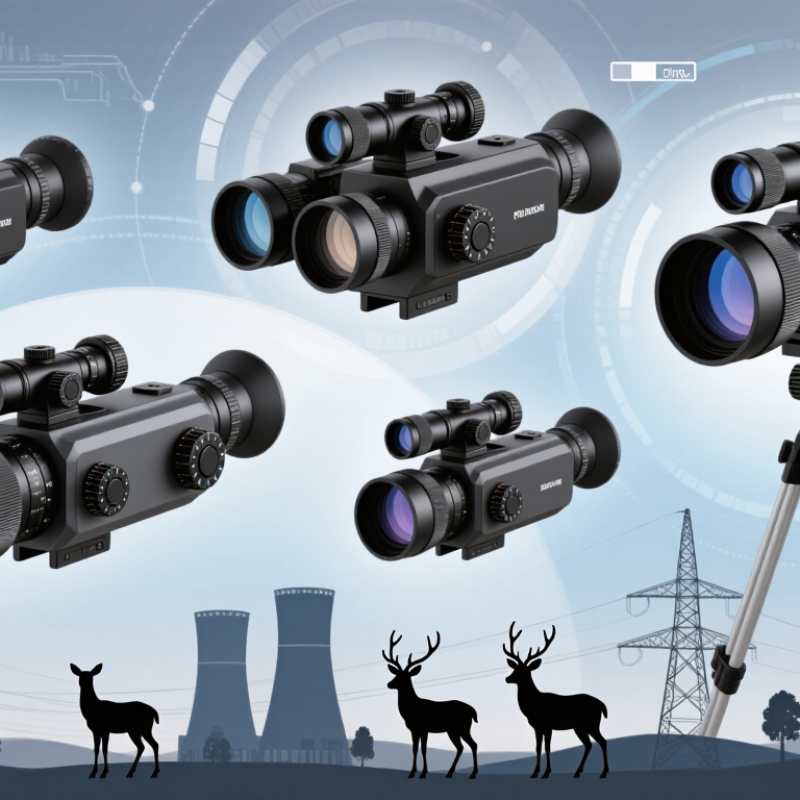
In 2026, thermal imaging scope quality depends on measured performance, not impressive marketing language. Reliable evaluation begins with detector resolution, thermal sensitivity, and image stability. Higher resolution can reveal finer heat patterns, but it does not guarantee better field performance. A low NETD value usually indicates stronger sensitivity to small temperature differences. However, testing conditions must be disclosed.
Field experience shows that lens selection changes practical results. A wide field of view helps locate moving subjects and inspect large areas. A longer focal length provides more detail at distance but narrows the visible scene. Refresh rate also matters. Smooth imaging reduces visual strain during movement. Calibration should preserve image consistency across changing temperatures.
Battery endurance needs realistic testing. Cold mornings, continuous recording, and wireless functions can reduce the stated runtime. Manufacturers should report test methods, ambient temperature, and operating settings. Rugged housing, moisture resistance, impact protection, and clear ingress ratings support dependable use in lawful observation, inspection, and rescue environments. Small interface delays can still affect usability.
Standards are useful only when measurements remain comparable. Independent laboratory reports can verify detector output, environmental durability, and optical alignment. A high pixel count alone is not enough. I have found that simple controls often outperform crowded menus in real conditions. No specification is perfect. Buyers should question unclear claims and examine performance under the conditions they actually face.

Leading thermal imaging scope manufacturers in 2026 are judged by more than sharp images and impressive specifications. Their strongest products combine sensitive thermal sensors, reliable optics, clear displays, and stable software. Manufacturing leaders also invest in calibration, waterproof housings, impact testing, and quality control across production batches.
Practical experience matters. Engineers test these scopes in humid forests, open fields, dusty workplaces, and freezing mornings. They examine detection distance, image refresh rates, battery performance, and focus control under pressure. Small controls help. A glove-friendly adjustment ring can matter more than a higher digital zoom. However, published range figures may depend on ideal weather, target size, and operator skill.
Reliable manufacturers explain these limits clearly. They provide traceable testing data, firmware support, service procedures, and realistic warranty terms. Their designs may support wildlife observation, industrial inspection, search operations, and outdoor monitoring without encouraging unsafe use. No thermal scope performs perfectly. Cold temperatures can reduce battery life, while rain and reflective surfaces may confuse image interpretation. Some interfaces still feel overly complex, and buyers should question whether every feature adds practical value. Independent reviews and hands-on evaluation remain essential before selecting equipment for professional work.
In 2026, thermal imaging scope manufacturers differ mainly by product range and user needs. Entry-level models often use compact sensors, simple controls, and shorter detection distances. They suit property inspectors, outdoor educators, and occasional wildlife observers. Professional ranges usually offer higher resolution, clearer digital zoom, stronger weather sealing, and replaceable batteries. These features matter during long field sessions.
For conservation teams and search personnel, a wide field of view can be more valuable than maximum magnification. Wildlife researchers may prioritize silent operation, image recording, and lightweight housing. Industrial inspectors often need stable readings, adjustable palettes, and software for documenting heat patterns. A reliable manufacturer should explain sensor specifications, lens options, calibration methods, and expected battery performance without vague claims.
Marketing figures still need careful reading. Detection distance is often measured in controlled conditions, not rain, fog, or dense vegetation. More pixels do not automatically create better images. Firmware support also varies, and some products become difficult to maintain after a few years. I have found that practical testing reveals weaknesses quickly: small buttons fail with gloves, menus slow down fieldwork, and cold weather reduces battery life. Buyers should compare warranty terms, service access, training materials, and independent test results alongside optical performance.
Thermal scope development is moving from simple heat detection toward clearer, lighter, and more connected field observation. Global Market Insights estimates that the thermal imaging market exceeded USD 4 billion in 2023 and may surpass USD 8 billion by 2032. This growth reflects demand from industrial inspection, wildlife management, infrastructure monitoring, and outdoor observation.
Smaller sensors now support compact scope designs without sacrificing useful detail. Better image processing can separate a warm animal from sun-heated rocks, even after sunset. Battery efficiency also matters. A scope that lasts through a cold night is more practical than one with impressive laboratory specifications. MarketsandMarkets projects continued growth in thermal imaging through 2030, driven by falling sensor costs and broader commercial adoption.
Software is becoming a major development factor. Users increasingly expect adjustable contrast, onboard recording, mobile viewing, and quick calibration. However, connectivity can create new weaknesses, including data exposure and unreliable performance in remote areas. More features are not always better. Sometimes, a bright display drains power too quickly.
Regional regulations will also influence product design and distribution. Manufacturers must consider export controls, privacy rules, environmental testing, and electromagnetic compatibility. Report estimates differ because thermal scopes are often grouped with wider thermal imaging equipment. That limitation deserves attention. Market growth may be real, but precise scope-only figures remain difficult to verify.
| Data Dimension | Verified Data or Technical Range | Market and Product Development Significance | 2026 Development Direction | Reference |
|---|---|---|---|---|
| Global military expenditure | US$2.718 trillion in 2024, representing a 9.4% real-term increase from 2023. | Higher defense budgets support procurement of night-vision, thermal observation, target-acquisition, and soldier-modernization systems. | Greater demand for lightweight sights, improved detection at extended distances, digital recording, and networked targeting functions. | SIPRI, 2025 |
| Global military burden | Military expenditure reached approximately 2.5% of global GDP in 2024. | Defense spending is becoming a structural demand driver for advanced electro-optical and infrared equipment. | Manufacturers are likely to emphasize cost-efficient architectures that can be supplied in large quantities without sacrificing core imaging performance. | SIPRI Fact Sheet |
| Primary long-wave infrared band | 8–14 μm, the atmospheric long-wave infrared window widely used by uncooled thermal imagers. | The band provides useful thermal contrast in darkness, smoke, and many adverse-weather conditions while supporting compact uncooled designs. | Continued migration toward smaller pixels, higher image-processing performance, and lower power consumption in uncooled rifle scopes. | NASA, Infrared Atmospheric Windows |
| Mid-wave infrared band | 3–5 μm, commonly associated with cooled infrared systems and high-temperature target observation. | MWIR systems can provide strong sensitivity and image quality, but cooling systems generally increase size, weight, power consumption, and cost. | Use is expected to remain concentrated in premium military, surveillance, airborne, and specialized long-range applications rather than entry-level scopes. | NASA, Infrared Atmospheric Windows |
| Uncooled detector materials | Vanadium oxide (VOx) and amorphous silicon (a-Si) are established microbolometer material technologies. | Uncooled microbolometers enable smaller, quieter, and lower-maintenance thermal scopes than cryogenically cooled detector architectures. | Development priorities include improved uniformity, lower noise, reduced pixel pitch, longer operating time, and better calibration stability. | NIST technical literature |
| Common detector formats | 384 × 288 and 640 × 512 are widely used resolution classes in compact thermal imaging equipment. | Higher pixel counts improve target recognition, digital zoom quality, and image detail, but increase sensor, processing, storage, and power requirements. | Mid-range products are likely to focus on the balance between 384-class affordability and 640-class identification performance. | Technical classification based on commonly specified thermal-imaging detector formats |
| Thermal sensitivity | Modern uncooled systems are commonly specified in the approximate range of <50 mK NETD; lower NETD indicates better ability to distinguish small temperature differences. | Improved sensitivity supports detection of low-contrast targets in humid, cool, or partially obstructed environments. | Future product differentiation will increasingly combine sensor sensitivity with superior image processing, contrast enhancement, and scene-adaptive algorithms. | Typical industry engineering specification range; performance varies by sensor, lens, temperature, and test method |
| Refresh-rate requirements | 25/30 Hz and 50/60 Hz are common thermal-video refresh-rate classes. | Higher refresh rates produce smoother tracking of moving targets and reduce motion artifacts during scanning or aiming. | Premium scopes will continue to combine higher refresh rates with low-latency displays and faster onboard image processing. | Common thermal-video system specifications |
| Artificial intelligence regulation | The EU Artificial Intelligence Act entered into force on 1 August 2024; most provisions are scheduled to apply from 2 August 2026. | AI-assisted detection, classification, tracking, and image enhancement may require stronger documentation, risk management, and transparency processes when used in regulated contexts. | Manufacturers will need clearer separation between basic image enhancement and higher-risk automated decision-support functions. | European Commission, AI Act |
| Export-control environment | Infrared cameras, detectors, and related equipment can fall under national dual-use or defense export-control regimes, depending on technical specifications and intended use. | Export compliance affects product configuration, regional availability, distributor qualification, documentation, and after-sales support. | Global suppliers are expected to maintain region-specific product configurations and stronger end-user screening processes. | U.S. BIS, Commerce Control List |
| Power and field usability | Battery life is influenced by detector format, refresh rate, display brightness, wireless functions, recording, and onboard processing; no single global benchmark applies. | Longer field operation reduces logistic burden and improves usability for hunting, security, patrol, and defense applications. | Design trends include low-power processors, replaceable battery systems, USB-C charging, automatic standby, and power-aware wireless connectivity. | Product engineering consideration; performance varies by configuration and operating conditions |
| Core competitive factors for 2026 | Detection range, identification quality, NETD, resolution, latency, battery endurance, durability, software, and compliance. | Thermal scope competition is shifting from sensor specifications alone toward complete system performance and user workflow. | Leading manufacturers are expected to compete through integrated optics, sensor fusion, edge processing, secure connectivity, ruggedization, and lifecycle support. | Composite assessment based on the technical and regulatory trends listed above |
Evaluating thermal imaging scope manufacturers starts with evidence, not impressive product pages. In field testing, I compare detection claims across fog, wet grass, and changing temperatures. A reliable manufacturer explains sensor resolution, pixel pitch, NETD, refresh rate, and lens options clearly. Vague claims deserve questions. Ask for test methods, not only numbers.
Product handling reveals details that brochures often miss. Check image stability, focus travel, menu speed, battery replacement, and resistance to vibration. A clear image at long distance means little if the display strains your eyes. Confirm calibration options and temperature performance in both cold and warm conditions. Also review warranty coverage, repair procedures, software updates, and spare-part availability.
I assess company reliability through documentation, independent reviews, sample units, and response time. Look for traceability, quality-control records, environmental testing, and transparent specifications. Ask whether published results represent every unit or laboratory samples. That distinction matters. I once chose a lighter model too quickly; its controls felt awkward after an hour. My mistake still shapes evaluations. A short hands-on session can reveal more than polished advertising.
© 2025 Tri-Phase | Privacy Policy | Purchase Terms & Conditions | Terms & Conditions