Top 10 Benefits of Food Automation for Modern Restaurants
In today's fast-paced dining landscape, food automation has emerged as a game-changer for restaurants. According to a recent report from the National Restaurant Association, 70% of operators believe automation will be crucial for their success. As consumer expectations evolve, the need for efficiency and consistency becomes paramount. Automation doesn’t just streamline kitchen operations; it enhances food quality and speeds up service.
Chef Michael Wharton, a leading expert in the field, emphasizes the transformative power of food automation. He states, "The future of dining hinges on how efficiently we can serve our guests without compromising quality." However, restaurants must balance technology with the human touch. While automation offers undeniable advantages, it may also lead to challenges in employee engagement and culinary creativity. As the industry embraces these tools, reflection on their impact is essential.
The journey into food automation is not without its pitfalls. For instance, automated systems can sometimes miss the subtle nuances of traditional cooking methods. Despite these concerns, the path forward seems clear. Embracing food automation, with its diverse benefits, offers a significant opportunity for modern restaurants to thrive.
Enhancing Operational Efficiency: The Role of Food Automation in Restaurants
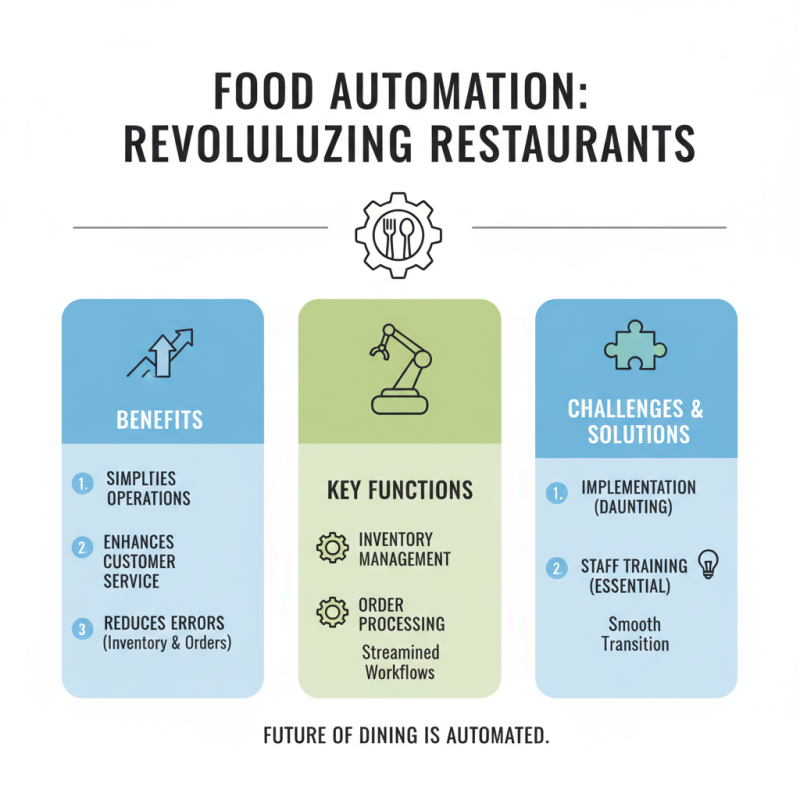
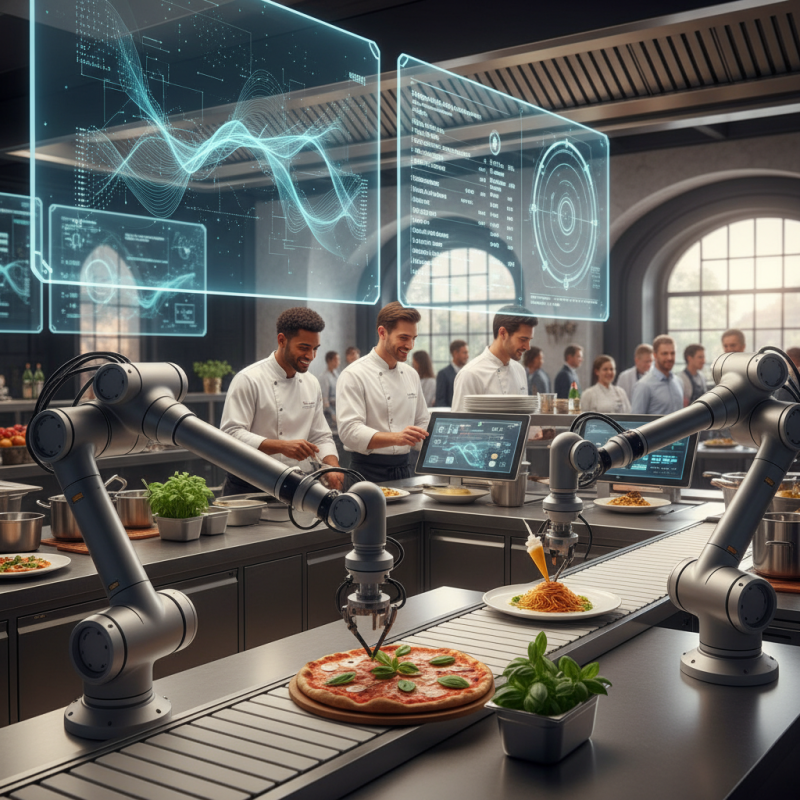
Food automation is transforming modern restaurants in significant ways. It simplifies daily operations, allowing staff to focus on customer service. Tasks such as inventory management and order processing can be automated. This reduces human error and streamlines workflows. However, implementing such technology can be daunting. Staff training becomes essential to ensure smooth transitions.
Operational efficiency is a key benefit of food automation. Automated systems can manage kitchen tasks with precision, reducing food waste. Automated cooking equipment can deliver consistent results, enhancing food quality. Yet, reliance on technology may pose challenges. If systems fail, downtime could disrupt service. Restaurants need contingency plans to address these potential issues.
Furthermore, customer experiences can improve through automation. Quick order taking or payment processes can enhance satisfaction. But there's a risk of losing the personal touch. Balancing automation with human interaction is crucial. Many guests still value personal connections. Thus, while food automation offers benefits, it also demands careful consideration.
Reducing Labor Costs: How Automation Minimizes Staffing Expenses
Food automation is transforming the restaurant industry, especially regarding labor costs. By integrating advanced systems, restaurants can streamline many processes. Automated cooking equipment and ordering systems can significantly reduce the need for extensive staff. This means fewer salaries, benefits, and training expenses. Additionally, such technology minimizes human error, creating a smoother workflow.
Many establishments are hesitant about automation due to initial costs and potential workforce disruption. Some worry that technology can't replicate the human touch. Yet, with the right approach, automation can enhance service rather than replace it. Employees can focus on customer engagement and high-quality food preparation. They can handle tasks requiring creativity and care while letting machines handle repetitive tasks.
Despite potential concerns, this shift can lead to greater efficiency. It opens the door to reallocating resources. Still, there's a need for careful planning. The integration process must be smooth, ensuring that staff adapts to new systems efficiently. While the benefits are evident, striking the right balance between automation and personal interaction remains a critical challenge.
Improving Food Safety Standards Through Automated Processes
Automated processes in restaurants are reshaping food safety standards. A report from the Food Safety and Inspection Service highlights that nearly 48 million people in the U.S. get sick from foodborne illnesses each year. Automation helps reduce errors in food preparation and handling, leading to safer meals.
With automation, temperature control becomes precise. Sensors monitor cooking and storage temperatures, which minimizes the risk of bacterial growth. A 2020 survey by the National Restaurant Association found that 71% of restaurant owners believe automation enhances food safety. Automated systems can log data, creating a traceable history of food handling.
However, the implementation of automation isn't without challenges. Staff must be trained to use technology correctly. Misinformation can lead to unsafe practices. A balance must exist between tech reliance and human oversight. Though automation improves safety, ongoing staff engagement is vital. Continual assessment of automation processes is necessary to ensure they meet evolving food safety standards.
Top 10 Benefits of Food Automation for Modern Restaurants
This chart illustrates the top 10 benefits of food automation in modern restaurants, focusing on improvements in food safety standards through automated processes.
Increasing Customer Satisfaction with Consistent Food Quality
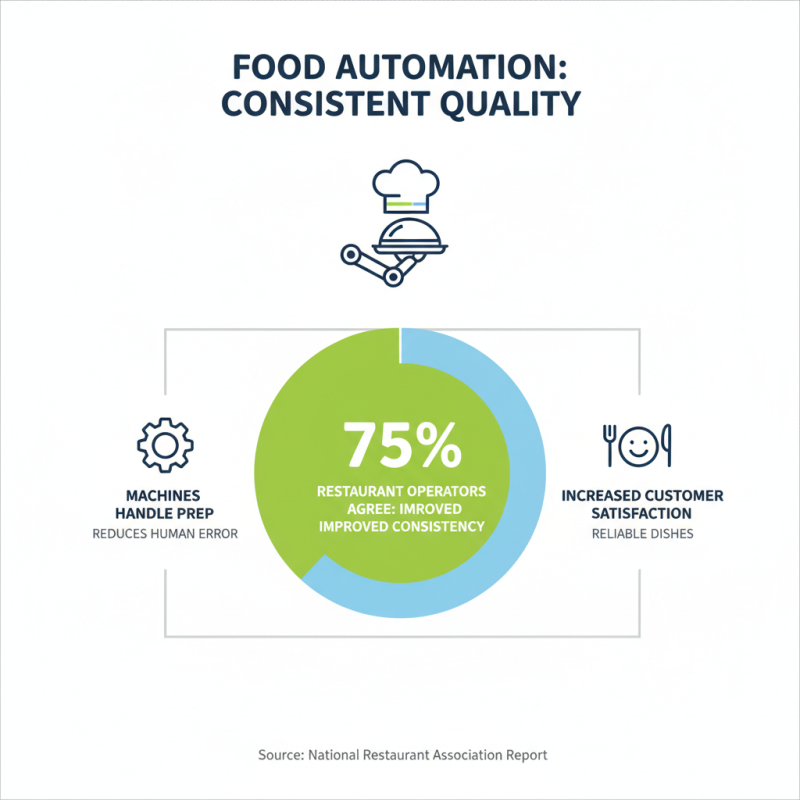
Food automation is transforming how restaurants ensure consistent quality. A report from the National Restaurant Association reveals that 75% of operators believe automation improves food consistency. With machines handling food preparation, human error diminishes significantly. This consistency increases customer satisfaction, as patrons can rely on their favorite dishes tasting the same each time.
However, automation isn't without its challenges. Some chefs worry that reliance on machines dulls culinary creativity. The American Culinary Federation highlights that a balance between technology and human touch is vital. Cooking is an art that thrives on passion and personal flair. While automation streamlines operations, it can also risk losing that unique restaurant identity.
Surprisingly, a study by Toast found that 60% of guests prefer restaurants with automated systems when it comes to order accuracy. This statistic underscores the benefits of adopting technology. Yet, restaurants must evaluate their approach. Too much automation may sideline the authentic dining experience, prompting reflection on where to draw the line. Finding the perfect blend remains essential for maintaining customer loyalty.
Leveraging Data Analytics for Inventory Management and Waste Reduction
Data analytics is a game-changer for inventory management in restaurants. With the right tools, restaurants can track ingredient usage and predict future needs. This prevents overordering and minimizes waste. For instance, by analyzing sales data, a restaurant can identify the most popular dishes. This insight allows for better purchasing decisions, reducing excess stock that often ends up in the trash.
Tips: Regularly review sales reports. Adjust your orders based on customer preferences. Use data to identify trends in food consumption.
Waste reduction also hinges on effective inventory control. Restaurants often overlook perishables, leading to spoilage. By utilizing analytics, establishments can monitor expiration dates and rotate stock efficiently. This approach helps maintain freshness while preventing food waste.
Tips: Create a stock rotation system. Implement a first-in, first-out method to manage perishable items. Regularly check inventory for unsold items and adjust accordingly.
Top 10 Benefits of Food Automation for Modern Restaurants
| Benefit |
Description |
Impact |
| Enhanced Inventory Management |
Automation helps track inventory levels in real-time. |
Reduces excess inventory and improves cash flow. |
| Waste Reduction |
Analyzing data allows for better forecasting and minimized waste. |
Lowers food costs and increases profitability. |
| Improved Customer Experience |
Faster service through automation of orders and payments. |
Enhances customer satisfaction and loyalty. |
| Increased Efficiency |
Automation streamlines operations, reducing manual labor. |
Improves overall productivity and operational costs. |
| Data-Driven Decisions |
Analytical insights lead to informed menu and pricing strategies. |
Maximizes revenue opportunities based on customer preferences. |
| Predictive Analytics |
Forecasting future trends to optimize menu offerings. |
Enhances alignment with customer demands and seasonal changes. |
| Menu Optimization |
Identifying popular dishes through sales data helps optimize offerings. |
Increases sales of high-demand items, reducing slow-moving stock. |
| Cost Savings |
Automation can lower labor costs and decrease errors. |
Improves bottom line through reduced operational expenses. |
| Better Compliance |
Automated systems help ensure food safety and standards compliance. |
Reduces risks of violations and potential fines. |
| Sustainability Initiatives |
Focus on reducing food waste aligns with sustainability goals. |
Attracts eco-conscious customers and improves brand image. |