China Top 10 Automation Laboratory Equipment Suppliers?
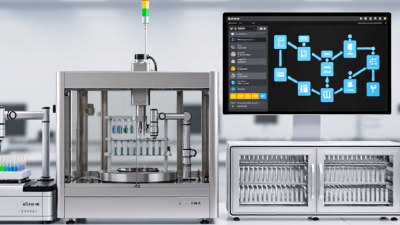
China’s laboratory equipment sector is changing quickly. Automation now reaches sample preparation, liquid handling, analytical testing, storage, and laboratory data management. This article examines China’s top 10 automation laboratory equipment suppliers through practical purchasing criteria. These include product reliability, integration capability, regulatory support, after-sales service, and application expertise.
Industry data shows why this market deserves careful attention. The International Federation of Robotics reported 541,302 industrial robots installed worldwide in 2023. Although that figure declined from the previous year, laboratory automation continues expanding through pharmaceutical research, clinical diagnostics, food testing, and biotechnology. MarketsandMarkets has also projected sustained growth for the laboratory automation market, supported by rising testing volumes and pressure to reduce manual errors. Different reports provide different market values. That inconsistency matters. Buyers should examine definitions, regions, and equipment categories before trusting a headline number.
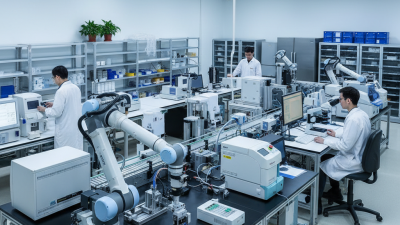
Dr. Richard Eglen, a recognized laboratory technology and SLAS expert, has emphasized, “The future of life science research depends on connected, automated workflows.” His point remains practical. A robot alone does not create a reliable automation laboratory. The surrounding software, calibrated instruments, validated methods, and trained operators determine real performance. Picture a busy Chinese laboratory at 8:00 a.m.: barcode readers identify samples, robotic arms transfer liquids, and dashboards record every movement. Small failures still occur. Gripper alignment, incompatible plates, or weak local service can interrupt an entire workflow. Therefore, this ranking considers more than price or production scale. It also reflects evidence from technical documentation, customer support, certifications, and deployment experience. Some conclusions may require further verification, especially when suppliers disclose limited performance data.
What Is Laboratory Automation Equipment?
What Is Laboratory Automation Equipment?
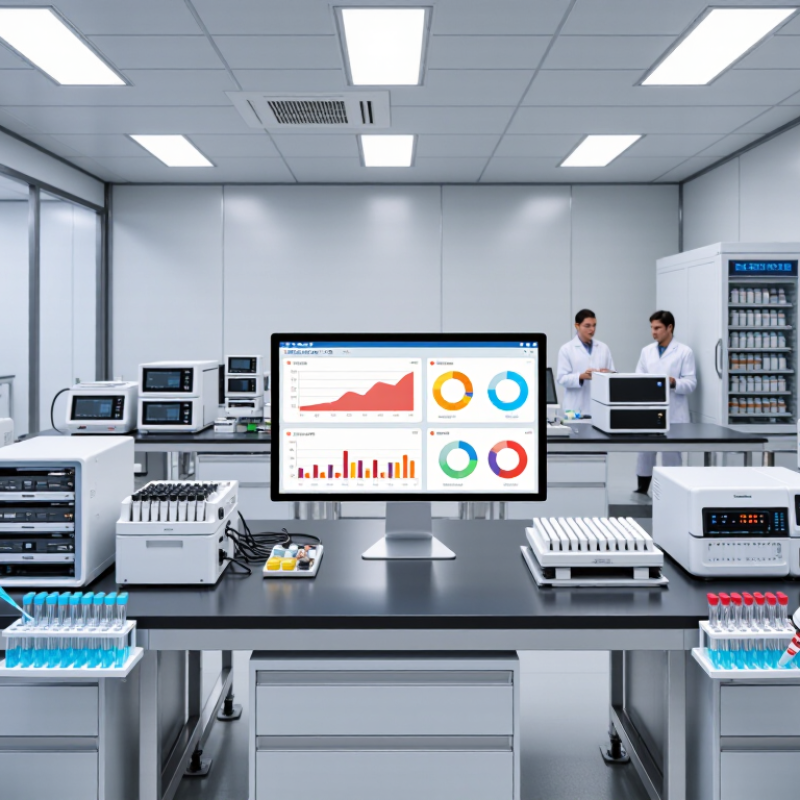
Laboratory automation equipment combines instruments, software, robotics, and data systems to perform repetitive testing tasks. It can move tubes, prepare samples, add reagents, read results, and record data. A typical workflow may include barcode scanning, liquid handling, centrifugation, and automated analysis. These systems support clinical, pharmaceutical, environmental, and research laboratories.
The value is practical. Automation can reduce manual pipetting errors, improve traceability, and process more samples per shift. Grand View Research estimated the global laboratory automation market at about USD 5.3 billion in 2023, with continued growth through 2030. Market estimates differ because suppliers define “automation” differently. That difference deserves attention. Equipment alone does not create a reliable laboratory. Staff training, validated methods, clean maintenance records, and compatible software remain essential. In my experience, a poorly labeled tube can defeat an expensive automated workflow.
Tips: Map the full process before purchasing. Measure sample volume, turnaround time, error rates, and required integration. Ask whether the system supports your tube sizes, laboratory information system, and quality procedures. Request real workflow demonstrations, not only brochures. Check service response times and spare-part availability in your region. A lower purchase price may hide higher maintenance costs. Pilot testing is wiser than trusting impressive specifications.
How to Identify China’s Top 10 Automation Equipment Suppliers
Identifying China’s top ten automation laboratory equipment suppliers requires more than comparing catalog prices. A polished website is only a starting point. Define the equipment first, including liquid handling units, robotic arms, testing systems, and sample preparation platforms. The right supplier should match your laboratory’s workload, accuracy targets, and floor space.
Request technical drawings, live operation videos, and recent installation references. Ask how the supplier controls calibration, software updates, and spare-part availability. Experienced suppliers can explain cycle time, repeatability, error recovery, and maintenance intervals without hiding behind vague marketing language. Check whether engineers provide factory acceptance testing and on-site commissioning.
Evidence matters. Review quality certificates, export records, customer feedback, and documented service procedures. A factory audit can reveal assembly conditions, inspection tools, and staff training levels. Speak with two or three existing users, preferably from laboratories with similar applications. Their comments may expose delays that sales materials never mention. Request a clear quotation covering installation, training, packaging, warranty limits, and future modifications.
Do not rank suppliers by price alone.
Score each candidate against technical capability, production capacity, response time, compliance documentation, and total ownership cost. A supplier may offer impressive automation but lack reliable software support. I have found that small details, such as connector standards and response time during faults, often influence long-term performance. The ranking should remain adjustable after sample testing, because early assumptions can be wrong.
Key Product Categories and Automation Technologies
China’s top automation laboratory equipment suppliers typically cover several product categories. These include liquid-handling workstations, robotic arms, sample storage systems, centrifuges, analyzers, and laboratory information interfaces. Each category solves a different workflow problem. A liquid handler may improve pipetting consistency, while automated storage reduces repeated manual searching. In real commissioning work, compatibility often matters more than a long feature list. A fast robot is less useful when its gripper cannot safely hold standard plates.
Automation technologies now include machine vision, barcode tracking, robotic motion control, and programmable scheduling. Vision systems can check tube positions and detect missing consumables. Barcode systems create clearer sample traceability. Integrated software connects instruments, records actions, and flags process errors. However, integration is rarely perfect. Small delays between devices can interrupt an otherwise efficient workflow. Reliable suppliers should provide validation documents, operator training, maintenance plans, and measurable performance data. Independent testing remains important.
Tips: Define the sample volume, plate format, and daily workload before contacting suppliers. Request a live demonstration using containers similar to yours. Check cleaning access, alarm handling, data security, and recovery after power loss. Ask how quickly spare parts and technical support can be delivered. Do not judge automation by appearance alone. A polished interface can still hide weak process control. In my experience, simple workflows are often more reliable than ambitious systems with poorly tested connections.
China Laboratory Automation Equipment: Key Product Categories and Technologies
Relative automation-integration score by product category, based on commonly deployed laboratory workflow technologies. The index ranges from 0 to 100 and does not represent company or brand performance.
Liquid handling and sample preparation typically achieve the highest automation levels because they support robotic movement, programmable workflows, barcode tracking, and LIMS connectivity. Analytical instruments and cold-chain systems are also increasingly integrated through digital interfaces, sensors, and remote monitoring.
Profiles of the Top 10 Chinese Laboratory Equipment Suppliers
China Top 10 Automation Laboratory Equipment Suppliers
The leading ten Chinese laboratory equipment suppliers reflect a broad, practical ecosystem. Their profiles span automated liquid handlers, robotic arms, sample preparation stations, centrifuge systems, laboratory conveyors, and integrated software. Some focus on high-throughput pharmaceutical workflows. Others serve hospitals, universities, food testing laboratories, or industrial quality control. This variety matters because one platform rarely fits every laboratory.
Industry data supports this expansion. The International Federation of Robotics reported 276,288 industrial robot installations in China during 2023. That represented about 51% of global installations. MarketsandMarkets estimated the global laboratory automation market at roughly 5 billion US dollars in 2024. Its report also forecasts continued growth through 2029. These figures do not prove that every supplier offers mature laboratory solutions. They do show strong demand for automation skills, precision components, and dependable integration.
A useful supplier profile should examine more than equipment photographs. The ten companies should be compared through pipetting accuracy, sample traceability, software compatibility, maintenance response, and validation support. Several Chinese manufacturers offer modular systems with stainless-steel frames and barcode readers. Others provide customized robotic workcells for limited bench space. In practice, integration quality can decide success. A fast robot is not enough. Some suppliers still need clearer documentation and stronger overseas service networks. That weakness deserves honest attention. Buyers should request test records, installation references, and realistic throughput data before purchasing.
How to Evaluate Suppliers for Your Laboratory Needs
China Top 10 Automation Laboratory Equipment Suppliers?
Choosing laboratory automation equipment requires more than comparing prices. A suitable supplier should match your sample types, testing volume, workflow, and compliance needs. MarketsandMarkets reported that the laboratory automation market may reach about USD 8.5 billion by 2028, showing strong investment in automated workflows. However, market growth does not guarantee equipment suitability.
Ask suppliers to demonstrate your real process. Use representative tubes, plates, reagents, and barcode formats. Measure pipetting accuracy, carryover, cycle time, and recovery after minor errors. A polished demonstration can hide practical weaknesses. Service matters. Request documented response times, spare-parts availability, installation procedures, and operator training. ISO/IEC 17025 principles also support traceable measurements and controlled technical processes, even when the supplier is not an accredited testing laboratory.
Review data handling carefully. The system should record user actions, instrument status, calibration events, and failed runs. Check whether it connects with your laboratory information system through stable interfaces. Calculate total cost, including consumables, maintenance, validation, software updates, and downtime. Fortune Business Insights estimates continued expansion in laboratory automation through 2030, but forecasts differ by research method. That uncertainty deserves attention. A lower quotation may become expensive when integration takes months. Require a pilot, acceptance criteria, and written performance evidence before purchase. Measure the boring parts.