
TRI-PHASEI-TECHAutomation Solutions of WI
China Top 10 Cooler Refrigeration Unit Manufacturers

China Top 10 Cooler Refrigeration Unit Manufacturers

China has become a significant source of commercial and industrial cooling equipment. Its manufacturers serve supermarkets, food processors, logistics fleets, cold rooms, and pharmaceutical facilities. This guide examines ten leading Chinese Cooler Refrigeration Unit manufacturers and the capabilities behind their market reputation.

The selection considers engineering experience, production consistency, product range, service coverage, and documented quality practices. It also reviews compressor options, condenser design, controller accuracy, energy performance, noise levels, and operating stability. These details matter when a unit runs through humid summers, dusty loading areas, or long delivery routes. A reliable supplier should provide clear technical data, installation guidance, spare parts, and responsive after-sales support. Certifications and refrigerant compliance also deserve careful verification before purchase.

No ranking is permanently perfect. Manufacturer strengths can change with factory capacity, component sourcing, export experience, and customer support. Some companies excel in truck refrigeration, while others focus on cold storage or retail display systems. Buyers should compare cooling capacity, temperature range, ambient conditions, warranty terms, and maintenance access. A lower purchase price may become expensive when compressors, fans, or control boards fail early. That risk is easy to overlook.

The manufacturers discussed here are presented as practical candidates, not automatic choices. Independent testing and direct supplier communication remain essential. Real performance depends on correct sizing, installation, airflow, insulation, and regular maintenance. This introduction provides a starting point for a more informed comparison of China’s Cooler Refrigeration Unit industry.
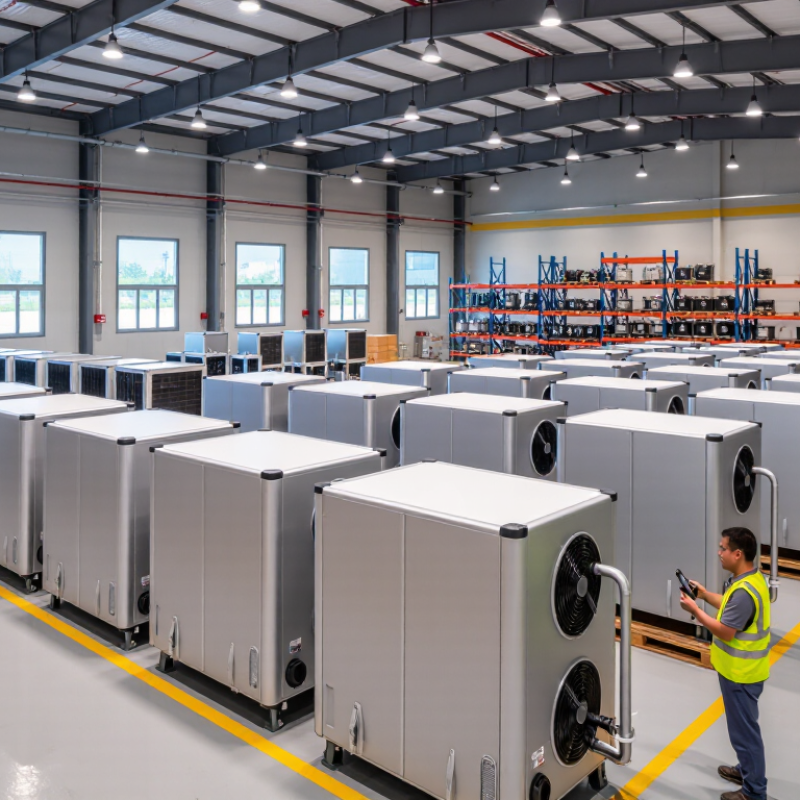
China Top 10 Cooler Refrigeration Unit Manufacturers

What Are Cooler Refrigeration Units and How Do They Work?

Cooler refrigeration units keep enclosed spaces cold by removing heat, not by creating cold air. They serve display cases, cold rooms, transport boxes, and commercial storage areas. A typical unit includes a compressor, condenser, expansion device, evaporator, fan, thermostat, and control panel. Each part has a clear task.

The compressor raises the refrigerant’s pressure and temperature. The hot refrigerant then flows through the condenser, where outdoor air removes heat. It becomes a high-pressure liquid. The expansion device reduces its pressure, making the refrigerant cold. Inside the evaporator, it absorbs heat from the cooler space. The fan moves air across the coil. The cycle repeats.

That is the basic process.

In service inspections, technicians often check coil cleanliness, airflow, refrigerant pressure, door seals, and unusual compressor noise. A blocked condenser can increase energy use quickly. Poor airflow may create warm corners, even when the thermostat shows a safe reading. Temperature stability matters more than a short burst of extreme cooling. Selection also requires attention to room size, insulation, ambient temperature, humidity, and loading habits.

A larger unit is not always better. It may cycle too frequently and waste power. Small units can also struggle during busy periods. The calculation is rarely perfect without site data. This is where practical testing matters. Log temperatures at different shelves and times. Then adjust settings based on evidence, not appearance.

Typical Cooler Refrigeration Storage Temperature Ranges

Cooler refrigeration units remove heat from an insulated space by circulating refrigerant through an evaporator, compressor, condenser, and expansion device. The chart shows commonly used storage temperature ranges for different cooled products; actual settings depend on product requirements, humidity, loading conditions, and local food-safety regulations.

Key Criteria for Evaluating Chinese Refrigeration Unit Manufacturers

Evaluating Chinese refrigeration unit manufacturers requires more than comparing quotations. The IEA’s The Future of Cooling reports that cooling demand could more than triple by 2050. Efficiency is therefore a commercial and environmental issue. Request verified COP or EER data at matching conditions, such as 35°C ambient temperature and a 7°C box temperature. Different test points can make identical figures misleading.

Factory evidence matters. Ask for factory acceptance records, compressor test results, leak checks, and component traceability. A serious supplier should explain its refrigerant choice, oil compatibility, defrost control, and low-ambient performance. The 2023 UNEP-led Global Cooling Watch report estimates that efficient cooling could reduce projected 2050 cooling emissions by 68%. That makes lifecycle performance more valuable than a low purchase price. Review ISO certificates, but verify their scope and validity with the issuing body.

Service capability is less visible. It still decides uptime. Check spare-parts stock, response times, remote monitoring, and technician training in your market. Test a pilot unit for energy use, noise, temperature stability, and restart behavior after a power interruption. One weakness remains: supplier data may come from ideal laboratory conditions. Independent testing is worth the cost. Also inspect a running production line, not only a prepared showroom. Real evidence can look less polished. That is often more useful.

China Top 10 Cooler Refrigeration Unit Manufacturers - Key Criteria for Evaluating Chinese Refrigeration Unit Manufacturers

No. Evaluation Dimension What to Verify Relevant Technical Reference Recommended Weight Strong-Supplier Indicator
1 Cooling Capacity Accuracy Check whether rated capacity is supported by test data under clearly stated evaporating, condensing, ambient-temperature, and refrigerant conditions. AHRI 540; ISO 5149; applicable national testing procedures 15% Capacity tables include operating conditions and test tolerances
2 Energy Efficiency Compare COP, EER, SEER, input power, compressor efficiency, fan power, and part-load performance for the intended duty cycle. ISO 16358; EN 14511; local energy-efficiency requirements 15% Provides full-load and part-load energy data
3 Operating Temperature Range Confirm stable operation in the required ambient and evaporating-temperature ranges, including high-ambient and low-temperature applications. Project specification; ISO 5149; equipment performance test data 10% Range is documented with derating data
4 Refrigerant Compatibility Verify compatibility with the specified refrigerant, oil, seals, valves, compressor, and system pressure requirements. ASHRAE 34; ISO 5149; EN 378; applicable refrigerant regulations 10% Refrigerant charge, safety class, and pressure limits are stated
5 Manufacturing Quality System Review process control, incoming inspection, brazing procedures, pressure testing, leak testing, traceability, and final inspection records. ISO 9001 quality-management principles; factory audit records 12% Documented inspection checkpoints and batch traceability
6 Safety and Compliance Check electrical safety, pressure-vessel protection, emergency controls, wiring quality, grounding, guarding, and required market approvals. IEC 60335; EN 378; ISO 5149; destination-market requirements 12% Provides valid certificates and product safety files
7 Customization Capability Evaluate options for voltage, frequency, compressor selection, control logic, enclosure, heat exchanger sizing, sound reduction, and installation layout. Approved drawings; technical change-control procedures 8% Supplies approved drawings before production
8 Reliability and Service Life Review component quality, endurance testing, vibration control, corrosion protection, maintenance intervals, and failure-rate records. Reliability test plans; preventive-maintenance documentation 8% Offers documented life-cycle and maintenance data
9 Delivery and Supply-Chain Control Assess standard lead time, production capacity, critical-component availability, packaging quality, spare-parts planning, and export documentation. Production plan; quality and logistics records; export documentation 5% Provides a realistic schedule and documented packing standard
10 After-Sales Technical Support Verify commissioning assistance, troubleshooting response, manuals, wiring diagrams, spare-parts availability, warranty terms, and training. Warranty policy; service-level agreement; technical documentation 5% Provides multilingual documentation and defined response procedures
Total Recommended Evaluation Weight 100% Use with project-specific requirements

China’s Top 10 Cooler Refrigeration Unit Manufacturers

China’s top 10 cooler refrigeration unit manufacturers serve supermarkets, cold rooms, food plants, and transport operators. Their strongest products usually combine compact structure, stable cooling, and efficient temperature control. Some focus on plug-in cooler units, while others build remote condensing systems for large facilities.

A reliable manufacturer should provide compressor data, refrigerant details, noise ratings, and tested cooling capacity. Factory experience matters. A unit designed for a humid coastal warehouse may need stronger corrosion protection than one used inland. Look for copper tubing, protected electrical panels, accessible filters, and clear maintenance instructions. These details affect daily service costs. Small details matter.

The leading ten manufacturers also differ in customization. Some adjust evaporator size for narrow cabinets. Others develop low-temperature systems for frozen storage or hot-climate operation. Buyers should verify performance at real ambient temperatures, not only laboratory conditions. Energy labels and test reports help, but paperwork can be incomplete. That deserves careful review. After-sales response is equally important, especially when a failed fan delays deliveries. Ask about spare parts, warranty handling, installation support, and technician training. A factory visit or live production inspection adds useful evidence. Claims should be checked against operating records, not accepted because they sound professional.

Product Range, Technologies, and Industry Applications

China Top 10 Cooler Refrigeration Unit Manufacturers

Product Range, Technologies, and Industry Applications

China’s leading cooler refrigeration manufacturers usually offer condensing units, compressor racks, air-cooled systems, and compact cold-room packages. Their product ranges cover small retail cabinets, medium storage rooms, and large distribution centers. Common compressor choices include scroll, semi-hermetic reciprocating, and screw designs. Selection depends on cooling load, operating temperature, and maintenance access.

Technology is becoming more practical. Variable-speed compressors reduce cycling during partial loads. Microchannel condensers can lower refrigerant volume and cabinet size. Electronic expansion valves improve control when product loads change quickly. Many units now include pressure sensors, remote alarms, and controller-based diagnostics. Low-global-warming-potential refrigerants are also influencing equipment design and service training.

Real performance still depends on installation quality. A well-designed unit can fail early when airflow is blocked or pipes are poorly insulated. Food processors use these systems for chilled rooms, blast cooling, and frozen storage. Retailers need quiet units with stable cabinet temperatures. Pharmaceutical facilities require tighter monitoring and documented calibration. Seafood plants often demand corrosion-resistant components and frequent washdown protection.

Factory testing may include leak checks, vibration inspection, electrical safety tests, and simulated load trials. However, catalogue data is not always enough. Buyers should verify performance at their actual ambient temperature and evaporation range. Energy savings can look impressive on paper, yet field conditions may expose weak controls, dirty condensers, or undersized wiring. A careful technical review remains essential.

How to Select the Right Chinese Manufacturer for Your Needs

China Top 10 Cooler Refrigeration Unit Manufacturers

How to Select the Right Chinese Manufacturer for Your Needs

Choosing a Chinese refrigeration unit manufacturer requires more than comparing online prices. Start with your cooling requirement, including room size, target temperature, ambient temperature, and daily operating hours. A reliable supplier should explain compressor selection, refrigerant options, energy use, and expected cooling capacity in clear technical language. Ask for product drawings, test records, factory photos, and references from similar projects. A polished website is not proof of engineering capability.

Factory verification matters. Review production equipment, quality checkpoints, pressure testing, electrical inspection, and final performance testing. Confirm whether the manufacturer can provide documentation and certifications relevant to your destination market. Discuss warranty terms, spare-part availability, installation guidance, and response times before signing an agreement. I once focused too heavily on the purchase price. That decision created delays when a small control component needed replacement. The cheaper option was not cheaper overall.

Tips: Send the same technical specification to several manufacturers. Compare cooling capacity under identical conditions, not just model numbers. Request a sample test or video inspection when practical. Check how carefully the sales engineer answers difficult questions. Vague replies may indicate weak technical support. Also confirm packaging details, delivery responsibilities, and acceptance standards in writing. Leave room for review; even a well-prepared specification can miss site conditions such as poor ventilation, voltage fluctuation, or frequent door opening.