Why Choose Industrial Automation for Your Business Needs?
In today's rapidly evolving industrial landscape, businesses increasingly turn to industrial automation. Experts like Dr. Amy Smith, a leading authority in automation technology, assert, "Automation drives efficiency, reduces costs, and enhances production quality." This insight highlights the transformative potential of industrial automation and its growing relevance across various sectors.
As companies strive for efficiency, industrial automation emerges as a vital strategy. By integrating automated systems, businesses can streamline operations, reduce human error, and improve safety standards. Industries from manufacturing to logistics benefit immensely. This shift not only meets current demand but also prepares companies for future challenges.
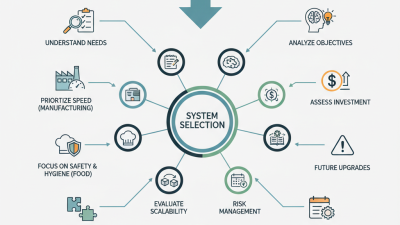
However, the journey toward adopting industrial automation is not without hurdles. Many organizations face initial resistance and require significant upfront investments. Businesses must evaluate their unique needs and consider the long-term advantages. Embracing industrial automation is essential, but it demands careful planning and a commitment to innovation.
Advantages of Industrial Automation for Increased Efficiency
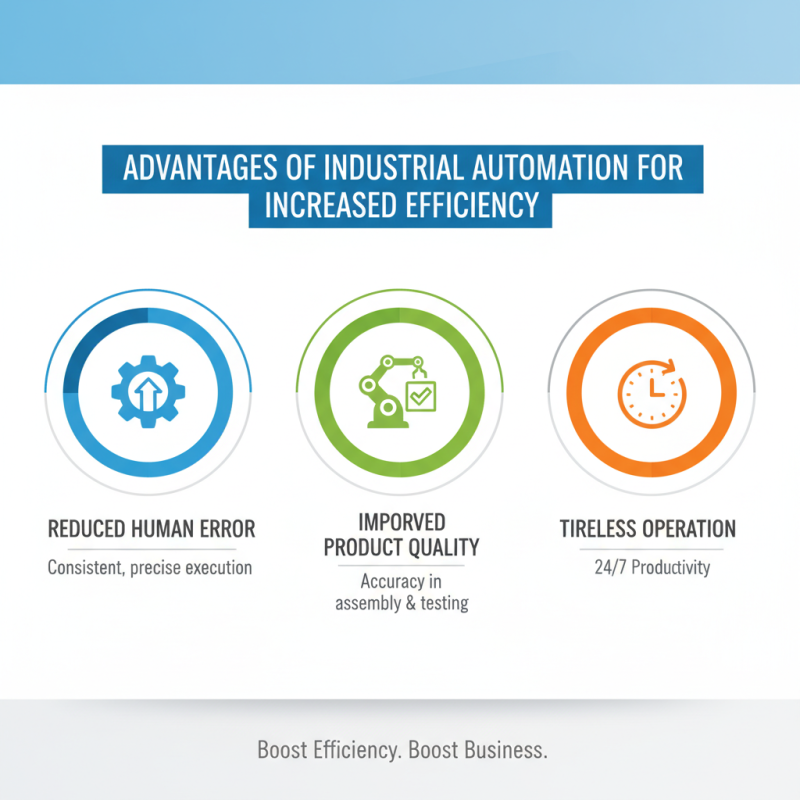
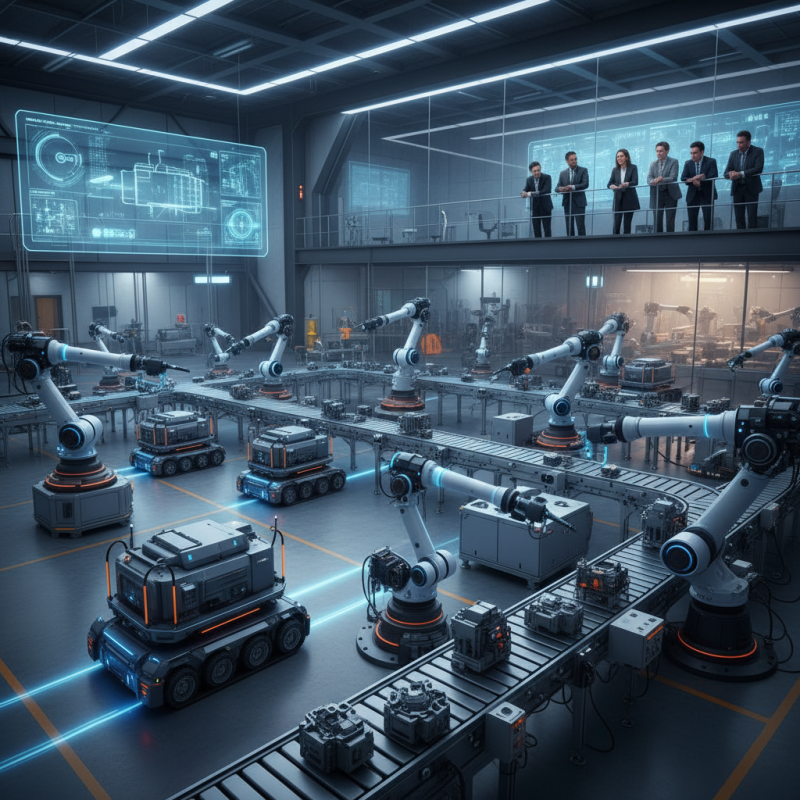
Industrial automation has become a cornerstone for businesses aiming to boost efficiency. By automating repetitive tasks, companies can reduce human error. For example, robotic arms in assembly lines can work tirelessly. They maintain accuracy, which directly impacts product quality.
Another advantage is the optimal use of resources. Automation ensures that machines run at peak performance with minimal downtime. This leads to significant cost savings. Real-time data collection also allows for quick adjustments in production processes. However, the transition to automation can be challenging. Employees may resist change, fearing job loss. Effective training can help ease this concern.
Moreover, integrating automation can reveal inefficiencies in current workflows. Identifying weak points allows for strategic improvements. Not all companies will succeed in this shift instantly. It takes time to adapt and refine automated processes. Yet, the potential rewards are substantial for those who persevere and innovate.
Cost Savings Through Industrial Automation Implementation
Industrial automation can significantly cut costs for businesses. By streamlining production processes, companies can reduce labor expenses. Robots and automated systems work tirelessly. They can operate without breaks or downtime. This kind of efficiency often leads to higher output and reduced waste.
Consider a factory that implements advanced automation. The initial investment might be high, but savings will follow. Over time, maintenance costs can be lower than labor costs. Additionally, automation minimizes human error. A small mistake in manual handling can lead to major financial losses. This risk diminishes with automated processes.
However, businesses must weigh the initial costs against savings. Not every company can afford a full transition at once. It's essential to assess the specific needs and potential return on investment. Tailoring solutions to fit unique situations often brings the best outcomes. The journey to automation may have its challenges, but the financial benefits can be substantial.
Enhancing Quality Control with Automation Solutions
Quality control is a critical aspect of any manufacturing process. Industrial automation offers effective solutions to enhance this vital function. With precision sensors and automated inspection systems, businesses can monitor production in real-time. This ensures that every product meets established standards.
Automation solutions reduce the likelihood of human error. However, they are not infallible. Machines can sometimes misread data or overlook defects. Regular maintenance and updates are essential to maintain reliability. Companies need to balance automation with human oversight for optimal results. By fostering collaboration between technology and skilled workers, businesses can achieve superior quality control.
Investing in automation technology requires careful consideration. It's essential to assess the specific needs of your operations. Not all automation systems are equally effective for different industries. Evaluate long-term benefits against initial costs. When done right, the integration of automation can lead to significant improvements in quality control, boosting overall productivity.
Quality Control Improvement through Industrial Automation
Scalability and Flexibility in Automated Business Processes
In recent years, industrial automation has gained traction across various sectors.
Scalability and flexibility are two crucial components that attract businesses to this technology.
A report by McKinsey indicates that companies implementing automation can improve productivity by 40% on average. Such statistics highlight the potential for businesses to grow without the proportional increase in resources.
Flexibility in automated processes allows businesses to quickly adapt to changing market demands.
Automation systems can be reconfigured to handle different tasks. Companies can introduce new products or alter production lines with minimal downtime. The capability to pivot quickly ensures that businesses remain competitive, especially in fast-moving industries.
However, not all businesses see the same success.
Some struggle with integrating these systems effectively.
A study by Deloitte reveals that 28% of organizations reported a lack of skills as the main barrier to automation.
Companies must address these gaps to fully leverage automation's capabilities.
Investing in employee training and development can foster a smoother transition and greater efficiency in automated workflows.
Future Trends in Industrial Automation Technology and Its Impacts
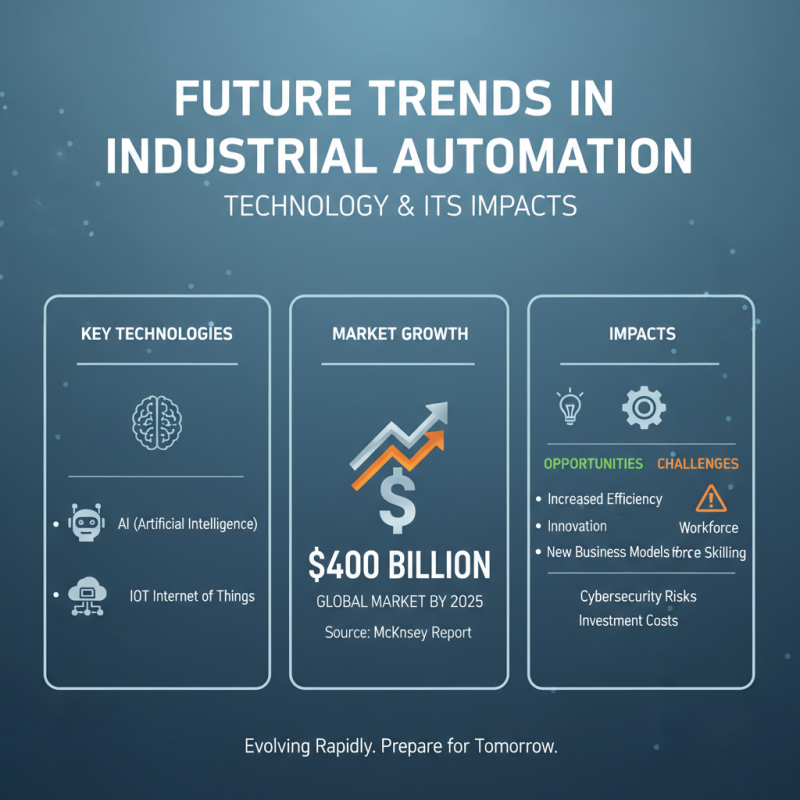
The landscape of industrial automation is evolving rapidly. Emerging technologies, such as AI and IoT, are shaping the future. A recent report from McKinsey indicates that the global industrial automation market could reach $400 billion by 2025. This growth presents opportunities and challenges for businesses.
Automation improves efficiency, yet it sometimes leads to workforce displacement. A projected 20 million manufacturing jobs could be automated by 2030, according to Oxford Economics. This raises concerns about unemployment in certain sectors. However, it also creates new roles in programming and maintenance. Companies must balance these dynamics to thrive.
Integrating automation also demands investments in cybersecurity and training. Gartner estimates that 60% of organizations will prioritize cybersecurity as part of their automation strategy by 2024. Keeping systems secure is vital as data breaches can have severe consequences. Organizations should focus on continuous learning to adapt to these changes. The path forward is not entirely clear, but the trajectory is undeniable.