How to Choose the Right Automation Control Systems for Your Business?
In today's competitive landscape, choosing the right automation control systems is crucial for business efficiency. Research indicates that automation can boost productivity by up to 30%. This significant increase arises from streamlined processes and reduced human error. However, many businesses struggle with selecting the appropriate system that aligns with their needs.
A recent report by McKinsey highlights that over 60% of companies fail to maximize the potential of their automation investments. Inadequate understanding of specific requirements often leads to mismatched systems. Issues such as integration with existing infrastructure and scalability should be evaluated carefully. These factors can determine the long-term success of automation control systems.
Reflecting on past implementations reveals that not all solutions provide the expected results. Businesses must adopt a critical approach when assessing their options. Engaging with industry experts and analyzing case studies can provide insight. This method fosters informed decision-making, ultimately enhancing operational efficiency. Choosing the right automation system can redefine a company’s trajectory in the market.

Understanding Automation Control Systems and Their Importance
Automation control systems are essential for modern businesses. They streamline operations, enhance efficiency, and reduce errors. According to a report by the International Society of Automation, companies can see a productivity increase of up to 30% when implementing these systems effectively. Understanding their importance is crucial for any organization aiming for growth.
Automation control systems help reduce operational costs and increase profitability. A McKinsey report indicates that automation could contribute up to $1.2 trillion yearly to the global economy. This data emphasizes how critical it is for businesses to adapt to new technologies. However, choosing the right system involves challenges. Many companies struggle to align automation with their specific needs. Improper integration can lead to wasted resources and missed opportunities.
Investing in the right automation technology is not just about immediate gains. It requires a thorough analysis of current workflows and future goals. Businesses must also consider scalability. The right automation control system should grow with the company, accommodating evolving processes. Evaluating industry standards and consulting experts in automation can help navigate this complex landscape. Balancing effectiveness and cost is key for sustainable success.
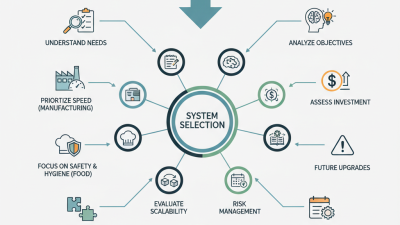
How to Choose the Right Automation Control Systems for Your Business?
| Dimension |
Description |
Importance Level |
| Scalability |
Ability to expand the system as the business grows |
High |
| Integration |
Compatibility with existing systems and processes |
Medium |
| Cost |
Total cost of ownership including installation and maintenance |
High |
| User-Friendliness |
Ease of use for operators and managers |
Medium |
| Support and Maintenance |
Availability of technical support and regular updates |
High |
| Data Security |
Measures in place to protect sensitive information |
High |
| Flexibility |
Ability to adapt the system for various processes |
Medium |
Identifying Your Business Needs and Objectives for Automation
Identifying your business needs and objectives for automation is crucial. A recent report by McKinsey highlights that 70% of companies struggle with adopting automation effectively. This indicates a significant gap between potential and implementation. Understanding specific pain points in your operations is essential. Businesses must assess current manual processes and pinpoint inefficiencies. Focus on areas where automation can provide relief, such as repetitive tasks that consume resources.
Establish clear objectives for automation. Consider how it aligns with your business goals. Are you aiming to reduce operational costs? Improve accuracy? A survey by Deloitte shows that companies with defined automation objectives experience a 30% higher success rate in implementation. Setting measurable goals helps track progress. Regularly re-evaluating these objectives remains vital. Adaptation is necessary as business needs evolve.
It’s also important to engage employees in the conversation. Resistance to change can hinder automation efforts. Address their concerns and gather input on processes. Understanding the workforce's perspective fosters smoother transitions. Automation should enhance, not replace, human roles. Automation's evolution requires an iterative approach, transparent communication, and ongoing training. Such strategies increase acceptance and empower teams, driving successful outcomes.
Evaluating Different Types of Automation Control Systems
When evaluating different types of automation control systems, it's essential to consider your specific business needs. Various systems are designed for different applications.
For example, a simple programmable logic controller (PLC) might suffice for straightforward tasks. However, a more complex distributed control system (DCS) may be necessary for large industrial processes. Understanding what your operation requires is crucial.
The scalability of the system is another important factor. As your business grows, your automation needs may change. Some systems are modular, allowing for easy upgrades. Others might require complete overhauls when adapting to new demands. A system that does not scale can limit your operational capabilities and hinder growth. It's worth reflecting on whether the system you choose today will serve you well in the future.
User-friendliness should not be overlooked. Systems that are difficult to operate can lead to inefficiencies. Staff training can be costly and time-consuming. Additionally, consider the support structure available for the system. Lack of proper documentation or customer support can lead to frustration and downtime. Evaluating these factors can help you make an informed decision that aligns with your operational goals.
Key Features to Consider When Choosing a Control System
When selecting the right automation control system, key features are essential to consider. One critical aspect is scalability. Your business might grow rapidly, so the chosen system should adapt to increased demands. An effective control system can accommodate more devices, sensors, and expanded functionalities. It's crucial to ensure that the solution can evolve without significant additional costs.
Another significant feature is user-friendliness. A control system should be intuitive for operators to navigate. Complex interfaces can lead to errors and inefficiencies. Look for systems with clear displays and straightforward commands. Training staff on intricate systems can be time-consuming and costly. A simpler solution often yields better results.
Communication capabilities are also vital. Systems should support various protocols to integrate seamlessly with existing infrastructure. This flexibility prevents the need for extensive overhauls. Systems that offer real-time data monitoring allow for prompt responses to issues. While sophisticated technology is beneficial, rely on solutions that enhance your operations without causing confusion or frustration among users.
Assessing Integration and Scalability Options for Future Growth
When selecting automation control systems, evaluating integration and scalability is vital. Businesses grow and change, so systems must adapt. A flexible solution can make all the difference. Ensure your system can connect with existing infrastructure. Look for compatibility with current tools and platforms. This promotes smoother operations and minimizes disruptions.
Consider how scalability aligns with your future goals. Systems should not only meet current demands but handle increased workloads too. Evaluate options that allow for easy expansions. Having a scalable system helps accommodate growth without costly overhauls. It’s essential to understand your business's trajectory before making a decision.
Reflect on your choice frequently. What works today might not be sufficient tomorrow. Stay informed about advancements in technology. Being proactive helps you avoid falling behind. Regularly assess how well your system supports your objectives. Blending current needs with future potential is challenging yet rewarding. A thoughtful approach can lead to lasting benefits for your organization.