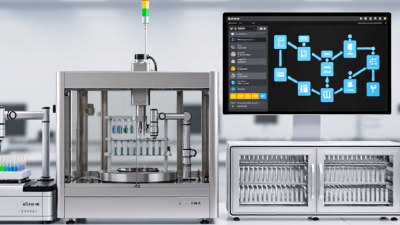
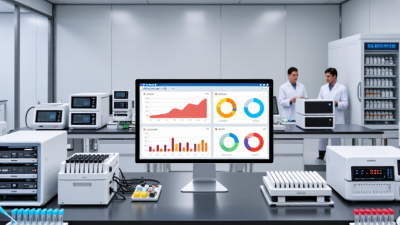
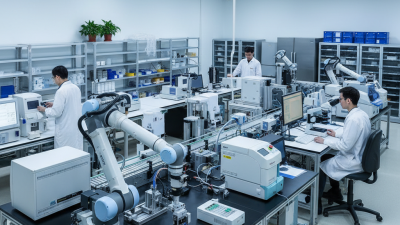
Choosing the right automation laboratory equipment is not simply a purchasing exercise. It is a decision about data quality, workflow continuity, operator safety, and future capacity. A modern automation laboratory may include liquid handlers, robotic arms, automated incubators, plate readers, barcode systems, and laboratory information management software. These components must work together, not merely look impressive in a product brochure.
Industry evidence supports careful planning. The International Federation of Robotics reported continued growth in professional service robots, including systems used in laboratory and medical environments. MarketsandMarkets has also projected strong expansion in the laboratory automation market, driven by higher testing volumes, labor shortages, and demand for repeatable results. However, market growth does not guarantee a suitable purchase. A fast robot can still create bottlenecks if its gripper cannot handle existing microplates. Small details matter.
Think about the bench at 8:00 a.m. Samples arrive together. Operators scan labels, transfer liquids, monitor alarms, and review results. Where does delay occur? That answer should guide equipment selection more than a general automation trend. Laboratories should examine throughput, liquid-handling accuracy, deck capacity, integration options, cleaning requirements, and service response times. Validation support is equally important, especially where ISO/IEC 17025 principles, quality management procedures, or electronic record controls apply.
There is no perfect platform.
A reliable evaluation also includes total ownership cost. This covers installation, consumables, software licenses, calibration, training, downtime, and future upgrades. Vendor demonstrations are useful, but they can be too polished. Ask to test representative samples, difficult volumes, real barcodes, and actual reporting workflows. The best automation laboratory solution is not always the most sophisticated one. It is the system that remains accurate, maintainable, compliant, and practical when daily work becomes unpredictable.
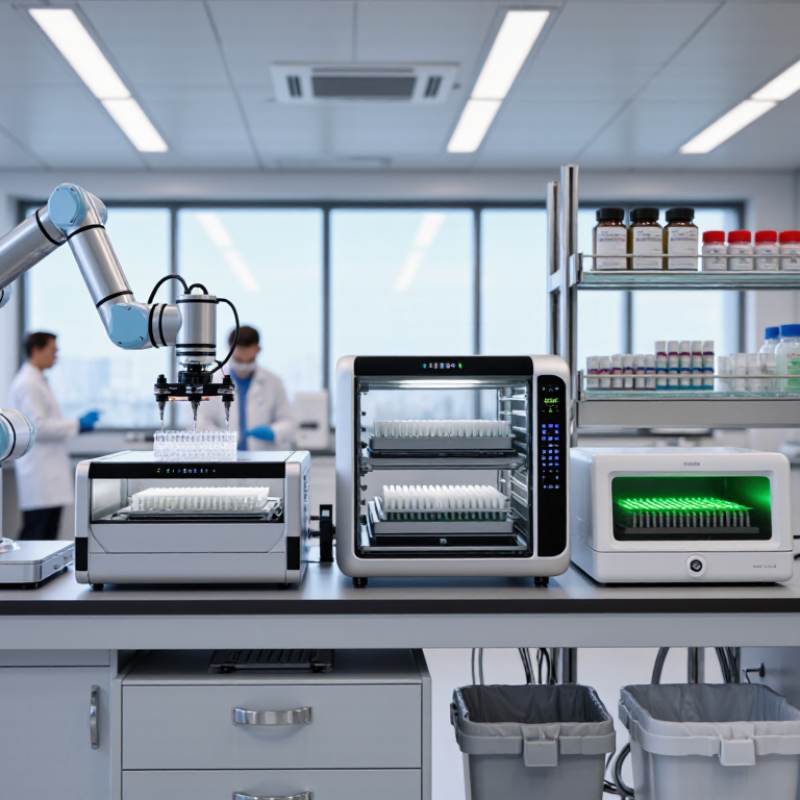
Before selecting automation laboratory equipment, describe the actual work in detail. Identify each sample type, preparation step, transfer volume, and required testing frequency. A vague goal such as “increase efficiency” is not enough. Define measurable targets, including throughput, precision, turnaround time, and acceptable error rates.
I have seen projects fail because teams automated a complicated workflow too early. The equipment performed well, but the process itself was poorly designed. Map the workflow from sample arrival to result recording. Mark repetitive movements, waiting periods, contamination risks, and manual decisions. Then decide which tasks require full automation and which still need trained human oversight. This reflection may reveal that a simpler system is safer and more practical.
Tips: Write the workflow as a step-by-step task list. Record real operating times for several working days. Include unusual samples and cleaning procedures. Check whether staff can maintain the equipment without specialized support. Leave space for future tests, but do not pay for capacity you cannot justify. A small pilot run can expose hidden problems before a full purchase. It is not glamorous, but it is valuable. Tie every equipment feature to a laboratory goal, a documented risk, or a measurable improvement.
Choosing automation laboratory equipment starts with the sample, not the catalog. Define its volume, viscosity, temperature sensitivity, and contamination risks. A liquid handler designed for clear buffers may perform poorly with dense suspensions or foaming solutions. Small differences matter. A few microliters can affect results.
Map the complete workflow before comparing equipment. Record mixing, dispensing, incubation, separation, detection, and data-transfer requirements. Consider daily workload, batch size, and required turnaround time. A system with high speed may still be unsuitable if setup takes hours. Walk through the process physically. Where will plates wait? How will operators load samples safely? These details often expose hidden delays.
Reliable equipment should support calibration, error tracking, and repeatable maintenance. Check whether its sensors detect blocked tips, insufficient volume, or misplaced labware. Confirm that software records clear audit trails and limits manual data entry. Validation should use representative samples, not only clean water. That is where assumptions become visible. A specification sheet can still mislead. For example, maximum throughput may depend on ideal conditions, trained operators, and uninterrupted supplies.
Leave room for imperfect runs. Samples vary. People make mistakes. Choose flexible tools that allow method adjustments without rebuilding the entire workflow. Review performance data after installation, then revise the process when evidence demands it. The best match is not always the fastest system. It is the equipment that protects sample quality while fitting the laboratory’s real working habits.
Choosing automation laboratory equipment starts with compatibility, not impressive specifications. Grand View Research’s 2023 market analysis valued the global laboratory automation market at about USD 5.1 billion in 2022. That growth increases choice, but not necessarily fit. Check deck dimensions, plate formats, robot reach, software interfaces, voltage, and waste routes. Ask for a live trial using your own tubes, viscosities, and barcode labels. A system that handles 384-well plates may still struggle with sticky samples.
Accuracy needs measurable evidence. Request repeatability data, calibration records, uncertainty estimates, and failed-run rates. ISO/IEC 17025 emphasizes traceable measurement and technically valid results. Do not accept “high precision” without test conditions. Compare pipetting variation at your smallest working volume, not only the vendor’s ideal setting. Throughput should include loading, calibration, cleaning, and recovery time. A 2024 industry report by MarketsandMarkets projects the laboratory automation market to reach roughly USD 8.4 billion by 2029, showing strong investment pressure. More speed is not always better.
Safety is operational, not decorative. Follow the risk-assessment approach described in the WHO Laboratory Biosafety Manual, 4th edition. Verify guarding, emergency stops, aerosol control, spill access, and safe manual overrides. Train operators with realistic fault scenarios. I have seen efficiency targets encourage shortcuts. That is a design failure. Leave capacity headroom, document every limitation, and review the selection after real samples expose its weaknesses.
Evaluate compatibility, accuracy, throughput, and safety using a balanced procurement scorecard.
The chart uses a 100-point evaluation model: compatibility and safety reduce integration and operational risk, accuracy protects data quality, and throughput determines capacity. Validate each score against your protocols, site requirements, and documented equipment specifications.
Choosing automation laboratory equipment starts with the workflow, not the catalog.
In a working laboratory, I map each handoff from sample receipt to result review. A compatible instrument should exchange data cleanly with scheduling, tracking, and reporting systems. Ask for a live integration test. Screenshots are not enough. Check file formats, user permissions, error alerts, and recovery after a network interruption. One overlooked interface can leave staff copying values by hand.
Maintenance deserves equal attention. Review cleaning steps, calibration intervals, spare-part access, and remote support rules. A ten-minute daily check may prevent a full afternoon of downtime. Request service records from comparable installations when possible. Also measure noise, footprint, and operator access around the equipment. I once favored a compact system, but cramped access made routine maintenance slower. That choice looked efficient on paper. It was not.
Training is a cost, not a ceremony. Ask how many hours each role needs, who trains new hires, and how competence is documented. Practice should include failed runs, alarm handling, and safe manual recovery. Calculate total cost across several years, including software updates, consumables, validation, utilities, service visits, and downtime. Compare those figures with expected throughput, not purchase price alone. Leave room for uncertainty. Usage often changes after installation, and early estimates can be overly confident. A careful pilot with real samples may reveal hidden labor and integration work before a large commitment.
Selecting laboratory automation equipment starts with the workflow, not the sales brochure. Map each step from sample arrival to result review. Record volumes, liquid ranges, container types, temperature needs, and operator decisions. Small tests matter. A system that saves pipetting time may still create delays during plate transfers or data entry.
Validate the platform with representative materials and normal staff. Use a pilot that includes low-volume samples, crowded schedules, cleaning cycles, and planned interruptions. Measure precision, carryover, recovery, processing time, error rates, and operator workload. Keep raw records, version-controlled methods, calibration logs, and access controls. These details support traceability and make technical claims easier to verify. An independent review can expose assumptions that an internal team overlooks.
Scaling requires more than adding instruments. Check laboratory space, power, ventilation, maintenance access, software interfaces, and training capacity. Define acceptance criteria before purchasing, then retest after installation. Include manual fallback steps for failed runs and uncertain results.
No pilot is flawless. Reality is messier. During one evaluation, a promising workflow failed because tubes flexed under the gripper. Changing the rack solved the issue, but it also reduced capacity. That trade-off deserved discussion earlier. Choose equipment that can be monitored, serviced, and adapted as methods change, while keeping qualified personnel responsible for final decisions.
© 2025 Tri-Phase | Privacy Policy | Purchase Terms & Conditions | Terms & Conditions