10 Essential Automation Trends to Watch in 2026?
The world of automation is evolving rapidly. As we approach 2026, several key automation trends will reshape industries and redefine workflows. Companies must stay informed to remain competitive.
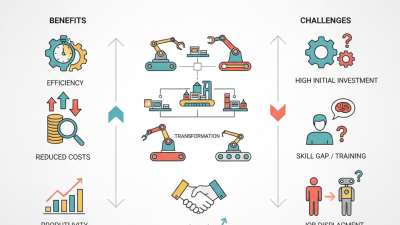
Understanding these automation trends is crucial for businesses aiming to innovate. Increased efficiency and productivity are often at the forefront, but challenges exist too. Implementing new technologies requires adaptation and can impact the workforce. Organizations must address employee concerns while leveraging automation to its full potential.
In this landscape, staying ahead means recognizing emerging technologies and strategies. By examining these trends, companies can better navigate the changes ahead. Embracing automation trends today sets the foundation for success in the future.
Emerging Technologies Driving Automation in 2026
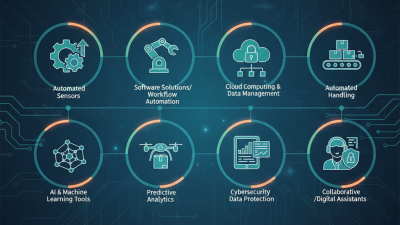
As we look towards 2026, several emerging technologies are set to drive automation across various sectors. Artificial Intelligence (AI) will continue to evolve, enhancing decision-making processes. With machine learning, organizations can analyze vast amounts of data efficiently. This helps in predicting trends and optimizing operations.
Robotic Process Automation (RPA) is gaining traction. It simplifies repetitive tasks, allowing workers to focus on higher-value activities. The integration of RPA with AI leads to intelligent automation, streamlining workflows even further. However, this shift may cause job displacement, raising important questions about the future of work.
Tips: Embrace continuous learning. As automation rises, so does the need for new skills. Understand the tools that can enhance your efficiency. Stay updated with trends, not just in technology but in your industry.
Internet of Things (IoT) is another key player. Connected devices will facilitate real-time data collection. This allows for better monitoring and control of processes. Yet, relying on technology raises concerns about data security and privacy. Organizations must balance innovation and risk management.
Tips: Regularly evaluate your automation strategies. Ensure they align with your business goals. This reflection helps identify areas needing improvement. By being vigilant, you can adapt to changes while mitigating potential issues.
The Role of Artificial Intelligence in Automation Trends
Artificial intelligence is reshaping the landscape of automation. By 2026, we can expect AI to drive innovations across various sectors. Enhanced algorithms will analyze vast datasets rapidly. This capability enables better decision-making in industries like healthcare and finance. With AI, automation will become more intuitive, mimicking human behavior in complex tasks.
However, as AI takes on more responsibilities, ethical concerns will emerge. Data privacy issues are already prompting discussions. Misjudgments in AI algorithms could lead to biased outcomes. Hence, proper oversight is essential. Businesses must balance efficiency with accountability. Training AI to understand nuances is a challenge.
Moreover, integrating AI into existing systems is not without difficulties. Companies often struggle with compatibility. Resistance to change among employees can hinder progress. Therefore, ongoing communication and training are crucial. The journey towards seamless automation will require patience and adaptability from all stakeholders.
Impact of IoT on Industrial Automation Solutions
The integration of IoT into industrial automation is transforming how factories operate. By 2026, the global industrial IoT market is projected to reach $263 billion, according to a Markets and Markets report. This growth is driven by the demand for real-time data and connectivity. IoT devices enable machines to communicate, enhancing efficiency and reducing downtime.
However, the implementation of IoT is not without challenges. Many organizations struggle with cybersecurity risks, as interconnected systems can expose sensitive data. In fact, a recent survey indicated that 70% of manufacturers are concerned about their IoT security. Additionally, the complexity of integrating IoT into existing infrastructure can lead to unexpected costs and resource allocation issues.
Despite these hurdles, the benefits can be substantial. IoT solutions can improve predictive maintenance, reducing costs by up to 25%. Companies leveraging these technologies often report increased operational efficiency and better supply chain management. As industries adapt to these advancements, there's a pressing need for ongoing employee training, ensuring workers can navigate these intelligent systems effectively.
10 Essential Automation Trends to Watch in 2026 - Impact of IoT on Industrial Automation Solutions
| Trend |
Description |
Impact on Industrial Automation |
Projected Growth |
| Increased Integration of IoT |
Enhanced connectivity among devices for real-time data access. |
Improved operational efficiency and decision-making. |
20% per annum |
| AI and Machine Learning |
Utilization of advanced algorithms for predictive maintenance. |
Reduced downtime and maintenance costs. |
25% per annum |
| Edge Computing |
Data processing closer to the source for faster analyses. |
Enhanced real-time decision-making capabilities. |
30% per annum |
| Robotic Process Automation (RPA) |
Automation of repetitive tasks through software robots. |
Increased productivity and reduced human error. |
22% per annum |
| Cybersecurity Innovations |
Advanced techniques to protect industrial systems from threats. |
Increased safety and reliability of automated systems. |
15% per annum |
| Digital Twins Technology |
Creating a digital replica of physical assets for analysis. |
Facility optimization and predictive maintenance. |
28% per annum |
| 5G Connectivity |
Faster, more reliable connections for industrial IoT devices. |
Enhanced real-time monitoring and operational insights. |
18% per annum |
| Sustainability Practices |
Incorporating eco-friendly technologies and practices. |
Reduced waste and improved environmental impact. |
10% per annum |
| Augmented Reality (AR) |
Using AR for training and maintenance of equipment. |
Enhanced training efficiency and reduced error. |
12% per annum |
| Predictive Analytics |
Analyzing data trends to predict future maintenance needs. |
Improved reliability and reduced operational costs. |
20% per annum |
Integration of Robotics and Automation in Various Sectors
The integration of robotics and automation is transforming industries. In manufacturing, robots enhance productivity and accuracy. They assist humans in repetitive tasks, reducing error rates. This synergy creates safer work environments, freeing workers for more complex roles.
In healthcare, automation streamlines patient care. Robots help with surgeries, improving precision. Automated processes ensure timely medication delivery. Yet, reliance on technology raises concerns. Some fear job displacement and loss of personal touch in caregiving.
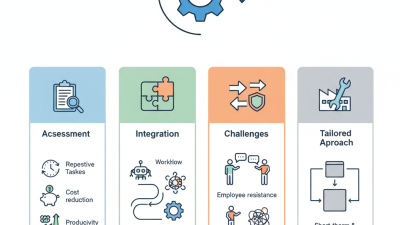
Tip: Embrace automation gradually. Assess the workforce's readiness for change.
In logistics, robotics optimize supply chains. Automated systems track inventory, minimizing delays. Drones are making deliveries more efficient. However, integrating these technologies can be complex and costly. Businesses must weigh the benefits against potential disruptions.
Tip: Start with pilot projects. Measure outcomes before wider implementation.
Investing in training for employees is crucial. With automation, new roles will emerge. Workers must adapt to collaborate with technology effectively. Continuous learning will be essential to navigate this evolving landscape.
Future Workforce Dynamics: Automation and Job Transformation
The future of work is rapidly changing. Automation is transforming job roles across industries. A report by McKinsey highlights that up to 25% of jobs could be affected by automation by 2030. This shift will alter job requirements and workforce dynamics significantly. Many roles will evolve, demanding new skills that focus on creativity and complex problem-solving.
As machines take over repetitive tasks, employees will need to adapt. A study by the World Economic Forum suggests that 97 million new jobs may emerge, driven by automation and AI technologies. However, some roles may become obsolete. This creates urgency for retraining programs. Without effective upskilling, many workers could find themselves ill-prepared for the jobs of the future.
Organizations must prioritize employee development. Training should focus on data analysis, digital literacy, and advanced interpersonal skills. The shift to automation may lead to anxiety among workers. Employers should foster a culture of continuous learning and support during this transition. Investing in human capital is vital. The future workforce will likely be a blend of humans and machines, working interdependently. This evolution presents both challenges and opportunities.
10 Essential Automation Trends to Watch in 2026