TRI-PHASEI-TECHAutomation Solutions of WI
10 Essential Tips for Lab Automation Success

10 Essential Tips for Lab Automation Success

In the rapidly evolving landscape of lab automation, efficiency is key. Recent reports indicate that implementing lab automation can lead to a 30% reduction in operational costs and a 25% increase in productivity. However, not all labs achieve these benefits. The process can be daunting, and many projects encounter unforeseen challenges.

Dr. Emily Carter, a prominent figure in the lab automation industry, once stated, "Automation is not just about robots; it's about rethinking your entire workflow." This highlights the necessity of a holistic approach. Successful lab automation requires understanding both technology and the specific needs of your laboratory.

Despite the promising statistics, many labs struggled with integration issues and employee resistance. According to the 2023 Lab Trends Report, nearly 40% of labs faced difficulties when transitioning to automated systems. These hurdles can be avoided with careful planning and adaptability. Embracing lab automation is not just a trend; it's a critical step towards modernizing laboratory operations.

10 Essential Tips for Lab Automation Success

Understanding the Basics of Lab Automation and Its Benefits

Lab automation is transforming scientific research and enhancing productivity. It reduces human error and increases accuracy in various tasks. Automated systems can handle repetitive tasks like sample analysis and data entry. This frees scientists to focus on more critical aspects of their work. However, it's essential to understand the basics to maximize these benefits.

Embracing lab automation comes with challenges. Training staff to use new systems may require time and resources. Some processes may not integrate smoothly, causing frustration. Organizations need to evaluate their needs carefully. Not every task is suitable for automation. It's crucial to identify which workflows will benefit most from these technologies. Balancing automation with human oversight is key. An over-reliance on machines could lead to oversight of critical errors. Reflection on these aspects ensures a thoughtful approach to implementing lab automation.
Identifying Key Areas for Automation in Your Laboratory

Identifying key areas for automation in your laboratory can significantly enhance efficiency. Begin by assessing repetitive tasks. Daily pipetting and sample handling are often time-consuming. Think about automating these processes to free up valuable researcher time. Consider using automated liquid handling systems or robotic arms. These tools can ensure precise measurements and reduce human error.

Next, evaluate data management. Manual data entry is prone to mistakes. Integrated software solutions can streamline data collection and analysis. By automating this aspect, you can improve accuracy and speed. However, be mindful of potential system failures. Regularly back up data to prevent loss. Training staff on new systems is also crucial. Not everyone may adapt quickly, which can slow progress.

Lastly, reflect on your laboratory's workflow. Every lab has unique needs that may evolve. What works today might not work tomorrow. Regularly revisit your automation strategy to ensure it remains relevant. Seek input from your team about obstacles they face. Their insights can guide better automation decisions and create a more efficient laboratory environment.

10 Essential Tips for Lab Automation Success

This chart illustrates the importance scores of various key areas for laboratory automation success. Each area is critical for optimizing processes and achieving greater efficiency in laboratory operations.

Choosing the Right Technology and Tools for Automation

Choosing the right technology and tools for lab automation is a critical step for success. According to a report by Frost & Sullivan, up to 35% of laboratory processes can be automated, significantly increasing efficiency. Yet, many labs still rely heavily on manual tasks. This leads to inconsistencies and human errors. Finding the right tools can minimize these issues.

It's vital to assess your specific needs before selecting automation equipment. Understand the volume and types of samples processed. Not all automation solutions will fit every lab environment. A survey from Lab Manager showed that 40% of labs experience dissatisfaction with their automation choices. This can result in wasted investments and frustration.

Invest in training for lab staff. They need to be comfortable operating new systems. Misuse of technology can lead to errors. Maintenance also matters. A poorly maintained system can quickly become a liability. Even the best technology cannot compensate for a lack of care and attention. Balancing high-tech solutions with practical support is necessary.

10 Essential Tips for Lab Automation Success

Tip Number Tip Description Recommended Technology/Tool Benefits
1 Assess Your Needs Requirement Analysis Software Identifies specific lab automation needs.
2 Research Available Technologies Technology Comparison Tools Helps in understanding different solutions.
3 Evaluate Vendor Support Vendor Support Rating Systems Ensures reliable vendor assistance.
4 Consider Scalability Scalability Assessment Tools Allows for future growth without major changes.
5 Plan for Integration Integration Planning Software Facilitates smooth technology assimilations.
6 Train Your Staff Training Management Systems Enhances user competence and confidence.
7 Test Before Full Deployment Pilot Testing Software Identifies issues prior to full-scale implementation.
8 Monitor Performance Performance Monitoring Tools Ensures system efficiency and reliability.
9 Seek Continuous Improvement Feedback Collection Tools Encourages ongoing enhancements.
10 Stay Updated with Trends Market Analysis Tools Keeps you informed about technological advancements.

Developing a Comprehensive Implementation Plan for Automation

10 Essential Tips for Lab Automation Success

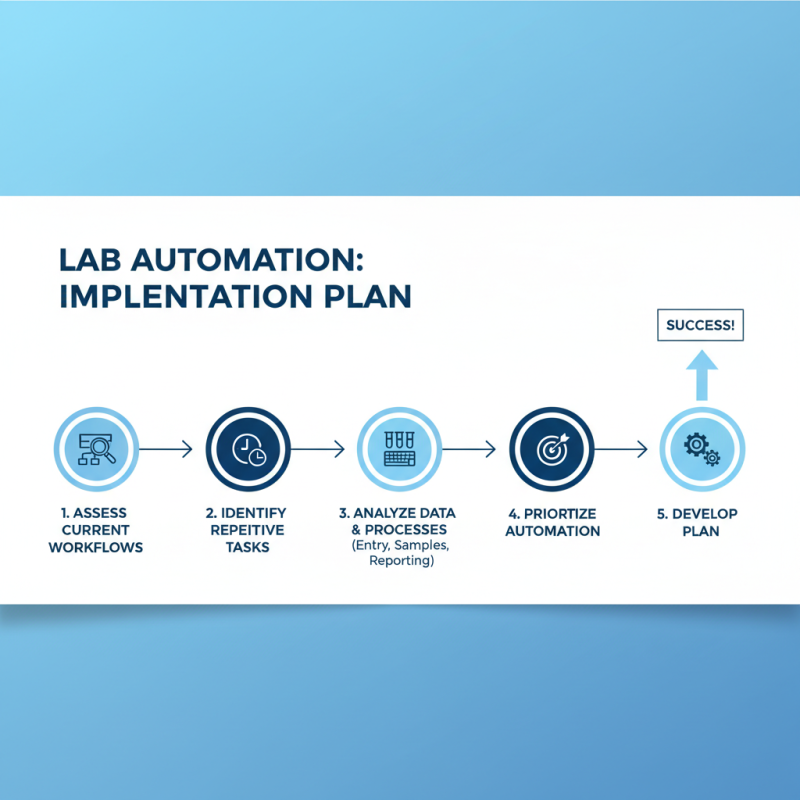
Developing a comprehensive implementation plan for lab automation is vital for success. Start by assessing current workflows. Understand what tasks are repetitive and time-consuming. Analyze data entry, sample processing, and reporting. Identifying these aspects helps prioritize which processes to automate first.

Engage your team early in the planning stages. Gather feedback on their challenges and suggestions for improvement. This can help identify potential roadblocks. It also fosters a sense of ownership, which can boost morale and cooperation. Clearly outline each phase of automation. Create realistic timelines that account for testing and adjustments.

Be prepared for setbacks during the implementation phase. Sometimes technology fails. Adjustments may require extra training for staff. Such issues can create frustration. Regularly revisit the plan and make necessary changes. Reflect on both successes and failures to continually improve the automation process.

Monitoring and Evaluating the Success of Automation Projects

10 Essential Tips for Lab Automation Success

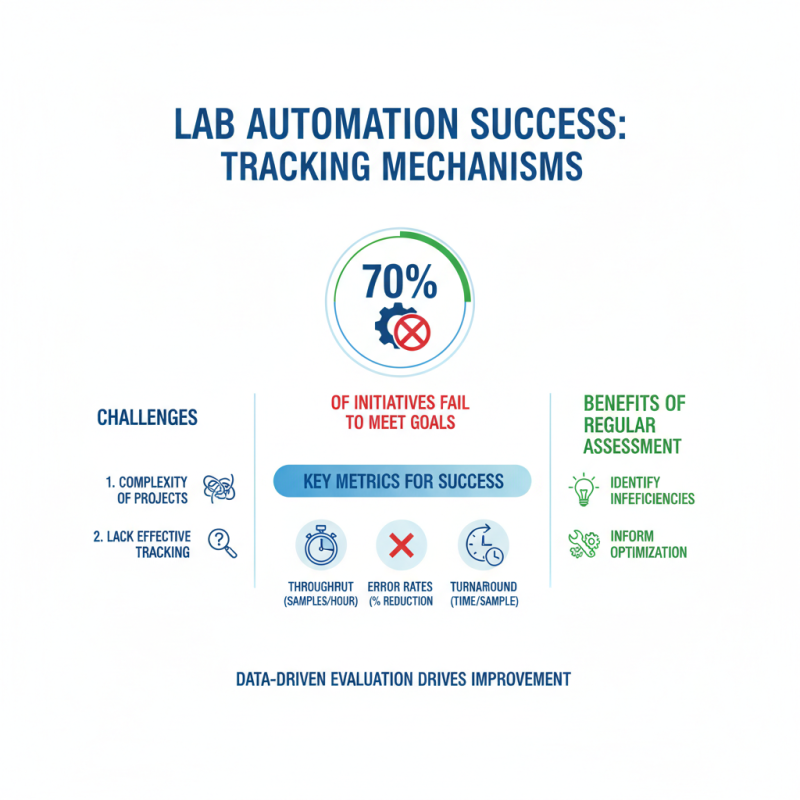
Monitoring and evaluating the success of automation projects in laboratories can be complex. Research shows that nearly 70% of automation initiatives fail to meet their original goals. This reality emphasizes the need for effective tracking mechanisms. Regular assessments can highlight inefficiencies in processes. Measurements like throughput, error rates, and turnaround times are critical.

Moreover, it is essential to set clear benchmarks before implementation. A study by a leading industry analyst group revealed that teams with defined KPIs achieve 40% better results than those without. However, relying solely on quantitative data may overlook qualitative aspects. User satisfaction and employee feedback are vital indicators. They provide deeper insights into daily lab operations.

Surprisingly, 30% of laboratories do not perform regular audits on their automated systems. This lack of oversight can lead to stagnation. Continuous improvement should become a core value. Re-evaluating existing workflows and the technologies in place can lead to unexpected insights. Ultimately, success in lab automation depends not only on the technology but also on the ongoing commitment to refinement and staff engagement.