What is the Role of Automation Laboratories in Modern Research?
Automation laboratories play a crucial role in advancing modern research across various fields. According to a report from Research and Markets, the global laboratory automation market is expected to reach $6.91 billion by 2027, growing at a CAGR of 7.6%. This growth highlights the importance of automation in increasing efficiency and precision in laboratory processes. Automation laboratories can streamline tedious tasks, allowing researchers to focus on innovative aspects of their work.
In many sectors, labs are investing in automation technologies to enhance productivity. For instance, the pharmaceutical industry has seen substantial benefits from automation systems. A recent survey indicated that 70% of pharma companies report improved data accuracy and reduced operational costs. However, despite these advantages, the transition to automation is not without challenges. Many researchers grapple with the complexity of these systems, raising questions about integration into existing workflows.
Thus, while automation laboratories promise efficiency, they also present a need for careful reflection. Assessing the human element remains essential. Maintaining a balance between technology and human expertise is crucial for success in modern research environments.

Definition and Overview of Automation Laboratories in Research
Automation laboratories are becoming essential in modern research. They streamline experiments and enhance data accuracy. Studies show that automation can boost productivity by up to 50%. These labs utilize advanced robotics and software to perform repetitive tasks. This reduces human error and increases the reliability of results.
However, not all automation is perfect. While these laboratories can handle high-throughput screening, they may lack the creative problem-solving capabilities of human researchers. Some tasks still require a nuanced understanding that machines cannot replicate. A report from the American Journal of Research highlights that 30% of automated processes still face challenges. Researchers must remain vigilant about potential errors.
Additionally, the implementation of automation involves costs and training. Organizations need to invest in infrastructure and staff education. It's crucial to balance automation's benefits against these potential hurdles. Researchers must continuously evaluate their systems to ensure they meet evolving needs. The role of automation is significant, yet it requires thoughtful integration into the research landscape.
Historical Evolution of Automation in Scientific Laboratories
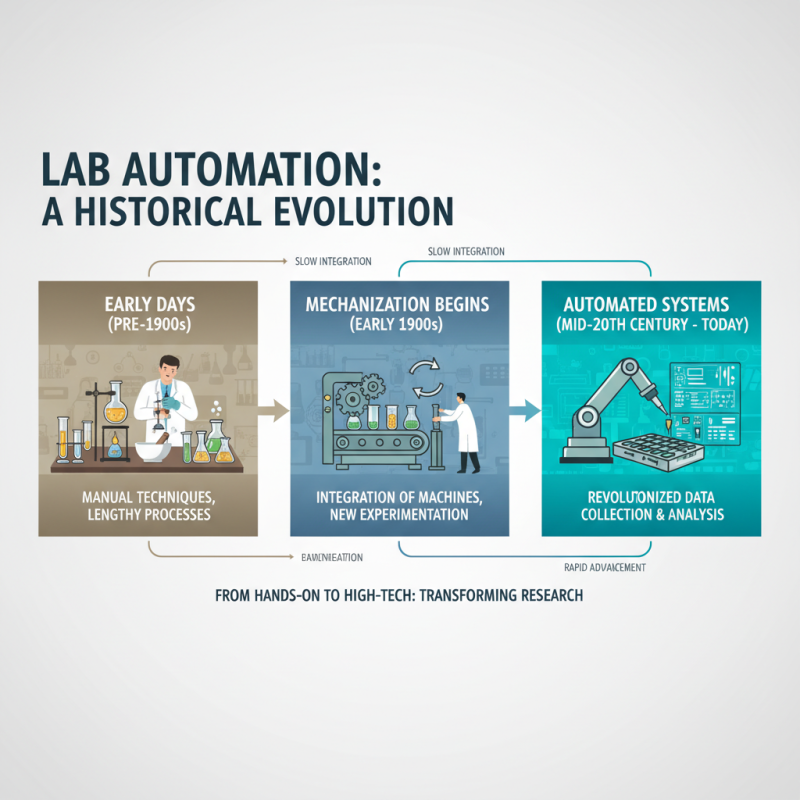
The historical evolution of automation in scientific laboratories has transformed research dramatically. In the early days, scientists relied heavily on manual techniques and lengthy processes. Slowly, the integration of machines began, shaping a new era for experimentation. The use of automated systems started in the 20th century, revolutionizing data collection and analysis.
Automation has brought efficiency to laboratories. Machines can perform repetitive tasks quickly, allowing researchers to focus on design and interpretation. However, this rise in automation isn’t without challenges. Not all tasks can be effectively automated. Some complex experiments still need human intuition and oversight. A balance must be struck to ensure quality results.
Tip: Always evaluate the tasks in your lab. Identify which processes can benefit from automation while keeping critical human oversight intact. Consider running pilot tests before fully integrating any new system.
Moreover, the incorporation of automation should be continuously reviewed. Researchers must remain vigilant about the potential loss of skills in the lab. Training on both automated systems and traditional methods is essential. Bridging the gap between technology and expertise can lead to better scientific outcomes.
Key Technologies and Tools Used in Automation Laboratories
Automation laboratories play a pivotal role in modern research. They enhance efficiency and precision across various fields. Key technologies in these labs include robotics, AI, and data analytics. Robotics streamline repetitive tasks, enabling researchers to focus on complex analysis. AI algorithms process vast datasets, revealing patterns that might go unnoticed.
A report from the International Federation of Robotics indicates that the use of robotics in laboratories increased by 35% in the last five years. This growth reflects the demand for precision and speed. Data analytics tools help researchers draw insights from experiments, but the reliance on technology raises questions. Are we losing the human touch in research?
Automation can sometimes lead to errors if not monitored closely. Systems may malfunction, impacting results. Moreover, the cost of implementing these technologies can be prohibitive for smaller labs. As we embrace automation, a balance needs to be struck. This balance ensures that human insight remains integral to scientific discovery while maximizing efficiency with technology.
Advantages of Automation in Modern Research Processes
Automation laboratories play a pivotal role in modern research, especially in enhancing efficiency. Automation technology enables researchers to conduct complex procedures quickly. According to a recent report, over 70% of laboratories have integrated automated systems for data collection and analysis. This shift leads to a significant reduction in human error, providing more reliable data.
The advantages of automation extend to cost-effectiveness and speed. Automating repetitive tasks minimizes the need for manual labor, allowing scientists to focus on innovative aspects of their work. A study revealed that labs adopting automated solutions increased their throughput by up to 40%. However, this reliance on technology raises concerns. Are we losing the human touch in research? The need for critical thinking and creativity cannot be automated.
Moreover, automation brings challenges. Not all research tasks can be effectively automated. Certain processes require nuanced judgments that machines can't replicate. According to industry experts, the balance between automation and human insight is vital. Continuous training for staff is essential to adapt to these technologies. As automation evolves, researchers must reflect on its limitations and embrace a hybrid approach.
The Impact of Automation in Modern Research Processes
This bar chart illustrates the efficiency improvements in various research processes due to automation. Each bar represents the percentage of efficiency gained by automating specific tasks within modern research, highlighting the significant benefits of adopting automation technologies.
Future Trends and Innovations in Laboratory Automation
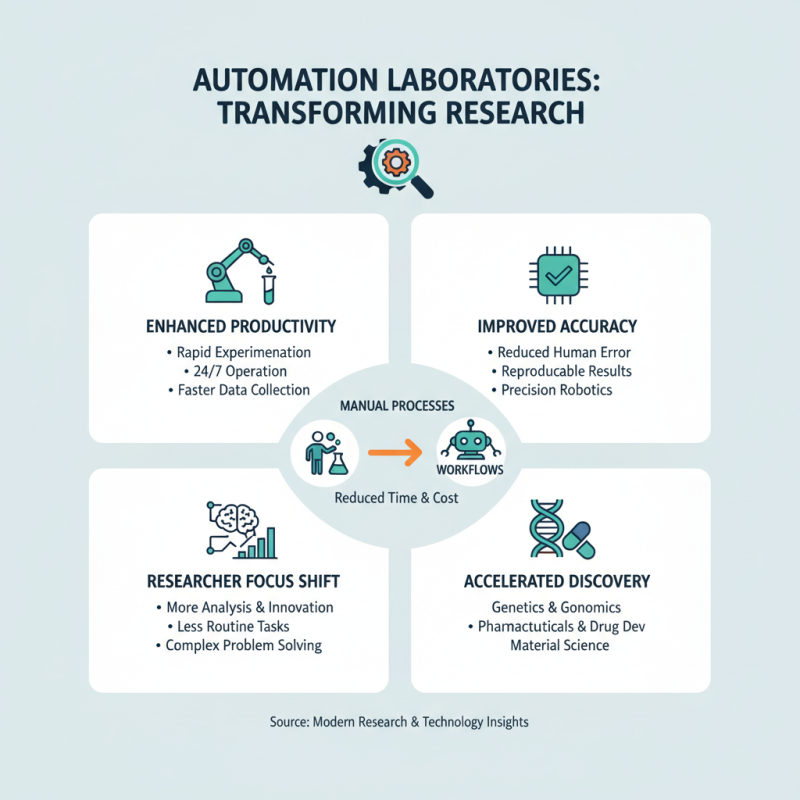
Automation laboratories are transforming modern research, enhancing productivity and accuracy. These facilities employ advanced robotics and software to streamline complex processes. Tasks once reliant on manual efforts are now automated, reducing human error. Researchers can focus more on analysis and less on routine operations. This shift is evident in various fields, from genetics to pharmaceuticals, where automation accelerates discoveries.
Future trends in laboratory automation hint at even greater innovations. Imagine labs where artificial intelligence drives experimental design. Machine learning algorithms analyze vast datasets quickly. This could lead to insights that are unreachable through traditional methods. Yet, the implementation of such technologies isn't without challenges. Integration can be complex, and there may be resistance from staff accustomed to older methods. Balancing between cutting-edge tools and human expertise remains a struggle.
Additionally, as automation increases, there is a risk of over-reliance on technology. Human oversight remains critical in interpreting results. Automation should empower, not replace, the scientist's intuition. Continuous training will be necessary to adapt to these innovations. Ultimately, the path forward requires a careful assessment of technology's role in research.