Top 10 Motion Automation Best Practices for Enhanced Efficiency?
As businesses strive to enhance efficiency, motion automation has become a critical focus. According to a report by McKinsey, automation can increase productivity by up to 30%. This shift enables companies to streamline processes and reduce operational costs. However, many organizations still struggle with effective implementation.
Motion automation involves the use of technology to automate repetitive tasks. Many still underestimate the challenges. A survey by Deloitte revealed that 43% of companies face hurdles in scaling their automation efforts. Often, lack of strategy and inadequate training contribute to these difficulties. Companies must acknowledge these gaps to leverage the full potential of automation.
The benefits of motion automation are clear. It improves accuracy and speeds up workflows. A study from PwC shows that 45% of jobs could be automated by the early 2030s. Yet, organizations must approach this advancement thoughtfully. Transitioning to automation requires careful planning and a willingness to adapt. Without a strong foundation, the results may not meet expectations. Understanding these best practices is essential for achieving lasting efficiency.

Understanding Motion Automation: Key Concepts and Terminology
Motion automation refers to the technology that automates repetitive motion tasks. Understanding key concepts is crucial for implementation. Terms like "robotic process automation" (RPA) and "computer vision" often come up. RPA enables software programs to handle tasks efficiently. Computer vision allows machines to "see" and interpret their environment.
Tips: Start by identifying tasks that require automation. Analyze different motions in your workflows. Determine which ones are repetitive and time-consuming. This helps in prioritizing tasks.
In motion automation, terminology matters. Concepts like "feedback loop" and "sensor integration" play a significant role. A feedback loop allows systems to learn from past actions. Sensor integration enables machines to adapt to changes in their environment.
Tips: Invest time in training your staff. Familiarize them with these terms. Knowledge helps in effective communication and successful onboarding. Regularly review processes to adapt and improve the automation strategy. This can be a trial-and-error journey. Be open to adjustments as you refine your approach.
Identifying Common Challenges in Motion Automation Implementation
Implementing motion automation can be a game-changer for many organizations. However, numerous challenges often arise during the implementation phase. According to a recent industry report, approximately 70% of businesses face significant barriers when adopting motion automation technologies. These hurdles include integrating existing systems and training staff to adapt to new processes efficiently.
Lack of clear objectives is another common problem. Many companies dive into automation without a defined strategy. In fact, about 60% of automation projects struggle to meet their initial goals. Poorly defined scopes lead to wasted resources and missed deadlines. Additionally, employees may resist changes due to fear of job displacement. This can create a toxic environment, hindering progress and innovation.
Technical glitches frequently occur during the transition. A survey found that 55% of organizations experienced disruptions when launching new automation systems. Ensuring that equipment and software are compatible is vital. It can save time and reduce frustration. Ultimately, addressing these issues can help organizations unlock the full potential of motion automation and drive enhanced efficiency.
Essential Tools and Technologies for Effective Motion Automation
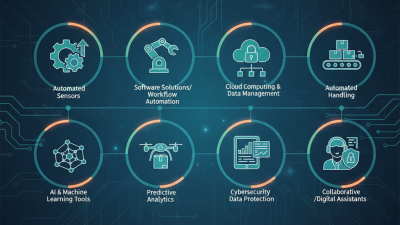
Motion automation is transforming industries by enhancing efficiency. Essential tools and technologies play a critical role in this evolution. Recent reports show that companies implementing automation experience a 30% increase in productivity. These technologies streamline repetitive tasks and allow teams to focus on more strategic initiatives.
Cloud-based platforms are essential for effective motion automation. They offer flexibility and scalability. A study revealed that over 70% of organizations using cloud tools noted significant improvements in operational efficiency. Additionally, robotic process automation (RPA) tools can handle tedious processes. However, integrating these technologies isn't always seamless. Challenges like employee adaptation and system compatibility need addressing.
Data analytics tools also contribute significantly. They provide insights into operational bottlenecks. About 60% of firms utilizing advanced analytics reported enhanced decision-making. Despite advancements, many companies struggle with data management issues. Lack of clear strategies can hinder the potential benefits of motion automation. Refining these strategies is crucial for maximizing outcomes.
Top 10 Motion Automation Best Practices for Enhanced Efficiency
| Best Practice |
Description |
Essential Tools |
Efficiency Gain (%) |
| Data Integration |
Seamlessly connect different data sources for real-time insights. |
API Services, ETL Tools |
25% |
| Automated Workflows |
Utilize automated sequences to reduce manual tasks. |
RPA Software, Workflow Automation Tools |
30% |
| Performance Analytics |
Monitor system performance to identify bottlenecks. |
Analytics Platforms, Dashboards |
20% |
| Scalable Solutions |
Implement systems that can easily scale with business needs. |
Cloud Services, Modular Software |
35% |
| User Training |
Provide comprehensive training to ensure efficient tool usage. |
Learning Management Systems, Workshops |
15% |
| Continuous Improvement |
Regularly update and optimize processes for better efficiency. |
Feedback Tools, Review Meetings |
18% |
| Quality Assurance |
Implement checks and balances to maintain output quality. |
QA Tools, Review Systems |
22% |
| Cross-Functional Collaboration |
Encourage different teams to work together on automation projects. |
Collaboration Tools, Project Management Software |
28% |
| Robust Documentation |
Maintain detailed records of processes for future reference. |
Documentation Tools, Knowledge Bases |
16% |
| Regular Audits |
Perform audits to ensure compliance and performance. |
Audit Software, Compliance Tools |
19% |
Strategies for Continuous Improvement and Scaling Motion Automation Efforts
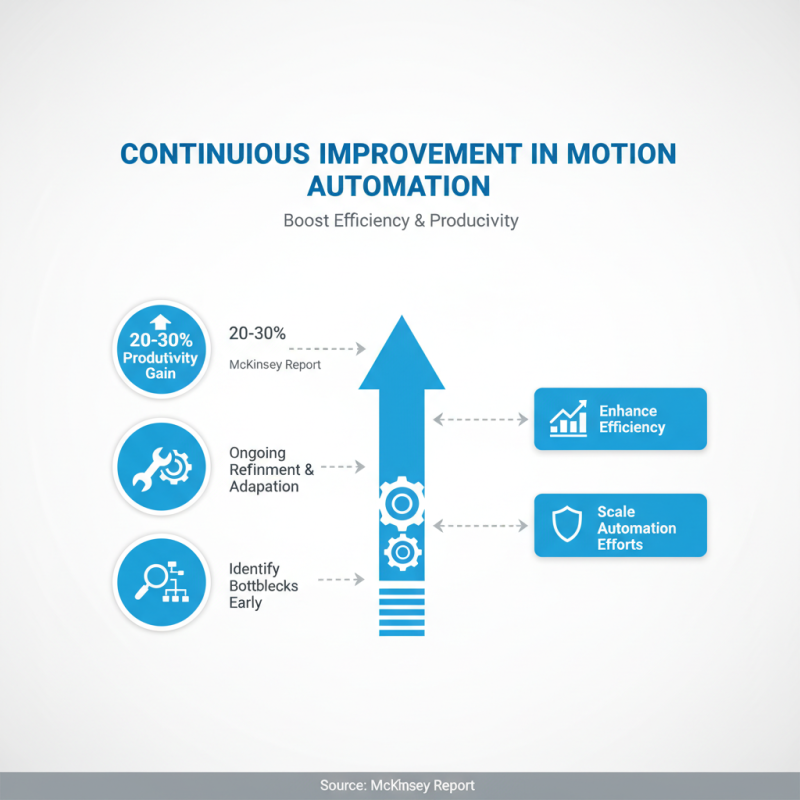
Continuous improvement in motion automation is vital for organizations aiming to enhance efficiency. According to a report by McKinsey, companies that implement automation can see productivity improvements of 20-30%. However, achieving these results requires ongoing refinement and adaptation. Businesses often face challenges in scaling their automation efforts. Identifying bottlenecks early can improve processes significantly.
Investing in employee training is essential for success. Gallup's research indicates that engaged employees are 27% more likely to improve productivity. Regular training sessions can bridge skill gaps and foster a culture of innovation. Moreover, integrating feedback loops into automations allows teams to adjust workflows based on real-time data, ensuring that systems remain responsive to changing needs.
Automation tools can be powerful but also present challenges. Many organizations struggle with integration across different platforms. A survey from Deloitte found that 40% of respondents cited integration issues as a key barrier to scaling automation. Continuous assessment of these challenges, along with collaborative teamwork, will lead to better outcomes. Regularly reviewing automation performance can reveal areas for enhancement, ultimately driving the organization's efficiency upward.