
China Top 10 Industrial Automation Manufacturers?
China has become a central force in global industrial automation. The International Federation of Robotics reported 276,288 industrial robot installations in China during 2023. That represented about 51% of global installations, showing the country’s enormous manufacturing demand.
The same World Robotics 2024 report recorded approximately 1.76 million operational industrial robots in China. Robot density also reached 470 units per 10,000 manufacturing employees. These figures create a strong foundation for evaluating China’s leading automation companies. However, factory automation extends beyond robots. PLCs, servo drives, motion controllers, DCS platforms, SCADA software, machine vision, and industrial networking also matter.
This guide examines China’s top 10 industrial automation manufacturers through practical and measurable criteria. These include product breadth, engineering capability, installed base, industry coverage, service response, export activity, and financial stability. Companies such as Inovance, Estun, SUPCON, HollySys, and Siasun illustrate different strengths across motion control, robotics, process automation, and intelligent manufacturing.
The ranking is not absolute.
Public data remains uneven. Some manufacturers disclose detailed revenue figures, while others combine automation sales with broader industrial businesses. Customer satisfaction can also vary between a large automotive plant and a smaller electronics factory. A servo cabinet may perform perfectly on a fast production line, yet require different support in a chemical facility. Therefore, this comparison combines published company information, IFR data, annual reports, and industry research rather than relying on popularity alone. The result should be viewed as a practical reference, not a permanent verdict. The market changes quickly, and even a careful ranking deserves periodic review.
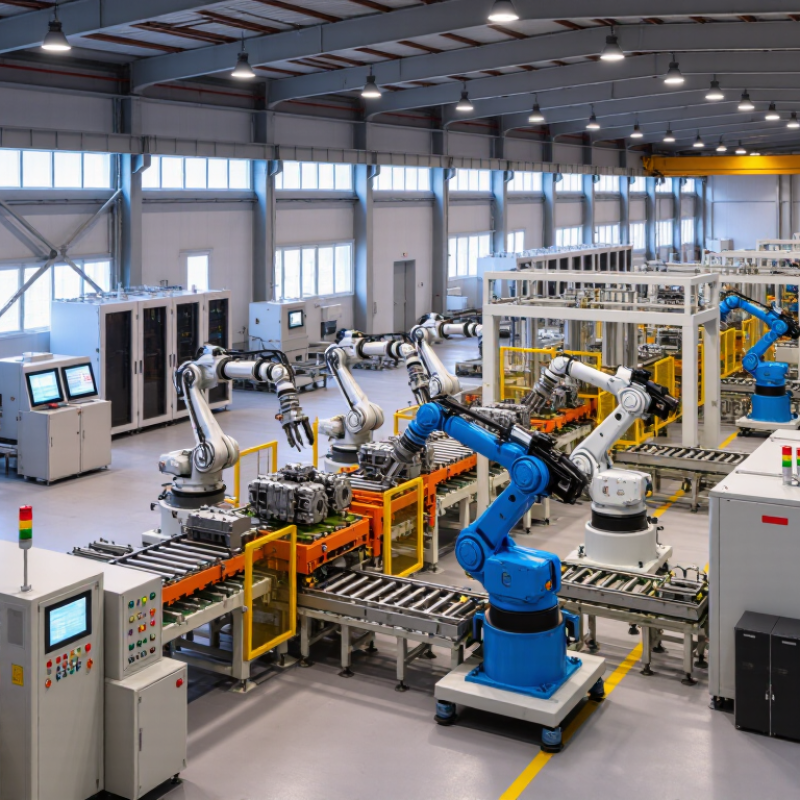
Industrial Automation in China: Industry Scope and Evaluation Criteria
China Top 10 Industrial Automation Manufacturers?
Industrial Automation in China: Industry Scope and Evaluation Criteria
China’s industrial automation sector covers controllers, sensors, drives, robotics, machine vision, and production software. It serves factories producing electronics, vehicles, packaging, energy equipment, and medical devices. From factory assessments, real performance often depends on integration quality, not product specifications alone. A reliable evaluation should examine technical capability, product stability, safety compliance, service coverage, and delivery consistency. Testing response time, communication compatibility, and fault recovery can reveal weaknesses hidden in brochures. A low purchase price may create higher maintenance costs later. That risk deserves careful attention.
Evaluation also requires evidence. Review installation records, independent certifications, customer references, warranty terms, and spare-parts availability. Check whether engineers can support commissioning in the required region. Compare system uptime, training quality, cybersecurity controls, and upgrade flexibility. The “top ten” should not mean the ten largest companies. It should reflect verified performance for a specific factory environment. This distinction is easy to miss.
Tips: Request a live demonstration using your own process data. Inspect a working production line when possible. Ask for failure logs, not only success stories. Test interoperability before signing a long-term contract. Keep the criteria weighted and written. Human judgment still matters, and even a careful scorecard can overlook daily operator experience.
China Top 10 Industrial Automation Manufacturers? – Industrial Automation in China: Industry Scope and Evaluation Criteria
A neutral, manufacturer-independent framework for evaluating industrial automation suppliers in China
| No. | Evaluation Dimension | Measurable Criteria | Recommended Evidence | Suggested Weight | Why It Matters |
|---|---|---|---|---|---|
| 1 | Product Portfolio Coverage | Availability of core automation products, including programmable logic controllers, industrial computers, human–machine interfaces, variable-frequency drives, servo systems, motion controllers, industrial robots, machine vision, sensors, and industrial networking equipment. | Published product catalogs, technical datasheets, supported communication protocols, and product lifecycle documentation. | 15% | A broad portfolio can reduce integration complexity and improve system compatibility. |
| 2 | Control and Motion Performance | Controller scan time, motion synchronization capability, servo positioning accuracy, repeatability, maximum axis count, cycle time, and deterministic control performance. | Verified technical specifications, test reports, application benchmarks, and customer acceptance criteria. | 14% | Control performance directly affects productivity, precision, and equipment stability. |
| 3 | Industrial Communication and Integration | Support for widely used industrial communication technologies such as Ethernet-based fieldbus systems, Modbus TCP, OPC UA, MQTT, and common safety communication protocols. | Protocol conformance information, integration guides, software development kits, and interoperability test results. | 11% | Open connectivity supports multi-vendor architectures and future system expansion. |
| 4 | Reliability and Product Quality | Mean time between failures, operating temperature range, ingress protection rating, vibration resistance, electromagnetic compatibility, warranty terms, and documented quality-control procedures. | Reliability test records, environmental test results, quality certificates, warranty policies, and field failure statistics. | 13% | Reliable equipment lowers downtime, maintenance expense, and production risk. |
| 5 | Functional Safety and Compliance | Safety integrity capability, performance level capability, machinery safety functions, electrical safety compliance, and conformity with applicable Chinese and international standards. | Safety certificates, conformity declarations, third-party assessment reports, and functional safety manuals. | 11% | Safety compliance is essential for machinery, process plants, logistics, and automotive production environments. |
| 6 | Digitalization and Software Capability | Engineering software usability, remote diagnostics, data collection, edge connectivity, historian integration, alarm management, analytics, and support for manufacturing execution or supervisory systems. | Software demonstrations, release histories, cybersecurity documentation, application programming interfaces, and digital-factory case studies. | 10% | Software capabilities determine how effectively automation data can support operations and continuous improvement. |
| 7 | Application and Industry Coverage | Demonstrated deployments in discrete manufacturing, process industries, electronics, automotive, packaging, energy, logistics, pharmaceuticals, food and beverage, and water treatment. | Technical case studies, reference projects, application notes, sector-specific certifications, and independently verifiable project information. | 9% | Relevant experience indicates whether solutions can address sector-specific production requirements. |
| 8 | Domestic Service and Delivery Capability | Availability of regional technical support, engineering resources, spare-parts coverage, training, commissioning support, repair turnaround, and response-time commitments within China. | Service-center locations, support-level agreements, training schedules, spare-parts policies, and customer service performance records. | 7% | Local support can shorten installation time and reduce the operational impact of failures. |
| 9 | Total Cost of Ownership | Purchase cost, engineering effort, installation cost, energy consumption, maintenance requirements, spare-parts cost, software licensing, upgrade cost, and expected service life. | Itemized quotations, lifecycle cost models, energy data, maintenance schedules, and five- to ten-year ownership estimates. | 6% | Lifecycle cost provides a more realistic comparison than initial purchase price alone. |
| 10 | Innovation and Supply-Chain Resilience | Product development activity, local manufacturing or engineering capability, component availability, alternative sourcing, cybersecurity updates, product roadmap transparency, and continuity planning. | Product release records, research and development information, supply-chain policies, inventory practices, cybersecurity advisories, and continuity plans. | 4% | Resilient supply and ongoing innovation help protect long-term production investments. |
| Industry Scope: The evaluation covers factory automation hardware, industrial control, motion control, robotics, machine vision, industrial networking, safety systems, manufacturing software, and related engineering services. Scores should be assigned only after reviewing comparable technical, commercial, compliance, and service evidence. | |||||
Related Posts
-
China Best Industrial Automation Trends for Global Buyers
-
China Best Industrial Automation Inc Supplier for Global Buyers?
-
China Top 10 Industrial Automation Trends for Global Buyers
-
What Are Industrial Automation Systems?
-
How to Choose Industrial Automation in 2026?
-
Top 10 Industrial Automation Equipment Suppliers in China?



