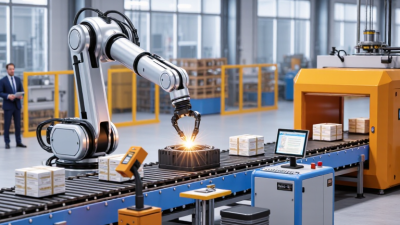
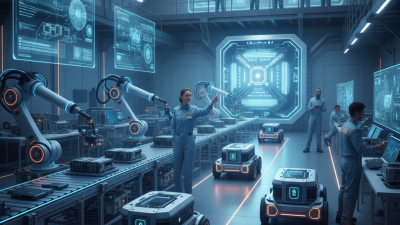
Manufacturing automation is no longer limited to large automotive plants. Global buyers now evaluate robotic arms, conveyor systems, machine vision, automated storage, and software-controlled production lines. Each type solves a different operational problem. A palletizing robot may reduce lifting injuries, while vision inspection can detect scratches smaller than a fingernail. The right choice depends on product variety, labor skills, factory layout, and expected production volume.
Shigeo Shingo, a respected industrial engineer and manufacturing improvement expert, said, “The most dangerous kind of waste is the waste we do not recognize.” His observation remains important for buyers comparing automation suppliers. A fast machine is not automatically a good investment. It may create bottlenecks, require expensive maintenance, or produce data nobody uses. Careful buyers examine cycle time, integration requirements, training, safety systems, spare parts, and total ownership cost. The cheapest quotation can become the most expensive decision.
This guide introduces ten major types of manufacturing automation for global buyers. It considers practical applications, strengths, limitations, and suitable factory conditions. Examples include robotic assembly, automated material handling, CNC systems, process control, and warehouse automation. The discussion also reflects real purchasing concerns, such as inconsistent power supply, limited technical support, and changing product designs.
Automation is not always the answer.
Some factories may need better work instructions before new equipment. Others may benefit from partial automation instead of a fully connected line. That distinction is easy to miss during supplier presentations. Reliable decisions require site data, operator feedback, pilot testing, and honest performance measurements. Manufacturing automation can improve safety, consistency, and productivity, but only when technology matches the process.
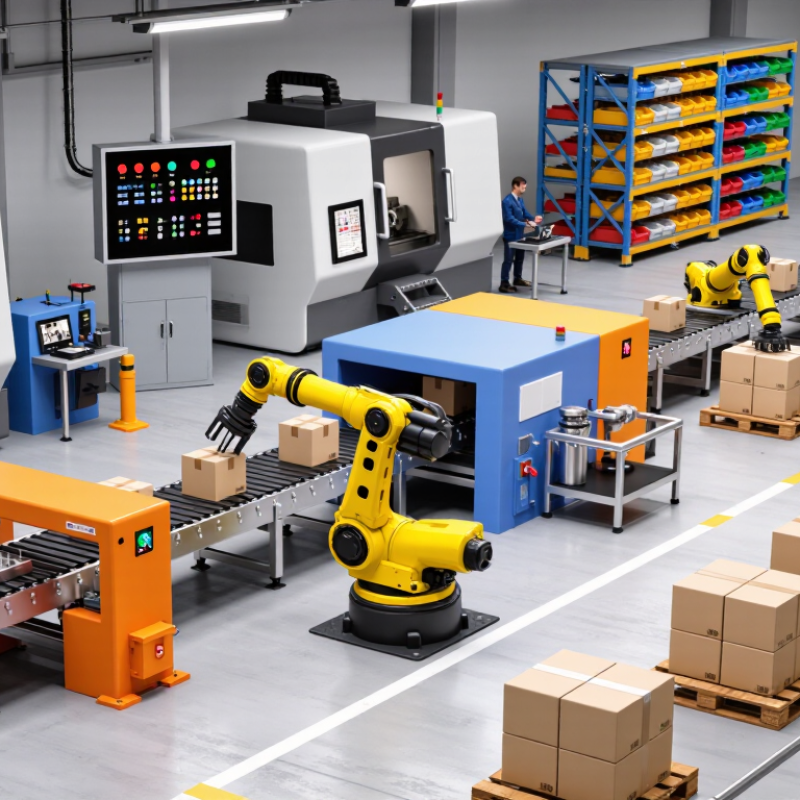
Manufacturing automation means using machines, software, sensors, and control systems to perform production tasks with limited human intervention. It includes fixed automation, programmable automation, flexible automation, industrial robots, collaborative robots, CNC equipment, machine vision, automated guided vehicles, warehouse systems, and process-control platforms. The definition is broader than robotics. A sensor checking temperature can be automation, too.
For global buyers, the practical question is not “How advanced is it?” but “What decision does it improve?” A robotic arm may repeat welding accurately, while vision equipment detects a scratched surface before shipment. Automated vehicles can move pallets through a facility, but poor route planning can still create delays. According to the International Federation of Robotics’ World Robotics 2024 report, 541,302 industrial robots were installed worldwide in 2023, with more than 4.28 million operating units. This scale shows adoption, not guaranteed success.
Automation also changes labor, maintenance, safety, and data requirements. The World Economic Forum’s Future of Jobs Report 2023 found that 85% of surveyed organizations expected technology adoption to drive business transformation. Yet many projects underperform because buyers measure equipment speed instead of total process value. That is an uncomfortable gap. A reliable assessment should examine cycle time, defect rates, energy use, integration costs, operator training, and local service capacity. Definitions remain imperfect, especially when software and machinery overlap. Procurement teams should document those boundaries before comparing suppliers or calculating payback.
The Ten Main Types of Manufacturing Automation
Manufacturing automation has ten main types, each solving a different production problem. Fixed automation supports high-volume lines with stable designs and fast cycle times. Programmable automation handles batches through adjustable programs and tooling. Flexible automation changes products with limited setup, although changeover planning remains essential. Robotic automation performs welding, picking, packing, and repetitive handling. CNC automation controls cutting, drilling, and milling with precise digital instructions. Assembly automation joins parts using controlled pressure, torque, or temperature. Small errors matter.
From supplier audits, I examine guarding, safety interlocks, maintenance access, and operator training. Material-handling automation uses conveyors, lifts, guided vehicles, and pallet systems to move components safely. Process-control automation monitors temperature, pressure, flow, and speed during production. Inspection automation applies sensors, cameras, and measurement tools to detect defects before shipment. Warehouse automation manages storage, retrieval, labeling, and inventory movement. These ten types often overlap within one factory. A buyer should request cycle-time records, spare-parts plans, validation data, and clear service responsibilities. I have seen impressive demonstrations fail under dust, vibration, or mixed product sizes. That weakness deserves attention. Reliable automation is not always the most complex option.
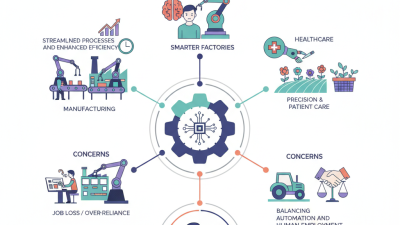
Indicative suitability scores for common discrete-manufacturing applications. The scores reflect the combined value of productivity, repeatability, scalability, integration capability, and flexibility.
Manufacturing automation ranges from simple sensors to coordinated robotic cells. Fixed automation uses dedicated tooling for high-volume products, such as beverage filling or metal stamping. It works quickly, but product changes can be expensive. Programmable automation stores production instructions in a controller. It suits batch manufacturing, including different sizes of valves or molded components. Flexible automation adjusts programs with limited downtime. Electronics and precision equipment often use this approach. Robotic automation uses articulated arms, grippers, and safety controls. Workers commonly deploy it for welding, palletizing, painting, and repetitive loading. Small details matter here.
CNC automation converts digital designs into cutting movements. Machine shops use it for accurate holes, slots, and complex surfaces. Automated assembly combines feeders, fixtures, and fastening tools. It is useful for appliances, medical devices, and small mechanical units. Material-handling automation moves parts through conveyors, lifts, or guided vehicles. Factories apply it between machining, inspection, and packing stations. Machine-vision automation uses cameras and software to detect missing parts, scratches, or incorrect labels. Process-control automation continuously regulates temperature, pressure, flow, or mixing in chemical and food production. Warehouse automation coordinates storage, picking, and dispatch through software and mobile equipment. Implementation is not always smooth. Poor data, weak maintenance planning, or unsuitable grippers can reduce real benefits. A practical buyer should test cycle time, error rates, operator training, and recovery procedures before scaling.
Top 10 Types of Manufacturing Automation for Global Buyers
Fixed automation delivers the lowest unit cost at high volumes, but design changes become expensive. Programmable automation costs more initially and suits repeat batches with changing specifications. Flexible automation supports varied products, though software, sensors, and skilled technicians raise operating costs.
Robotic arms improve lifting, welding, and material handling while reducing ergonomic injuries. Collaborative robots simplify shared workspaces, but their slower speed may limit output. Automated guided vehicles and autonomous mobile robots reduce transport labor, yet floor traffic and charging areas need careful planning. Machine vision improves inspection accuracy, although poor lighting can create false rejects. CNC systems offer precise machining but require reliable tooling data and operator training.
Process-control systems stabilize temperature, pressure, and flow in continuous production. Warehouse automation increases picking speed, but integration with inventory software can become difficult. Integration is the trap. Buyers should compare purchase price, installation, maintenance, energy use, training, and downtime exposure. A low-cost machine may need costly electrical changes or custom interfaces. Experienced integrators normally test communication protocols before shipment and confirm local safety requirements. Cybersecurity also matters when equipment connects to factory networks. Small pilots help. However, pilot results can mislead if product mix, shift patterns, or maintenance skills differ from the final site. Buyers should request spare-parts lists, response times, acceptance criteria, and measurable payback assumptions. Real factories are rarely tidy. That uncertainty deserves a budget.
| Automation Type | Typical Application and Definition | Indicative Initial Investment (USD) | Main Benefits | Key Risks and Limitations | Integration Needs and Typical Complexity |
|---|---|---|---|---|---|
| Fixed or Hard Automation | Dedicated equipment designed to repeat one high-volume operation, such as transfer lines, automated presses, or specialized packaging systems. | $100,000–$2,000,000+ | Very high throughput, consistent cycle times, low unit cost at stable volumes, and strong repeatability. | Limited product flexibility, expensive engineering changes, long commissioning periods, and high exposure to demand changes. | Requires detailed process engineering, custom tooling, safety validation, utilities, line balancing, and connection to production control systems. High complexity |
| Programmable Automation | Computer-controlled machinery that can manufacture batches of different products by changing programs, tooling, or operating parameters. | $50,000–$1,000,000+ | Supports batch production, shorter changeovers than fixed automation, repeatable quality, and easier product updates. | Requires skilled programming, incorrect recipes can create scrap, and frequent changeovers may reduce equipment utilization. | Needs programmable controllers, recipe management, machine data collection, operator training, and production scheduling interfaces. Medium complexity |
| Flexible Automation | Integrated equipment that automatically handles multiple product variants with limited manual intervention and rapid changeover. | $250,000–$2,500,000+ | High product variety, reduced setup time, improved labor productivity, and better response to changing customer demand. | Higher capital cost, complex software, difficult fault diagnosis, and potentially lower performance if product variation is poorly defined. | Requires standardized product data, coordinated controls, digital work instructions, tooling management, and strong cross-functional commissioning. High complexity |
| Industrial Robotic Cells | Programmable robotic workstations used for welding, painting, machine tending, assembly, palletizing, or material handling. | $80,000–$500,000+ per cell | Stable cycle times, improved worker safety in hazardous tasks, repeatable quality, and suitability for continuous operation. | Upfront integration cost, safety-zone requirements, tooling failures, programming dependency, and reduced return when production volume is low. | Requires end-of-arm tooling, guarding, safety scanners, fixtures, robot programming, vision or sensor interfaces, and operator training. High complexity |
| CNC Machine Automation | Computer numerical control equipment for automated cutting, milling, turning, drilling, grinding, or multi-axis machining. | $100,000–$1,500,000+ | High dimensional accuracy, repeatability, complex geometry capability, reduced manual machining, and strong traceability of programs. | High maintenance and tooling costs, skilled labor requirements, chip and coolant management issues, and downtime from programming errors. | Needs CAD/CAM data, post-processors, tooling and fixture systems, probing, machine monitoring, quality inspection, and maintenance planning. Medium to high complexity |
| Automated Assembly Systems | Dedicated or modular equipment that feeds, positions, joins, tests, and transfers components into finished products. | $150,000–$2,000,000+ | Faster assembly, consistent insertion and fastening, lower ergonomic exposure, reduced direct labor per unit, and improved process control. | Sensitive to component variation, feeding problems, difficult rework, long ramp-up periods, and costly redesigns when products change. | Requires reliable part presentation, poka-yoke controls, torque or force monitoring, testing stations, traceability, and quality-system interfaces. High complexity |
| Automated Material Handling and AS/RS | Conveyors, automated storage and retrieval systems, pallet systems, lifts, and warehouse control equipment for internal logistics. | $200,000–$5,000,000+ | Higher storage density, reduced travel time, improved inventory accuracy, fewer manual handling tasks, and more predictable material flow. | High dependence on layout and software, bottlenecks can affect the entire plant, and mechanical downtime may interrupt production supply. | Needs warehouse or manufacturing execution software, barcode or RFID identification, location mapping, safety systems, and accurate inventory data. High complexity |
| Automated Guided Vehicles and AMRs | Driverless vehicles that transport materials, components, pallets, or finished goods along mapped or managed routes. | $40,000–$150,000+ per vehicle | Flexible internal transport, scalable deployment, reduced forklift traffic, lower manual movement, and easier route changes than fixed conveyors. | Traffic congestion, battery and charging constraints, floor-condition sensitivity, cybersecurity exposure, and dependency on accurate logistics data. | Requires fleet management software, traffic rules, charging infrastructure, navigation maps, safety assessment, and interfaces with warehouse systems. Medium to high complexity |
| Machine Vision Inspection | Cameras, lighting, optics, and image-processing software used to inspect dimensions, presence, surface defects, labels, or assembly conditions. | $25,000–$250,000+ per station | Fast non-contact inspection, objective quality decisions, 100% inspection capability, process feedback, and improved defect traceability. | Performance can vary with lighting, surface finish, product position, and defect definition; false rejects may increase operating cost. | Needs stable fixturing, controlled lighting, image libraries, reject mechanisms, statistical monitoring, and links to PLC or quality databases. Medium complexity |
| Process Control and Industrial IoT | Sensors, distributed control, supervisory systems, data historians, and analytics used to control and monitor continuous or discrete processes. | $100,000–$2,000,000+ | Improved process stability, energy monitoring, predictive maintenance opportunities, faster root-cause analysis, and better production visibility. | Cybersecurity threats, poor sensor quality, data-integration issues, legacy-system constraints, and unclear returns if actions are not automated. | Requires industrial networking, sensor calibration, control-system architecture, data governance, cybersecurity controls, and MES or ERP connectivity. High complexity |
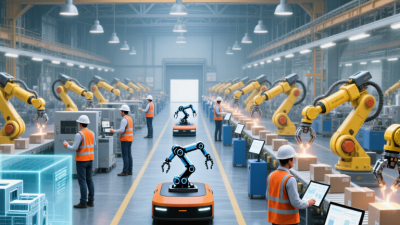
Global buyers should match automation with product volume, labor conditions, and service access. The ten common options include industrial robots, collaborative robots, automated guided vehicles, autonomous mobile robots, CNC systems, programmable logic controllers, machine vision, automated storage systems, process control, and packaging automation. Each solves a different bottleneck. A robotic arm may handle repetitive palletizing, while machine vision checks small defects under changing light.
The International Federation of Robotics reported 541,302 industrial robots were installed worldwide in 2023.
It also recorded more than 4.28 million robots operating globally.
These figures show strong adoption, but they do not prove that every factory needs robots. A low-volume plant may gain more from modular sensors and programmable controls. A high-volume facility may justify integrated robotics, vision, and automated material movement.
Start with cycle time, defect rates, changeover frequency, and available technical skills.
Measure before buying.
Country conditions matter. Voltage standards, import procedures, worker training, spare-parts access, and data-security rules can affect uptime. A system that performs well in one plant may struggle elsewhere. The International Federation of Robotics also reported a global robot density of 162 units per 10,000 manufacturing employees in 2023. That benchmark is useful, but imperfect.
It cannot replace a site audit. Buyers should request open interfaces, local maintenance plans, safety validation, and realistic payback assumptions.
Cheap automation can become expensive when integration remains unclear.
© 2025 Tri-Phase | Privacy Policy | Purchase Terms & Conditions | Terms & Conditions