
TRI-PHASEI-TECHAutomation Solutions of WI
What Is a Pop Up Electrical Socket?

What Is a Pop Up Electrical Socket?

A Pop Up Electrical Socket is a practical answer to a familiar problem: limited power access on modern desks, kitchen islands, and meeting tables. Hidden beneath the surface, it rises when needed and disappears after use. The result is cleaner than a loose power strip. It also creates new safety questions.

Grand View Research identifies continued growth in the global smart home market, driven by connected devices and improved household convenience. Research and Markets similarly reports expanding demand for modular electrical accessories and flexible power solutions. These trends support interest in Pop Up Electrical Socket systems, especially in offices, hospitality spaces, and premium residential projects. However, market reports often group sockets with broader electrical equipment. Their figures should not be treated as exact sales data for pop-up products.

Lesley Rudd, chief executive of Electrical Safety First, offers a principle that fits this product category: “Safety must come before convenience.” That idea matters when a motorized unit lifts beside a sink or carries several chargers. Buyers should examine socket depth, ingress protection, child-safety features, overload protection, cable routing, and installation quality. A smooth lid is useful. It is not proof of safety.

In practice, the best unit feels solid, rises without wobbling, and closes without trapping cables. Small details matter. Certification should match the installation country and local electrical requirements. Some product descriptions remain vague, which deserves criticism. A Pop Up Electrical Socket can improve a space, but only when design, testing, and professional installation work together.
What Is a Pop Up Electrical Socket?

Definition and Basic Function of a Pop-Up Electrical Socket

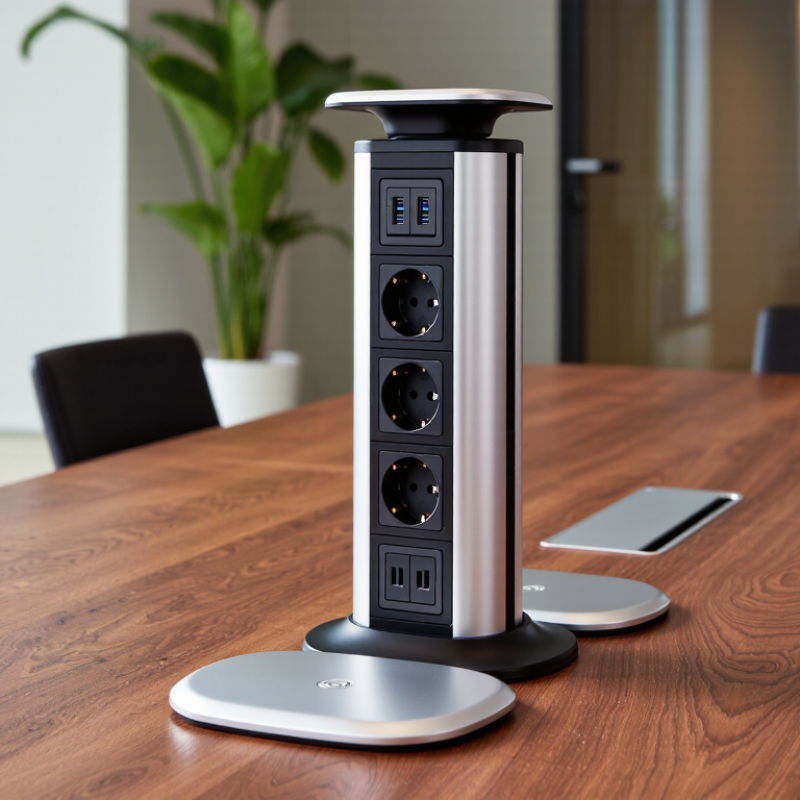
A pop-up electrical socket is a retractable power outlet installed in a countertop, desk, workbench, or floor. When closed, its cover sits nearly level with the surrounding surface. With a light press or controlled lift, the unit rises and exposes one or more outlets. Its basic function is simple: bring electrical access closer to where equipment is used. This design reduces loose extension cords across work surfaces, although it does not remove every hazard. Some models include USB charging ports, data connections, or separate switches. These features are not universal. The housing usually contains socket modules, wiring terminals, seals, and a spring or motorized lifting mechanism.

In a kitchen, a pop-up outlet can power a mixer without occupying a permanent wall outlet. At a conference table, it can support laptops while remaining hidden between meetings. The socket should rise smoothly and lock securely. It should not wobble. During installation, a qualified electrician checks the available depth, cable routing, load rating, and grounding. The surrounding surface must also leave enough clearance for safe movement. A socket made for dry indoor use may be unsuitable near sinks or damp floors. That distinction is easy to miss. The design sounds nearly ideal, but it remains a mains electrical device. Crumbs, dust, and spilled liquids can enter the opening when the cover is raised. Specifications can also be confusing; the stated capacity may describe the total load, not each outlet. I would verify the rating before connecting high-power appliances. This small step is often overlooked.

What Is a Pop-Up Electrical Socket?

A pop-up electrical socket is a retractable power outlet installed in a desk, countertop, floor, or work surface. When retracted, it remains concealed; when raised, it provides access to electrical power for connected devices.

The chart shows representative nominal power ratings for common devices that may be connected to a pop-up socket. Actual consumption varies by model and operating conditions. High-power appliances should only be used when the socket, wiring, and circuit are rated for the required load.

Main Components and How the Pop-Up Mechanism Works

What Is a Pop Up Electrical Socket?

A pop-up electrical socket is a recessed power unit that rises from a desk or countertop when needed. Its main components usually include a housing, socket modules, a spring or motorized lift, and a locking system. A cable connection supplies power from the fixed wiring below. Some models also include USB charging ports, indicator lights, or moisture-resistant covers.

The mechanism is simple but carefully balanced. Pressing the top releases the latch, allowing the inner column to lift. In manual designs, spring tension pushes the unit upward. A second press often locks it back into the housing. Motorized versions use a small drive system and limit switches to control movement. The housing helps keep dust and spills away when closed, although it is not automatically waterproof. I have found that alignment matters more than expected. A slightly uneven cutout can cause rubbing, noise, or incomplete movement. Qualified electrical work is essential when connecting fixed wiring.

Tips:

  • Measure the opening twice before installation.
  • Keep the socket clear of crumbs and standing water.
  • Do not force a stiff mechanism.
  • Check the load rating and cable condition regularly.
  • If heat, burning smells, or loose outlets appear, stop using it and contact a qualified electrician.
  • A child-safe cover may also be sensible in busy rooms.

Different Types and Common Installation Locations

What Is a Pop Up Electrical Socket?

A pop up electrical socket is a retractable power unit installed inside a worktop, desk, floor, or cabinet. It stays hidden when unused and rises when power is needed. Common types include manual lift sockets, push-button units, rotating towers, and motorized models. Some combine power outlets with USB charging ports or data connections. Their design can reduce cable clutter, but it also creates a moving mechanism that needs careful maintenance.

Installation location affects safety and convenience. Kitchen worktops suit sockets near coffee machines, mixers, or charging areas. Office desks benefit from units placed beside monitors, not directly under spilled drinks. Floor-mounted sockets can serve conference tables and open-plan workspaces, but they require strong covers and correct floor-box protection. The National Fire Protection Association reported that electrical distribution and lighting equipment caused about 32,620 home fires annually from 2016 to 2020. That figure makes professional installation more than a cosmetic choice.

Tips: Confirm the socket’s load rating, depth, and water-resistance level before cutting the surface. Keep it away from sinks unless local electrical rules permit that location. Use a qualified electrician for circuit protection and grounding. In practice, even a well-designed unit may collect crumbs around its rim. That small detail is easy to underestimate. Choose a smooth, wipeable surface and inspect the mechanism regularly. NFPA data also reminds us that hidden power should never mean hidden risk.

Electrical Safety Features and Usage Considerations

What Is a Pop Up Electrical Socket?

A pop up electrical socket is a retractable outlet installed in a countertop, desk, or cabinet. It stays hidden when unused and rises when power is needed. This design saves space, but appearance should never replace careful safety checks.

Electrical Safety Features and Usage Considerations

Look for grounded outlets, child-protection shutters, overload protection, and a residual-current safety device where local rules require one. The housing should resist ordinary dust and small spills, although it is not automatically waterproof. Keep wet hands, splashing liquids, and cleaning sprays away from the socket. Never exceed its rated load, especially when using kettles, heaters, or other high-power appliances. A qualified electrician should confirm the wiring, grounding, and installation depth. Incorrect fitting can trap cables or weaken the countertop.

Tips: Keep the socket fully lowered when not in use. Check the cord for heat, cracking, or loose plugs. Stop using it if you notice buzzing, burning smells, or discoloration. Do not force the mechanism when crumbs or objects block its movement. A tidy surface can hide a problem. That detail is easy to miss. Safety shutters and overload protection reduce risk, but no feature is perfect. Inspect the unit occasionally, and follow the installation instructions and applicable local electrical requirements.

Key Factors to Consider When Choosing One

What Is a Pop Up Electrical Socket?

Key Factors to Consider When Choosing One

A pop-up electrical socket stays hidden inside a desk, kitchen island, or work surface. With a light press, it rises for convenient access. These units can reduce cable clutter, but appearance should not control the purchase. Safety, capacity, and installation quality matter more.

Check the socket’s electrical rating before connecting appliances. A laptop charger needs little power, while a kettle or toaster demands much more. The total load should remain within the manufacturer’s stated limit. I have seen users choose several outlets without checking shared capacity. That shortcut can create heat and premature wear.

Look closely at the construction. A strong metal or heat-resistant housing usually handles daily movement better than fragile plastic. The lifting mechanism should feel smooth, stable, and free from sharp edges. Also inspect the cable length, plug type, grounding method, and available protection features. Damp areas require equipment designed for moisture exposure, not a standard indoor model.

Installation depth is easy to overlook. Measure the cabinet or desktop before ordering. Leave enough room for cables to bend without pressure. A qualified electrician should verify wiring, earthing, and local compliance requirements. I would also test the unit after installation, although I once focused too much on appearance and forgot access for future maintenance. Dust and crumbs eventually find every opening. Choose a design that can be cleaned and serviced without dismantling the entire surface.

What Is a Pop Up Electrical Socket? - Key Factors to Consider When Choosing One

Selection Dimension What It Means Typical Options or Specifications What to Check Before Choosing
Definition A pop-up electrical socket is a retractable power and connectivity unit installed in a desk, countertop, work surface, or floor. Manual lift, push-to-open, spring-assisted, or motorized mechanisms. Confirm that the unit is designed for the intended surface and installation environment.
Installation Location The mounting position affects accessibility, protection, wiring, and the required product design. Desk, kitchen island, conference table, workbench, floor box, or furniture panel. Measure the surface thickness, available clearance below the surface, and cable-routing space.
Socket and Port Mix The combination of outlets and data connections determines how many devices can be connected. AC outlets, USB-A, USB-C, Ethernet, HDMI, audio, and cable pass-through openings. Choose ports based on current devices and likely future requirements, not only appearance.
Electrical Rating The rating indicates the maximum voltage, current, and power load the socket is designed to handle. Common household and office units are rated for the electrical standards of their installation country. Check the voltage, frequency, current rating, plug type, and applicable local electrical requirements.
USB Charging Integrated USB ports can charge personal electronics without using an AC outlet. USB-A, USB-C, or a combination; USB-C may support higher charging power when specified. Review the total output, output per port, charging protocol, and whether power is shared between ports.
Ingress Protection An IP rating describes protection against solids and water under defined test conditions. Indoor dry-location models generally have different protection levels from models intended for damp or outdoor areas. Do not assume that a retractable cover makes a product waterproof; verify the stated IP rating and installation limits.
Safety Features Safety features help reduce electrical, mechanical, and misuse-related risks. Grounding, shutters, overload protection, surge protection, child-resistant designs, and thermal protection. Look for recognized certification marks and installation instructions appropriate for the local market.
Mounting Cutout The cutout is the opening required in the desk, countertop, or other mounting surface. Round, rectangular, or custom-shaped cutouts, depending on the socket design. Use the manufacturer’s exact cutout template; a slightly incorrect opening can prevent secure installation.
Retracted Height and Clearance The closed height and underside depth determine whether the unit fits without interfering with drawers or equipment. Low-profile, standard-depth, and extended-depth designs. Measure both the visible surface and the space beneath it before drilling or purchasing.
Materials and Finish Materials affect durability, appearance, corrosion resistance, and cleaning requirements. Aluminum, steel, polycarbonate, ABS plastic, and finishes such as black, white, silver, or brushed metal. Match the finish to the surrounding surface and select corrosion-resistant materials for humid environments.
Cable Management Cable management keeps connected wires organized and reduces pulling or bending at the socket. Rear cable exit, integrated cable channel, pass-through opening, or separate under-desk routing. Allow enough space for plug heads, power adapters, and the bend radius of connected cables.
Ease of Operation The opening and closing mechanism affects daily convenience and long-term usability. Push-to-open, lift-up, hinged cover, manual retractable, or powered operation. Choose a mechanism that is easy to operate while preventing accidental opening or cable pinching.
Best Use Case Pop-up sockets provide convenient, concealed access to power and connectivity when a clean surface is preferred. Home offices, meeting spaces, kitchens, training rooms, hospitality areas, and workshops. Select a model according to the location, connected equipment, environmental conditions, and local installation rules.