TRI-PHASEI-TECHAutomation Solutions of WI
China Best Industrial Automation Trends for Global Buyers

China Best Industrial Automation Trends for Global Buyers

China’s industrial automation trends are reshaping how global buyers evaluate factories, equipment, and long-term suppliers. The opportunity is substantial, but the market is not perfectly uniform.

The International Federation of Robotics reported 276,288 industrial robot installations in China during 2023. This represented about 51% of global installations that year. China also reached approximately 470 robots per 10,000 manufacturing employees, according to World Robotics 2024. These figures show strong adoption across automotive, electronics, metalworking, and logistics. They do not guarantee identical capabilities from every supplier.

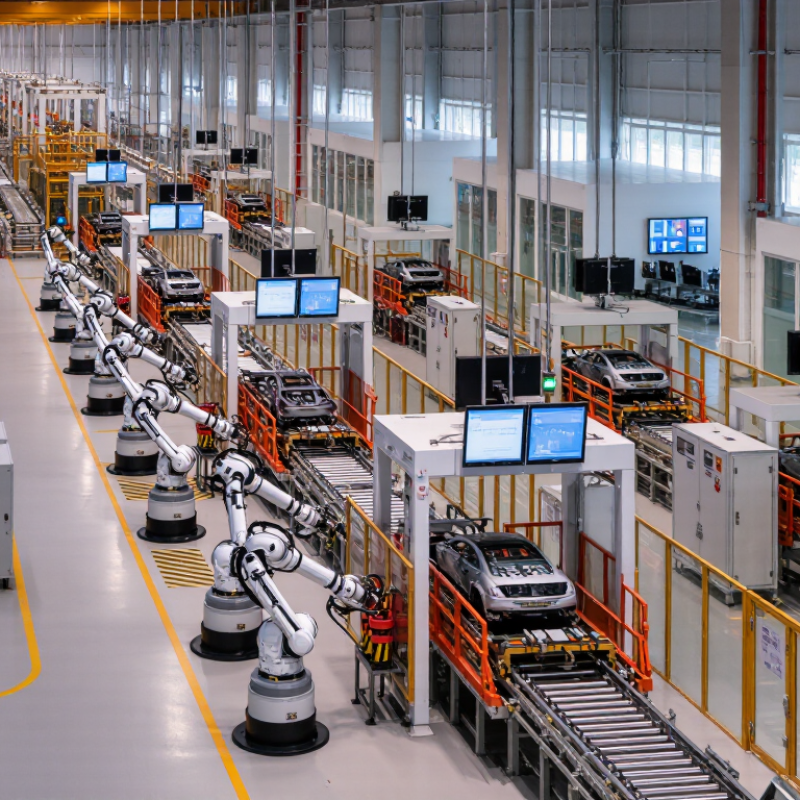
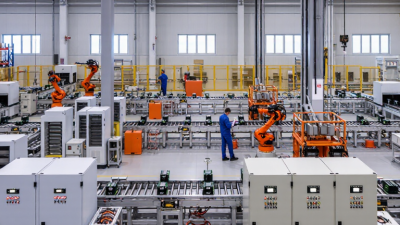
Real factories reveal the difference. One facility may use vision-guided robots beside automated conveyors, while another still depends on manual loading. Global buyers should examine cycle times, rejection rates, preventive maintenance records, and spare-parts availability. These details often matter more than a polished product catalogue.

This article will examine China’s key industrial automation trends, including collaborative robots, machine vision, digital twins, industrial Internet platforms, and energy-efficient systems. It will also connect technology choices with total cost of ownership, integration quality, cybersecurity, and export-market compliance. The Ministry of Industry and Information Technology has repeatedly promoted intelligent manufacturing and upgraded production capacity. However, policy direction is not the same as proven project performance.

Reliable purchasing decisions require factory audits, sample testing, documented safety procedures, and transparent service agreements. Buyers should request measurable evidence. Claims deserve verification. Some suppliers remain excellent at hardware but weaker in software integration or overseas support. That gap deserves careful reflection before signing a contract.

China Best Industrial Automation Trends for Global Buyers

China Industrial Automation Defined: Systems, Segments, and Buyer Terms

China Best Industrial Automation Trends for Global Buyers

China Industrial Automation Defined: Systems, Segments, and Buyer Terms

China’s industrial automation market now covers control, sensing, motion, robotics, software, and industrial networking. The International Federation of Robotics reported 276,288 robot installations in China during 2023. That represented 51% of global installations. These figures show scale, but scale does not guarantee project fit.

A typical system connects sensors to PLCs, drives, robots, SCADA, and MES platforms. PLCs manage machine logic. SCADA displays production conditions. MES tracks orders, materials, quality, and traceability. Key segments include automotive, electronics, batteries, food processing, logistics, and general manufacturing. Buyers should define cycle time, accuracy, uptime, payload, IP rating, and safety requirements before comparing quotations.

Use precise purchasing terms. FAT means factory acceptance testing, while SAT means site acceptance testing. OEE measures availability, performance, and quality. MTBF indicates expected operating reliability, but suppliers may calculate it differently. Total cost of ownership includes integration, training, spare parts, energy, and downtime. Field audits often reveal an uncomfortable gap: a low equipment price can hide expensive software changes. The data is useful, but imperfect. China’s automation strength is real; engineering documentation, local support, and compliance evidence still require careful checking. Sources: International Federation of Robotics, World Robotics 2024; Ministry of Industry and Information Technology, China industrial digitalization publications.

Market Baseline: 276,288 Robots Installed in China in 2023 (IFR)

China Best Industrial Automation Trends for Global Buyers

China installed 276,288 industrial robots in 2023, according to the International Federation of Robotics. This figure shows strong manufacturing demand, not merely equipment popularity. It also gives global buyers a practical market baseline. Robot adoption now reaches welding, assembly, material handling, inspection, and packaging lines.

The number matters, but context matters more. A robot suitable for a small electronics station may fail in heavy machining. Buyers should check payload, reach, cycle time, repeatability, floor space, and environmental protection. Integration quality often decides performance. A reliable cell needs clear programming, guarded access, emergency controls, and documented maintenance procedures. Ask for test results using your actual workpieces.

The market is moving toward connected production, machine vision, flexible grippers, and data-based maintenance. These features can reduce manual handling and improve traceability. They can also create new integration problems. Poor network planning may delay production. Incomplete training may leave valuable equipment underused. That part is easy to overlook.

A careful buyer should request installation records, spare-parts policies, software support terms, and operator training details. Independent factory audits can expose gaps between catalog claims and daily performance. The 276,288-unit figure is impressive, yet it does not guarantee every project will succeed. My assessment would remain cautious until the equipment passes a realistic pilot test. Real production is less forgiving.

Core Trend: AI, Machine Vision, and Collaborative Robots Through 2026

China’s industrial automation market is shifting from fixed programming toward AI-assisted decisions. Production audits show this clearly: cameras now inspect welds, labels, and surface defects beside existing lines.

The International Federation of Robotics reported 541,302 industrial robot installations worldwide in 2023. China accounted for more than half of them, showing strong purchasing capacity and integration experience. By 2026, AI will help robots adjust speed, gripping force, and inspection rules from changing production data. Machine vision will matter most where defects are small, reflective, or inconsistent. Better lighting still matters. AI cannot rescue poor images.

Collaborative robots are also gaining attention among global buyers. Industry forecasts expect the collaborative robot market to expand strongly through 2026, supported by shorter deployment times and flexible production cells. A cobot can place parts beside an operator, then move to packaging after a software change. This sounds simple, but safety assessment, payload limits, and cycle-time testing remain essential. The International Federation of Robotics continues to stress risk evaluation and application-specific safeguards.

China’s advantage is not only lower equipment cost. Its supplier ecosystem supports faster customization, local engineering, and high-volume manufacturing. Yet buyers should request traceable test data, failure-rate records, cybersecurity controls, and spare-parts plans. Some suppliers still present laboratory accuracy as factory performance. That gap deserves more scrutiny.

Supplier Benchmarking: China Reached 470 Robots per 10,000 Workers in 2023

China Best Industrial Automation Trends for Global Buyers

China reached 470 industrial robots per 10,000 manufacturing workers in 2023, according to the International Federation of Robotics’ World Robotics 2024 report. The figure rose 17% from 2022 and exceeded Germany’s 429 and Japan’s 419. This benchmark shows faster factory automation, especially in electronics, automotive components, batteries, and metal processing.

The number needs careful reading. Robot density measures installed industrial robots against manufacturing employment, not total workforce productivity. The same IFR report recorded about 276,000 new industrial robot installations in China during 2023. China also held roughly 1.75 million operational industrial robots, creating a deep field for supplier comparison. Buyers should examine cycle-time records, uptime data, safety certifications, local service coverage, and spare-part response times. Ask for production-floor evidence, not only catalog claims.

A high density does not guarantee stable output. That is the uncomfortable part. Some factories still report integration delays, operator training gaps, and weak data connectivity. The China Robot Industry Alliance’s industry reporting also indicates strong growth alongside uneven application maturity. Suppliers should therefore be scored by verified deployment results, software openness, maintenance skills, and five-year operating costs. Price alone is a poor benchmark. Good automation is measurable on the factory floor.

Global Buying Controls: IEC 61508, ISO 10218, CE, and TCO Metrics

China Best Industrial Automation Trends for Global Buyers

Global buyers should treat IEC 61508 as a safety lifecycle, not a document checklist. It covers hazard analysis, safety functions, software controls, validation, and maintenance. Ask for traceable evidence at each stage. A safety integrity claim without test records is weak. Very weak.

ISO 10218 guides industrial robot safety, including guarding, collaborative operation, emergency stops, and commissioning. Buyers should inspect a sample cell before signing contracts. Check access doors, reduced-speed modes, restart behavior, and operator visibility. CE marking also requires careful review. It indicates conformity with applicable European requirements, but it does not replace a risk assessment. The technical file, declaration, manuals, and wiring details should match the delivered machine. One mismatch can delay customs or installation.

TCO metrics reveal costs that unit prices hide. Measure integration hours, control-panel changes, energy use, spare parts, training, calibration, downtime, and end-of-life handling. Compare five-year operating scenarios, not only purchase quotations. A cheaper system may require more engineering support. That difference becomes expensive during production ramp-up. Use site data where possible, then challenge optimistic assumptions. Forecasts often ignore night-shift troubleshooting. Buyers should also confirm local service capability and document revision control. Standards evolve, and a compliance package can become outdated before commissioning. The uncomfortable question is simple: can the supplier prove safe performance under real operating conditions?

China Best Industrial Automation Trends for Global Buyers - Global Buying Controls: IEC 61508, ISO 10218, CE, and TCO Metrics
Automation Trend Buyer Requirement Relevant Global Control Evidence to Request Measurable Acceptance Metric TCO Cost Elements Global Buying Priority
Safety-rated control systems
Integrated safety PLCs, safety I/O, emergency-stop circuits, and monitored protective devices.
Safety functions must be specified by risk, required performance, validation method, and operating environment rather than by controller model alone. IEC 61508
Functional safety lifecycle and safety integrity concepts, including SIL 1, SIL 2, and SIL 3 where applicable.
Safety manual; safety certificates for applicable components; PFHD or PFDavg data; failure-rate assumptions; validation records; proof-test interval. Each safety function has a documented target SIL or equivalent risk-reduction requirement, calculated architecture, and completed validation report. Engineering; safety validation; proof testing; spare safety modules; downtime during testing; training. Critical
Collaborative and conventional robot cells
Use of robots with guarding, speed-and-separation monitoring, power-and-force limiting, or hand-guided operation.
Define the robot application, tooling, payload, reach, foreseeable misuse, access points, and human–robot interaction modes. ISO 10218-1:2025
Robot safety requirements.
ISO 10218-2:2025
Robot-system and integration safety requirements.
Risk assessment; robot declaration and technical documentation; cell layout; safeguarding design; stopping-time and stopping-distance test; gripper hazard analysis. Validated safety distances and stopping performance under the maximum specified payload, speed, tool, and operating conditions. Safety fencing or scanners; tooling; integration; floor space; cycle-time losses from reduced speed; maintenance. Critical
CE-ready machinery supply
Equipment designed for entry into the European Economic Area.
Identify whether the shipment is a complete machine, partly completed machinery, or an assembly of machines and assign conformity responsibilities contractually. CE marking
Machinery Directive 2006/42/EC remains the principal framework until the application of Regulation (EU) 2023/1230 on 20 January 2027, subject to applicable transition rules.
EU Declaration of Conformity or Declaration of Incorporation; risk assessment; user instructions; technical file access arrangement; applicable harmonised-standard list; CE label details. Documentation package is complete, language requirements are met, and all applicable essential health and safety requirements are addressed before shipment. Technical documentation; translation; conformity assessment; modifications after factory acceptance; customs and market-surveillance exposure. Critical
Industrial connectivity and data integration
Ethernet-based control, OPC UA, MQTT gateways, edge data collection, and manufacturing-system integration.
Specify data ownership, interfaces, update policy, network segmentation, time synchronization, and recovery procedures before purchase. IEC 62443
Industrial automation and control-system cybersecurity practices, including zones, conduits, and security levels.
OPC UA
Platform-independent industrial interoperability framework.
Network architecture; interface specification; user and role matrix; hardening guide; vulnerability-management process; backup and restore test; software bill of materials where available. Successful interoperability test; documented recovery time objective; controlled user access; verified backup restoration; no unresolved critical security findings at acceptance. Integration software; licenses; cybersecurity assessment; patching; network hardware; downtime for updates; specialist support. High
Machine vision and quality inspection
Camera-based inspection, optical measurement, traceability, and defect classification.
Define inspection criteria, sample variation, lighting conditions, acceptable false-reject rate, and escalation handling. ISO 9001 quality-management principles; applicable product regulations and sector-specific inspection requirements. Golden samples; defect library; lighting specification; test protocol; calibration records; image-retention policy; operator acceptance procedure. Detection rate, false-reject rate, measurement repeatability, inspection cycle time, and traceability completeness are agreed using representative production samples. Cameras and lighting; computing hardware; calibration; model maintenance; rejected-good-product cost; data storage. High
Predictive maintenance and condition monitoring
Use of vibration, temperature, current, pressure, and runtime data to identify degradation.
Use condition indicators to support maintenance decisions, not as a substitute for a verified safety function or statutory inspection. ISO 17359 provides general guidance for condition monitoring and diagnostics of machines; maintenance procedures should also follow the equipment manufacturer’s instructions. Sensor accuracy and range; baseline data; alarm thresholds; diagnostic logic; maintenance workflow; historical event records; calibration certificates. Alarm precision, lead time before confirmed failure, avoided unplanned downtime, mean time to repair, and maintenance compliance. Sensors; gateways; software; data storage; calibration; analyst time; false alarms; integration with maintenance systems. Medium–High
Energy-efficient automation
Variable-speed drives, regenerative braking, standby modes, efficient pneumatics, and energy dashboards.
Measure energy at machine or cell level and compare consumption against a defined production output. ISO 50001 energy-management principles; IEC 61800-9-2 methods may support drive-system efficiency classification where applicable. Power-meter specification; measurement boundary; load profile; standby behavior; compressed-air consumption; energy data export; commissioning baseline. kWh per finished unit, peak demand, idle consumption, compressed-air leakage rate, and verified energy reduction after commissioning. Efficient drives; meters; controls engineering; compressed-air infrastructure; software; demand charges; maintenance. High
Modular and scalable production cells
Standardized mechanical, electrical, software, and communication interfaces for future expansion.
Purchase a documented architecture with spare capacity and defined change-control responsibilities. IEC 60204-1 for electrical equipment of machines; applicable machinery, EMC, and low-voltage requirements should be assessed for the complete installation. Electrical schematics; I/O list; interface control document; spare-capacity statement; software version-control record; expansion test plan. Expansion can be completed without redesigning the safety architecture, exceeding cabinet capacity, or invalidating the conformity assessment. Initial overcapacity; standardized modules; engineering changes; spare parts; software maintenance; future integration labor. High
Digital factory acceptance testing
Remote witness testing, simulation, virtual commissioning, and structured production-data review.
Use a formal FAT/SAT protocol with objective pass/fail criteria and a controlled punch list. IEC 61508 lifecycle evidence and ISO 10218 safety validation records should be reviewed where the equipment includes related safety functions or robot systems. Approved test specification; simulated I/O list; cycle-time report; alarm matrix; safety-function test results; open-issue register; SAT sign-off. FAT pass rate, punch-list closure time, repeatable cycle time, alarm response, safety-function response, and first-pass SAT acceptance. Travel; test fixtures; virtual commissioning; rework; delayed installation; production ramp-up; remote-support time. High
Total cost of ownership governance
Evaluation beyond purchase price, including installation, operation, downtime, compliance, and end-of-life.
Compare bids using the same functional scope, production assumptions, service period, spare-parts policy, and warranty exclusions. ISO 15686-5 provides a life-cycle costing framework that can be adapted to industrial assets and automation projects. Five- or ten-year cost model; utility assumptions; labor rates; uptime assumptions; spare-parts list; warranty terms; software fees; decommissioning plan. TCO = CAPEX + installation + commissioning + energy + labor + maintenance + consumables + downtime + compliance + software/support + end-of-life costs − residual value. All listed lifecycle cost categories, with sensitivity analysis for energy price, utilization, downtime rate, labor, and spare-parts availability. Critical
Buyer control note: CE marking is a manufacturer’s declaration of conformity with applicable European Union requirements; it is not, by itself, a universal third-party product certification. The applicable standards, conformity route, and legal responsibilities should be confirmed for the specific machine, installation, destination market, and commissioning date.