TRI-PHASEI-TECHAutomation Solutions of WI
China Top 10 Industrial Automation Trends for Global Buyers

China Top 10 Industrial Automation Trends for Global Buyers

China’s industrial automation market is entering a more practical, demanding phase. Global buyers now examine more than machine speed. They assess reliability, software compatibility, energy use, maintenance support, and workforce skills.

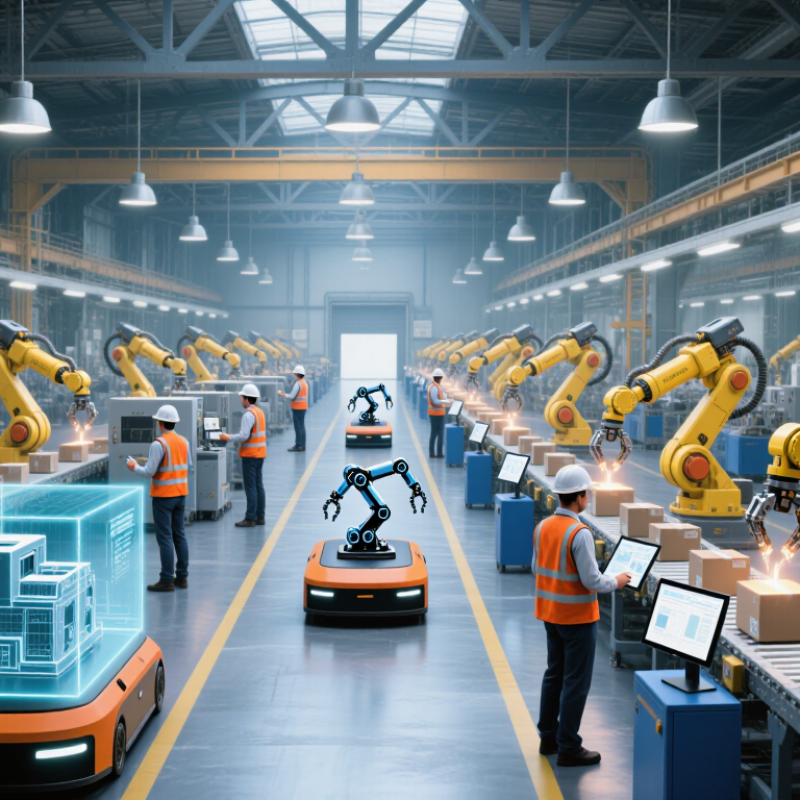
This article explores the China Top 10 Industrial Automation Trends shaping purchasing decisions. These trends include intelligent robotics, machine vision, digital twins, industrial artificial intelligence, collaborative robots, and connected production systems. A factory floor may show robotic arms moving every few seconds, sensors tracking vibration, and dashboards warning engineers before equipment fails. These details matter because small interruptions can affect delivery schedules and operating costs.

Rodney Brooks, a respected robotics expert and founder of iRobot, said, “The robots are coming for your jobs, but they’re not coming for your jobs in the way you think.” His observation remains useful for global buyers. Automation changes tasks, skills, and responsibilities. It does not simply remove people from production.

However, technology alone cannot guarantee better performance. Supplier quality, integration experience, cybersecurity controls, and after-sales service still require careful evaluation. Some forecasts may overstate artificial intelligence’s immediate value. Some factories may purchase advanced equipment before preparing their employees. That mistake is easy to overlook.

The following industrial automation trends provide a grounded starting point for international sourcing teams. They also highlight important questions. Can the equipment integrate with existing systems? Can local technicians maintain it? Will the promised efficiency appear beyond a controlled demonstration? Buyers should remain curious, but not careless.
China Top 10 Industrial Automation Trends for Global Buyers

China’s Industrial Automation Market: Scope, Drivers, and Global Relevance

China’s industrial automation market now covers robots, motion control, sensors, machine vision, control systems, and factory software. Its scope reaches automotive, electronics, batteries, logistics, food processing, and industrial equipment. According to the International Federation of Robotics’ World Robotics 2024 report, China installed 276,288 industrial robots in 2023. That represented about 51% of global installations. The country’s operational robot stock also exceeded 1.7 million units.

Several forces are expanding demand. Rising labor costs encourage manufacturers to automate repetitive welding, inspection, and material handling. Export-oriented factories also need stable quality across long production runs. China’s Ministry of Industry and Information Technology has reported more than 10,000 digitalized workshops and smart factories. Policy support matters, but customer economics matter more. A compact vision system can reduce inspection errors within one production shift.

Global buyers are watching this market for scale, engineering depth, and customization. Local suppliers often support fast prototype changes, dense component sourcing, and integration with existing equipment. These advantages can shorten deployment schedules. However, buyers should examine software compatibility, cybersecurity controls, spare-parts access, and technical documentation. Data definitions differ between reports, and automation adoption is uneven across regions. That is an important weakness. The strongest opportunity may not be a fully autonomous factory, but a measurable upgrade to one difficult process.

The Ten Leading Automation Trends Shaping Chinese Industry

China’s industrial automation landscape is moving from isolated machines toward connected production systems. Factory audits often reveal AI vision inspection on fast-moving lines, where cameras detect surface defects within seconds. Collaborative robots are also supporting workers in assembly, packing, and material handling. Their value is clear when product models change frequently.

Industrial Internet platforms now connect equipment, sensors, and production software across several workshops. Edge computing processes machine data near the production line, reducing delays and protecting operational continuity. Private 5G networks are improving communication between mobile robots and control systems. Digital twins help engineers test layouts before moving physical equipment. Predictive maintenance uses vibration, temperature, and energy data to identify early failures.

The remaining trends are equally practical. Flexible manufacturing cells allow smaller batches without major retooling. Energy management systems measure compressed air, electricity, and heat consumption in real time. Cybersecurity is becoming part of automation design, not an afterthought. Worker training is shifting toward simulation, remote assistance, and mixed human-machine workflows. This matters for global buyers evaluating reliability, service access, and data governance.

Not every factory needs all ten trends. Over-automation can create expensive complexity. A poorly integrated sensor still produces poor decisions. Procurement teams should request test results, maintenance records, and clear system boundaries. That evidence is often more useful than impressive demonstrations.

Technologies and Applications Behind China’s Automation Transformation

China’s automation transformation is moving beyond factory robots. Manufacturers now combine industrial robots, machine vision, programmable logic controllers, industrial networks, and cloud-based monitoring. These systems support welding, packaging, inspection, warehousing, and precise material handling. On a production floor, cameras detect surface defects while sensors track vibration, temperature, and cycle time. This practical data helps teams reduce stoppages and adjust maintenance schedules before failures become costly. Yet integration remains uneven. Older equipment often needs gateways, custom interfaces, and patient testing.

Tips for global buyers: Ask for application evidence, not impressive specifications. Request sample inspection reports, response-time data, safety documentation, and integration drawings. Check whether the supplier supports local voltage, language, training, spare parts, and remote diagnostics. A pilot line is wiser than a large first order. Measure uptime, defect rates, changeover time, and operator learning time. Do not ignore cybersecurity. Use access controls, network segmentation, encrypted connections, and documented update procedures.

The strongest solutions are modular. A buyer may start with vision inspection and add predictive maintenance later. Digital twins can test layout changes before physical installation, saving floor space and reducing commissioning risks. Collaborative automation supports repetitive tasks where staffing is difficult, but human-machine risk assessments remain essential. Results depend on workflow design, not hardware alone. In practice, some projects promise quick payback and deliver slower learning. That gap deserves honest measurement.

China Top 10 Industrial Automation Trends for Global Buyers - Technologies and Applications Behind China’s Automation Transformation

Rank Automation Trend Core Technologies Typical Industrial Applications China Market Relevance Technology Maturity Primary Buyer Value Key Integration Considerations
1 Industrial Robots and Collaborative Robots Articulated robots, SCARA robots, delta robots, collaborative robots, robot controllers and machine vision Assembly, welding, palletizing, packaging, material handling, dispensing and inspection Very High Mature Higher throughput, improved repeatability, reduced exposure to hazardous or repetitive work Payload, reach, cycle time, safety zoning, end-of-arm tooling, programming and local service capability
2 Machine Vision and AI-Based Inspection 2D and 3D cameras, optical lighting, deep-learning inspection, edge computing and image-processing software Surface inspection, dimensional verification, defect detection, label checking and robotic guidance Very High Mature Consistent quality control, traceable inspection decisions and reduced manual inspection effort Image quality, lighting stability, training data, false-positive control, explainability and processing latency
3 Industrial Internet of Things and Connected Factories Industrial sensors, gateways, edge devices, industrial Ethernet, OPC UA, MQTT and manufacturing data platforms Equipment monitoring, production tracking, energy management, remote diagnostics and plant-wide data collection Very High Mature Improved visibility of assets, faster decisions and better use of production data Legacy-machine connectivity, data ownership, network architecture, cybersecurity and interoperability
4 Digital Twins and Manufacturing Simulation 3D plant models, discrete-event simulation, virtual commissioning, process modeling and real-time asset data Line balancing, factory layout, robot-cell validation, capacity planning and operator training High Growing Lower commissioning risk, shorter changeover planning and earlier detection of process bottlenecks Model accuracy, data synchronization, engineering skills, software compatibility and lifecycle maintenance
5 Flexible Manufacturing and Modular Automation Modular production cells, programmable automation, quick-change tooling, flexible conveyors and recipe management High-mix assembly, customized products, short production runs and rapid product changeovers Very High Growing Greater product variety, reduced changeover time and improved responsiveness to demand changes Standardized interfaces, recipe control, tooling repeatability, operator training and validation procedures
6 Autonomous Mobile Robots and Intralogistics Autonomous mobile robots, fleet management, simultaneous localization and mapping, navigation sensors and warehouse software Line-side delivery, warehouse transport, order movement, pallet handling and work-in-progress logistics High Growing Reduced manual transport, more flexible material flow and improved warehouse utilization Traffic management, floor conditions, load standards, safety scanners, fleet integration and charging strategy
7 Predictive Maintenance and Industrial Analytics Vibration, temperature and current sensors, anomaly detection, condition monitoring and maintenance analytics Rotating equipment, pumps, motors, compressors, production tools and utility systems High Growing Earlier fault detection, fewer unplanned stoppages and better maintenance scheduling Sensor placement, baseline data, alarm thresholds, model validation, data quality and maintenance workflow integration
8 Energy-Efficient and Low-Carbon Automation Energy meters, variable-speed drives, power monitoring, compressed-air analytics, energy dashboards and process optimization Motors, HVAC systems, compressed-air networks, heating processes and energy-intensive production lines Very High Mature Lower energy consumption, improved operating-cost control and better emissions reporting Accurate sub-metering, production-normalized energy data, equipment compatibility and savings verification
9 Industrial Cybersecurity and Secure Automation Network segmentation, secure remote access, identity management, endpoint protection, logging and industrial security monitoring Production networks, supervisory systems, programmable controllers, remote service connections and connected equipment Very High Growing Reduced cyber risk, stronger operational continuity and improved compliance readiness Asset inventory, patching constraints, segmentation, account management, incident response and IEC 62443 alignment
10 Cloud-Edge Manufacturing Platforms and Remote Operations Edge computing, industrial cloud services, remote monitoring, centralized dashboards, APIs and data orchestration Multi-site production monitoring, remote support, centralized quality management and standardized reporting High Growing Scalable visibility across sites, faster troubleshooting and more consistent operational standards Data residency, connectivity reliability, cybersecurity, latency, API governance and offline operating capability
Assessment scale: “Very High” and “High” indicate strong relevance to current industrial automation investment priorities in China; “Mature” indicates broadly deployed technologies with established engineering practices; “Growing” indicates expanding adoption with more variation in implementation maturity.

What Global Buyers Should Evaluate When Sourcing from China

China’s industrial automation market is moving toward AI vision, collaborative robots, digital twins, and connected production lines. Energy monitoring and predictive maintenance are also gaining attention. Global buyers should evaluate these trends through practical factory needs, not attractive demonstrations. A system should reduce cycle time, stabilize quality, or lower downtime. Otherwise, advanced features may become expensive decoration.

Sourcing requires more than comparing quotations. Request clear specifications, process data, component lists, software licenses, and maintenance terms. Review the supplier’s engineering experience with similar materials and production speeds. A factory audit can reveal wiring quality, testing discipline, and spare-part control. Ask for factory acceptance testing before shipment. Include installation training and remote support in the contract. Cybersecurity deserves attention, especially for systems connected to production networks. Check applicable safety and data requirements in the destination market. Documentation is often weaker than expected. Treat that as a real sourcing risk.

Tips: Test one production cell before expanding. Measure output, reject rates, recovery time, and operator feedback. Ask for sample alarm records and a replacement-parts schedule. Confirm who owns the source code and process data. Keep a realistic contingency budget. Even good automation projects need adjustment after installation.

Risks, Standards, and Future Developments in China’s Automation Sector

China Top 10 Industrial Automation Trends for Global Buyers

China’s automation growth is substantial, but scale creates new purchasing risks. The International Federation of Robotics reported 276,288 industrial robot installations in China during 2023. That represented about 51% of global installations. Buyers should examine safety functions, software support, spare parts, and technician training. Low purchase prices can hide costly integration work. I have seen specifications look complete, yet commissioning exposed unclear network responsibilities. That gap still matters.

Standards require careful verification. Machinery should align with ISO 10218, while industrial control cybersecurity should reference IEC 62443 principles. Electrical systems may also require IEC 60204-1 compliance, depending on the application and destination market. A certificate alone proves little. Ask for test records, risk assessments, firmware policies, and traceable component documentation. China’s future growth will likely combine robotics, machine vision, digital twins, and artificial intelligence. However, connected factories increase exposure to unauthorized access and data leakage. The risk is not theoretical. It is operational.

Tips: Request a complete bill of materials and a three-year support plan. Test emergency stops under real production conditions. Separate safety networks from ordinary business networks. Require bilingual manuals and documented software version control. Use independent inspection when the application involves high-speed motion or human collaboration. Standards evolve, and buyers can misunderstand them. That is an uncomfortable but useful reminder.