TRI-PHASEI-TECHAutomation Solutions of WI
How to Choose Industrial Automation in 2026?

How to Choose Industrial Automation in 2026?

Choosing industrial automation in 2026 requires more than comparing robot prices. It requires a clear view of production goals, workforce realities, and long-term risk. The International Federation of Robotics reported 541,302 industrial robot installations worldwide in 2023. It also recorded more than 4.28 million operational robots globally. These figures show strong adoption. They do not prove that every factory needs more machines.

The right system must fit the work. Examine cycle times, product variations, floor space, maintenance skills, and integration requirements. A robotic arm may improve welding consistency. A vision system may reduce inspection errors. A poorly connected machine may simply create faster problems. Rockwell Automation’s 2024 State of Smart Manufacturing Report found that 95% of manufacturers had invested in, or planned to invest in, smart manufacturing technologies. However, investment alone does not guarantee measurable returns.

The details matter.

Joseph Engelberger, widely known as the father of industrial robotics, once said, “I can’t define a robot, but I know one when I see one.” His words remain useful, although they oversimplify today’s connected factories. Modern selection also involves cybersecurity, data ownership, worker training, safety validation, and software compatibility. The International Federation of Robotics, Deloitte, and NIST provide useful reference points, but buyers should verify every claim against site-level evidence. A pilot cell, realistic uptime data, and transparent total-cost analysis can reveal uncomfortable weaknesses. That reflection is valuable. The cheapest automation may become the most expensive decision.
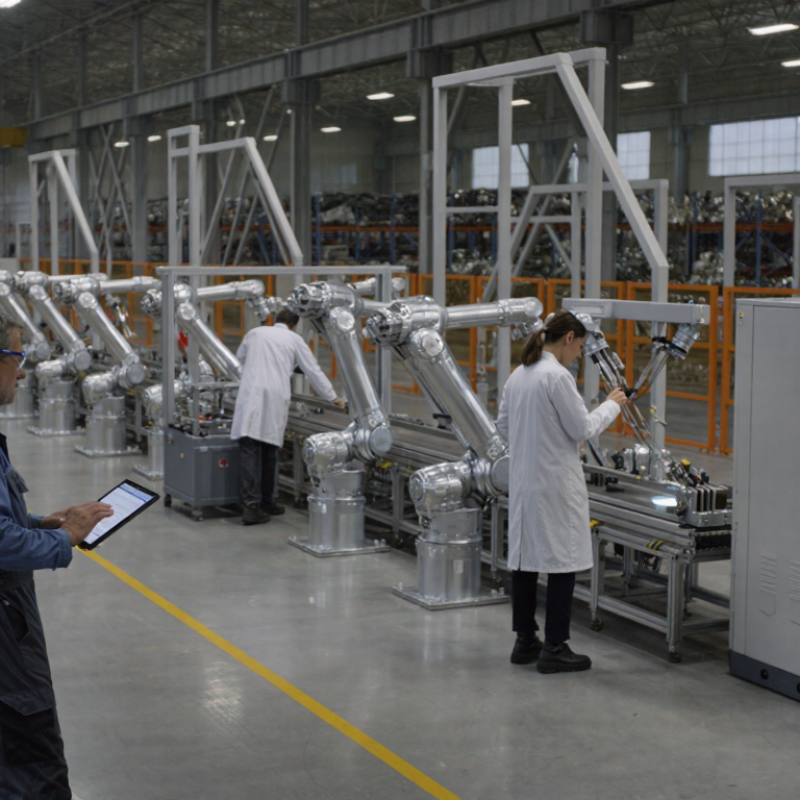
How to Choose Industrial Automation in 2026?

Define Your Automation Goals, Processes, and Performance Requirements

How to Choose Industrial Automation in 2026?

Effective automation begins with a measurable production goal, not a list of fashionable technologies. Define whether you need higher output, fewer defects, safer handling, or shorter changeover times. Set a baseline using real figures, such as 420 units per shift, a 4% defect rate, and 18 minutes of downtime per changeover. Vague goals create expensive systems that look advanced but solve little.

Map the process on the factory floor. Record material movement, operator decisions, inspection points, and repeated delays. A simple process map often exposes more value than a complex software demonstration. Specify required cycle time, accuracy, payload, operating temperature, data access, and maintenance skills. Include safety controls, training needs, and integration with existing equipment. These details determine whether automation will support daily work or disrupt it.

Test assumptions with a limited pilot. Measure actual throughput, unplanned stops, energy use, and error recovery time. Keep operators involved; their practical knowledge often reveals problems hidden in technical drawings. Our early automation plans focused too heavily on speed. We underestimated cleaning time and manual adjustments. That mistake changed our evaluation method. Now, we assess the complete operating cycle, including setup, maintenance, inspection, and recovery. Reliable performance matters more than impressive peak figures. If the process changes frequently, flexibility may deserve greater weight than maximum speed.

Assess Equipment, Technology, and System Compatibility

How to Choose Industrial Automation in 2026?

Choosing industrial automation in 2026 requires more than comparing machine prices. Assess equipment against actual production conditions. Measure load, cycle time, accuracy, heat, dust, and available floor space. A polished specification can still fail beside a vibrating press. Check service access, spare-part availability, and operator training before approval. Small gaps become expensive downtime.

Technology should solve a verified problem, not create a fashionable upgrade. Compare sensors, controllers, vision tools, and data systems by reliability and measurable output. Confirm communication protocols, power requirements, response times, and cybersecurity controls. Test equipment with representative materials and the fastest planned cycle. A short pilot exposes faults that brochures rarely mention. It may also reveal that manual handling remains safer or simpler.

System compatibility deserves a full site review. Map existing machines, software, safety circuits, networks, and maintenance routines. Confirm that new controls exchange data without forcing fragile workarounds. Check signal formats, timestamps, access permissions, and recovery procedures after network failure. Plan for expansion, but avoid buying capacity nobody can support. No checklist is perfect. Document every assumption, then challenge the weakest one with operators and technicians. Their practical objections often uncover the real integration cost.

How to Choose Industrial Automation in 2026? - Assess Equipment, Technology, and System Compatibility

Assessment Dimension What to Evaluate Practical Data Point Compatibility Requirement Recommended 2026 Direction Risk Level
Production Capacity Current throughput, peak demand, cycle time, product mix, and planned expansion. Design for normal demand plus approximately 15–25% scalable capacity where demand is expected to grow. Robot, motion, controller, inspection, and material-handling speeds must support the same takt-time target. Medium
Equipment Performance Accuracy, repeatability, uptime, operating range, load capacity, and environmental rating. Compare stated repeatability, permissible payload, duty cycle, ingress protection, and mean time between failures. Mechanical tolerances, actuator force, sensor resolution, and controller scan time must meet the process specification. High
Control Architecture Centralized versus distributed control, real-time requirements, safety control, and local autonomy. Use deterministic control for synchronized motion and time-critical interlocks; use standard IT networks for non-critical data. Controllers must exchange tags, status, alarms, recipes, and safety signals without incompatible data types or timing gaps. High
Communication Protocols Real-time field communication, machine-to-machine data exchange, remote monitoring, and historical data access. Prioritize open, documented interfaces such as OPC UA for structured industrial data and MQTT for lightweight event messaging. Confirm support for required data models, timestamps, alarms, quality codes, authentication, and store-and-forward behavior. High
Software and Data Programming environment, recipe management, data ownership, analytics, dashboards, and upgrade policy. Verify support for IEC 61131-3 control languages, structured data export, audit trails, backups, and version control. Software must preserve data meaning across equipment, supervisory control, manufacturing execution, and enterprise planning layers. Medium
Functional Safety Emergency stops, guarding, safe speed, safe torque removal, risk assessment, and validation procedures. Safety functions should be selected from a documented risk assessment and validated according to applicable machinery-safety requirements. Safety devices, safety controllers, drives, and actuators must achieve the required performance level or safety integrity level as a complete function. Very High
Cybersecurity Asset inventory, network segmentation, account control, patching, remote access, backups, and incident response. Use role-based access, multifactor authentication for remote access where feasible, encrypted connections, and tested offline backups. Legacy devices must be isolated or protected by industrial firewalls when they cannot support modern authentication or patching. Very High
Energy Efficiency Motor efficiency, compressed-air consumption, idle power, regenerative energy, and peak electrical demand. Measure energy per finished unit and compare operating, standby, and peak-load values before and after automation. Drives, motors, controllers, power supplies, and plant energy-monitoring systems must expose compatible measurement data. Medium
Human–Machine Interface Operator workflow, alarm usability, multilingual support, accessibility, training, and changeover procedures. Alarms should identify the problem, location, consequence, and corrective action; avoid excessive nuisance alarms. HMI screens must reflect controller states, recipe permissions, safety status, and maintenance information consistently. Medium
Maintenance and Support Spare parts, diagnostics, remote support, local expertise, documentation, and lifecycle availability. Confirm documented spare-part lead times, backup procedures, diagnostic tools, and support coverage for the planned service life. Replacement devices must retain compatible firmware, connectors, configurations, programs, and communication behavior. High
Integration Cost Purchase price, engineering, installation, commissioning, training, downtime, software licenses, and future upgrades. Evaluate total cost of ownership over the expected service life rather than comparing equipment purchase prices alone. Integration effort increases when interfaces, data models, electrical standards, and programming practices are inconsistent. High
Scalability and Flexibility New products, additional stations, format changes, remote diagnostics, and future automation levels. Assess how quickly a trained engineer can add a station, modify a recipe, or introduce a new product without redesigning the whole system. Modules should use reusable programs, consistent naming, standard connectors, and interoperable data structures. Medium
Verification Before Purchase Factory acceptance testing, site acceptance testing, interoperability trials, safety validation, and performance evidence. Define measurable acceptance criteria for throughput, quality, availability, alarm response, energy use, and data integrity. Test the complete chain from sensor and actuator to controller, supervisory software, historian, and business application. Very High
Evaluation basis: prioritize safety, interoperability, cybersecurity, maintainability, lifecycle cost, and measurable production performance. All figures are practical planning ranges or verification criteria and should be confirmed against the specific process, applicable regulations, and site conditions.

Compare Safety, Scalability, Integration, and Maintenance Needs

Choosing industrial automation in 2026 requires more than comparing cycle times. Safety is non-negotiable. Start with hazard analysis, guarded access, safe torque-off, and documented validation. ISO 10218-1:2025 emphasizes risk reduction across robot applications, while IEC 61508 supports lifecycle-based functional safety. In plant assessments, ask whether technicians can test a safety circuit without bypassing it. That small detail often reveals weak engineering.

Scalability and integration decide whether a pilot survives production growth. The International Federation of Robotics recorded 541,302 industrial robots installed worldwide in 2023, with 4.28 million operating units. This installed base increases the value of open data models, common network protocols, and modular control architecture, according to World Robotics 2024. Deloitte’s 2025 Smart Manufacturing and Operations Survey found that 92% of manufacturers view smart manufacturing as important to competitiveness within three years. Yet integration is rarely plug-and-play. Legacy controllers, inconsistent tags, and poor timestamps create expensive ambiguity.

Maintenance needs deserve equal weight. Require condition monitoring, alarm histories, spare-part visibility, and remote diagnostics with strict access controls. NIST SP 800-82 Revision 3 recommends separating industrial control networks and managing risks throughout the lifecycle. Test recovery, not just uptime. A system may perform well during a demonstration, then fail after a sensor drifts. Predictive analytics can help, but dirty data can mislead. This is the uncomfortable part. Budget for training, manual fallback, and periodic safety reviews.

Calculate Total Ownership Costs and Expected Return on Investment

How to Choose Industrial Automation in 2026?

A low purchase price rarely reflects the real investment. Calculate total ownership costs across the system’s useful life. Include equipment, engineering, installation, software, operator training, energy, maintenance, and eventual replacement. Add integration work for sensors, conveyors, safety controls, and existing production software. These hidden costs often exceed early estimates.

Measure the current process before comparing automation options. Record labor hours, cycle time, scrap, changeover losses, unplanned stoppages, and output quality. Then estimate realistic improvements, not ideal results. A simple ROI calculation is: annual net benefit divided by total investment. Net benefit should include added production and reduced waste, minus service contracts, spare parts, energy, and financing costs.

Downtime is expensive.

Use three scenarios: conservative, expected, and optimistic. In plant evaluations, the conservative case usually provides the most useful decision signal. A project may promise a two-year payback, yet training delays or difficult maintenance can extend it. Review the assumptions with operators and maintenance technicians. Their practical experience may reveal access problems, cleaning limits, or frequent product changes.

Do not ignore resilience. Estimate the cost of software updates, cybersecurity controls, replacement components, and specialist support over ten years. Also examine whether the system can scale without rebuilding the entire line. A cheaper solution may produce a higher lifetime cost. The spreadsheet will not catch everything. Recheck it after pilot testing and during the first production quarter.

Select, Test, Deploy, and Continuously Improve the Automation System

How to Choose Industrial Automation in 2026?

Select, Test, Deploy, and Continuously Improve the Automation System

Choosing industrial automation in 2026 starts with the process, not the equipment. Map each task, handoff, and operator decision. Record cycle times, defect rates, downtime, and maintenance causes for several weeks. Set measurable targets, such as reducing changeover time by 20 percent. Include safety, cybersecurity, training, and future production changes in the specification. A cheaper system may become expensive when integration is unclear.

Test the system with real materials, variable product sizes, and normal operator behavior. Use a small pilot cell before approving full deployment. Check response times, sensor accuracy, alarm quality, cleaning access, and recovery after a fault. Ask operators to perform routine tasks without engineering support. Their feedback often exposes weak interfaces and hidden maintenance problems. Our first pilot underestimated adjustment time. That mistake changed our acceptance criteria.

Deploy in controlled stages, with clear ownership for every handoff. Train operators beside the working system, not only in a classroom. Keep manual procedures available during the transition. Review performance weekly using production records, maintenance logs, and operator comments. Improve one constraint at a time, then verify the result against baseline data. Do not trust a dashboard blindly. Data gaps happen. Recheck unusual results on the shop floor, and update the system when products, risks, or staffing conditions change.

How to Choose Industrial Automation in 2026?

Select the right technology, test it against real production conditions, deploy it in stages, and continuously improve performance with measurable data.

Global annual industrial robot installations increased from 373,000 units in 2019 to 541,000 units in 2023, showing continued demand for scalable and continuously improvable automation systems. Source: International Federation of Robotics, World Robotics reports.