
Top Automation Controls Suppliers for Global Buyers
Choosing reliable automation controls suppliers requires more than comparing product catalogs or headline prices. Global buyers must examine technical depth, production consistency, documentation quality, and after-sales support. A dependable supplier should provide PLCs, HMIs, sensors, drives, and safety components that work together smoothly. Compatibility matters on the factory floor.
This guide reviews leading automation controls suppliers from a practical buyer’s perspective. It considers engineering experience, product certifications, regional service coverage, delivery performance, and replacement-part availability. A supplier may offer advanced controllers, but weak commissioning support can delay an entire production line. Clear wiring diagrams and responsive technical teams often matter more than impressive marketing language.
No supplier is perfect.
Real projects expose limitations. A product may perform well in one plant but require costly integration elsewhere. Local voltage standards, communication protocols, environmental conditions, and technician training can change the final decision. Buyers should request sample documentation, warranty terms, lifecycle information, and realistic lead times before signing a contract. Independent testing and reference checks also improve confidence.
The companies discussed here serve different industries, budgets, and operating environments. Some emphasize broad global portfolios, while others focus on specialized control systems or regional expertise. Their strengths should be assessed against measurable requirements, not reputation alone. With careful comparison, businesses can reduce commissioning risks, improve maintenance planning, and build more resilient production systems. Yet even a well-researched shortlist deserves periodic review, because software platforms, cybersecurity expectations, and component availability continue to change.
Definition and Role of Automation Controls Suppliers
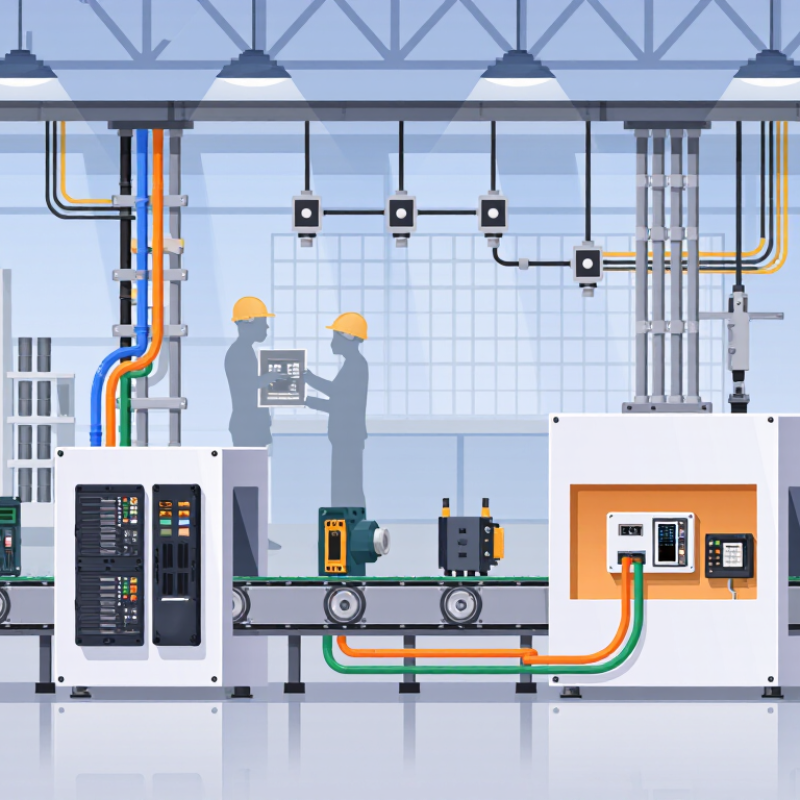
Automation controls suppliers design, assemble, and support systems that manage industrial machines. They provide programmable controllers, sensors, safety relays, operator panels, and communication modules. Their role extends beyond selling hardware. They help buyers select compatible components, configure control logic, and maintain stable production. A qualified supplier understands how a sensor signal reaches a controller, then triggers a motor or valve. That practical connection defines its value.
For global buyers, suppliers also reduce technical and operational uncertainty. Experienced engineers review voltage levels, network protocols, enclosure ratings, and environmental conditions. They may provide wiring diagrams, user manuals, sample programs, and traceable test records. Clear documentation matters when equipment crosses borders or changes hands. A reliable supplier explains limitations instead of promising universal compatibility. Regional standards, language needs, spare parts, and response times should be checked before purchase. Small details matter, such as connector types or a replacement module’s delivery window.
No supplier is perfect. A polished datasheet can still omit firmware limits or installation challenges. Buyers should request sample documentation and ask how failures are diagnosed. Site testing often reveals issues that remote discussions miss. In practice, the best supplier relationship develops through evidence, not confident claims. Regular training, measurable service terms, and honest technical feedback support safer decisions. Some evaluations remain incomplete, and that should be acknowledged. Controls systems evolve, so suppliers must keep learning with their customers.
Top Automation Controls Suppliers for Global Buyers - Definition and Role of Automation Controls Suppliers
Automation controls suppliers provide the hardware, software, engineering, integration, and support services required to monitor and control industrial processes. The table below summarizes the main supplier categories and the capabilities global buyers commonly evaluate.
| Supplier Category | Primary Products or Services | Typical Buyer Requirements | Common Application Areas | Global Supply Considerations | Typical Availability |
|---|---|---|---|---|---|
| Control System Suppliers | Programmable logic controllers, distributed control systems, remote terminal units, industrial controllers, and control system software. | Reliable process control, scalable architecture, communications support, cybersecurity features, and long-term product support. | Discrete manufacturing, process industries, utilities, water treatment, energy, and infrastructure. | Regional engineering support, local spare-parts access, language support, training, and compatibility with international communication protocols. | Widely available globally |
| Industrial Automation Integrators | System design, panel building, programming, installation, commissioning, testing, and lifecycle maintenance. | Turnkey execution, documented project management, site commissioning, production continuity, and integration with existing equipment. | Factories, warehouses, packaging lines, material handling, food processing, pharmaceuticals, and automotive production. | Ability to work across jurisdictions, comply with local electrical codes, provide multilingual documentation, and support remote diagnostics. | Available by region and project scope |
| Motion Control Suppliers | Servo drives, motors, motion controllers, variable-frequency drives, positioning systems, and motion software. | Accuracy, repeatability, speed control, coordinated motion, energy efficiency, and machine safety compatibility. | Robotics, CNC equipment, converting machinery, assembly systems, printing, packaging, and semiconductor equipment. | Motor and drive voltage compatibility, replacement availability, technical support, and compliance with regional electrical requirements. | Widely available for standard applications |
| Industrial Sensor Suppliers | Temperature, pressure, level, flow, proximity, photoelectric, vibration, position, and condition-monitoring sensors. | Measurement accuracy, environmental resistance, calibration capability, signal compatibility, and dependable replacement supply. | Process monitoring, machine automation, inventory handling, quality inspection, utilities, and predictive maintenance. | Measurement-unit compatibility, hazardous-area requirements, ingress protection, calibration documentation, and regional inventory. | Broadly available worldwide |
| Industrial Networking Suppliers | Industrial Ethernet equipment, managed switches, gateways, wireless systems, protocol converters, and network monitoring tools. | Deterministic communication, redundancy, network security, remote access, diagnostics, and interoperability. | Connected factories, machine-to-machine communication, process plants, building automation, and distributed facilities. | Radio approvals, cybersecurity regulations, environmental ratings, technical support coverage, and protocol compatibility. | Widely available; specialized solutions may require longer lead times |
| Human-Machine Interface Suppliers | Operator panels, industrial displays, supervisory control software, alarm systems, and manufacturing data interfaces. | Clear visualization, alarm management, data logging, role-based access, multilingual interfaces, and integration with control systems. | Production lines, utilities, batch processing, logistics, building management, and remote operations. | Software licensing terms, language support, cybersecurity updates, display availability, and compatibility with installed systems. | Widely available globally |
| Functional Safety Suppliers | Safety controllers, emergency-stop devices, safety relays, light curtains, interlocks, safety scanners, and safety engineering. | Risk reduction, fail-safe operation, validation documentation, safety performance levels, and compliance with applicable machinery standards. | Robotics, machine tools, packaging, material handling, assembly, chemical processing, and high-risk production environments. | Local certification requirements, qualified safety personnel, documented validation, and availability of certified replacement parts. | Available through specialized channels |
| Electrical Control Panel Suppliers | Custom control cabinets, motor-control centers, power distribution panels, wiring, labeling, testing, and documentation. | Correct enclosure design, thermal management, wiring quality, maintainability, electrical testing, and code compliance. | Industrial plants, commercial facilities, water systems, energy projects, and infrastructure installations. | Local panel-building regulations, enclosure standards, component sourcing, export packaging, and site installation capability. | Usually regionally supplied |
| Industrial Software and Data Suppliers | Manufacturing execution systems, historian platforms, production dashboards, data analytics, asset monitoring, and cloud connectivity. | Data integrity, system integration, user access control, scalability, reporting, and support for operational technology security. | Smart manufacturing, production optimization, quality management, energy monitoring, and asset performance management. | Data-residency rules, subscription models, cybersecurity requirements, integration interfaces, and local implementation resources. | Globally accessible; implementation is often regional |
| Maintenance and Retrofit Specialists | Obsolescence management, system upgrades, reverse engineering, spare-parts sourcing, repairs, and modernization projects. | Reduced downtime, compatibility with legacy equipment, controlled migration, technical documentation, and extended asset life. | Older factories, utilities, process plants, infrastructure, and production systems requiring phased upgrades. | Access to historical drawings, discontinued-part expertise, site response time, cross-border logistics, and migration planning. | Strongly dependent on local technical coverage |
Buyer evaluation should also consider total cost of ownership, compliance with applicable national and international standards, cybersecurity practices, spare-parts strategy, service response time, training, warranty terms, and the supplier’s ability to support the full operating life of the automation system.
Related Posts
-

Top Manufacturing Control Systems for Global Buyers?
-
What Are Industrial Automation Systems?
-
How to Choose Industrial Automation in 2026?
-

Top 10 Tips for Choosing Industrial Automation Equipment?
-

Top Automation Supplies Tips for Global Buyers Seeking Efficiency?
-
Top 10 Industrial Automation Equipment Suppliers in China?



