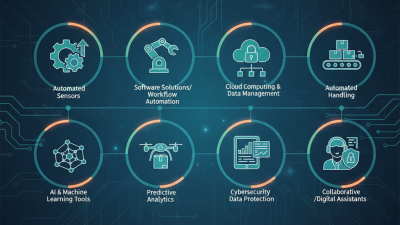
Automation equipment is entering 2026 with a more practical agenda. Manufacturers want faster production, safer workplaces, and measurable energy savings. They also want systems that can adapt without replacing entire production lines.
This article examines the leading automation equipment trends shaping factories in 2026. Artificial intelligence will support predictive maintenance, quality inspection, and production scheduling. Machine vision cameras may identify a scratched component within milliseconds. Collaborative robots will handle repetitive tasks beside trained operators. Meanwhile, digital twins will help engineers test process changes before touching physical machinery.
Erik Brynjolfsson, an economist and leading authority on technology and work, stated, “The key to winning the race is not to compete against machines but to race with machines.” That principle remains important for industrial automation. Skilled technicians will still interpret alarms, adjust workflows, and approve critical decisions.
Cybersecurity will receive greater attention as more controllers, sensors, and robots connect to factory networks. Energy monitoring will also move closer to the machine level. A single dashboard could reveal unusual motor consumption before a failure occurs.
But predictions can age badly. Some companies may overinvest in fashionable AI tools while neglecting basic maintenance, operator training, or reliable data. That risk deserves attention. The strongest automation strategy will probably combine proven equipment with carefully tested innovation.
Readers should evaluate each trend through practical evidence: downtime reduction, safety performance, payback period, integration complexity, and workforce impact. This balanced approach can separate meaningful progress from impressive demonstrations.
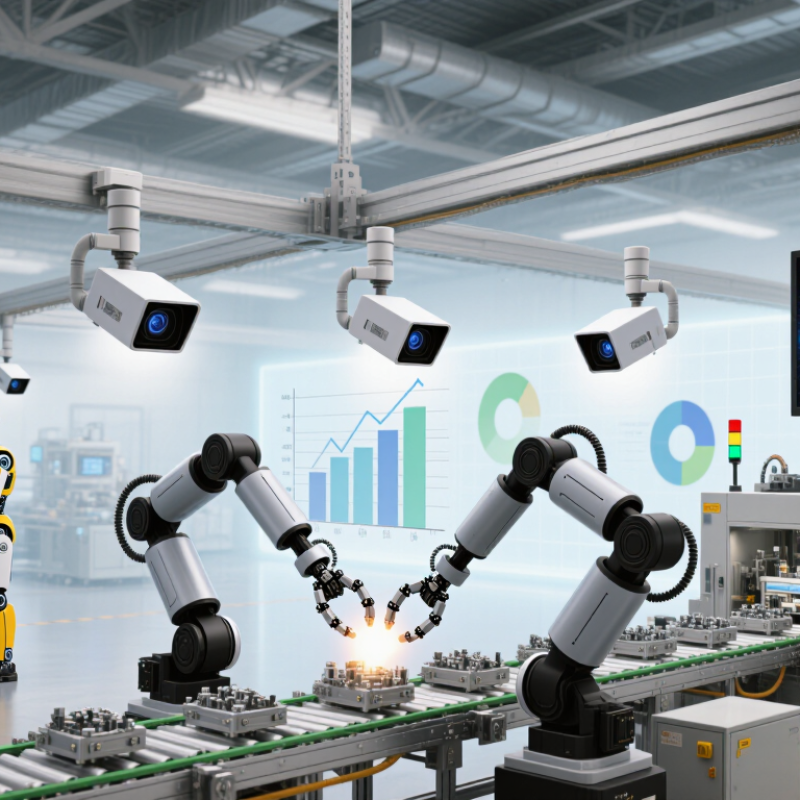
Automation equipment in 2026 will focus on practical intelligence, flexible production, and measurable efficiency. Edge-based artificial intelligence will help machines detect defects without sending every image to remote servers. This reduces delay and supports faster decisions on the factory floor. In pilot projects, local processing can identify surface marks within milliseconds. Small gains matter.
Modular equipment will become more valuable as production volumes and product designs change. Manufacturers can replace one assembly module instead of rebuilding an entire line. Collaborative robots, adaptive grippers, and compact vision systems will support this shift. Better sensors will measure force, temperature, vibration, and position during operation. These details help engineers find faults before an unexpected stoppage. However, automation is not automatically efficient. Poorly selected sensors can create expensive data without useful insight.
Digital twins will connect equipment settings with real production behavior. Engineers can test cycle changes virtually before interrupting a working line. Energy monitoring will also become part of equipment design, not an optional report. Machines that reveal idle power, compressed-air losses, and peak consumption offer clearer improvement targets. Cybersecurity will require stronger access controls and regular software maintenance. Interoperability remains difficult because older machines often use different communication standards. That weakness deserves more attention. Reliable 2026 systems will combine automation skill with careful human judgment, transparent maintenance records, and realistic performance testing.
In 2026, industrial automation is shifting from fixed sequences toward AI-driven systems that interpret changing conditions. A vision camera can detect a scratched component, while machine-learning software adjusts the robot’s path. This matters on mixed-production lines, where products change hourly. Less reprogramming. Modern systems combine sensors, edge computing, predictive analytics, and conventional control hardware. The edge processor keeps decisions near the machine, reducing delays and protecting operational data. However, AI does not replace engineering judgment.
During practical deployment, teams typically begin with one bottleneck, such as repeated jams or inconsistent inspection results. They collect vibration, temperature, cycle-time, and image data before changing the process. Clean labels matter. Poor data can teach a model to repeat an operator’s mistake. A reliable system should explain alarms, record decisions, and allow a trained employee to override automatic actions. This supports safer commissioning and makes maintenance easier to audit. It also helps workers trust recommendations instead of treating them as mysterious instructions.
The strongest 2026 trend may be adaptive automation, not full autonomy. Equipment can forecast bearing wear, detect tool drift, and schedule service during planned pauses. Yet predictions sometimes fail when materials, lighting, or staffing patterns change unexpectedly. That weakness deserves more attention. Manufacturers should test models across seasons, shifts, and product variations, then review false alarms with production staff. Human expertise remains essential, especially when an unusual sound signals a problem before software notices it.
Global industrial robot installations increased substantially from 2019 to 2023, reaching more than 540,000 units in 2023. This expanding automation base is supporting the 2026 shift toward AI-enabled vision, predictive maintenance, adaptive robotics, and more autonomous production systems.
Source: International Federation of Robotics, World Robotics reports. Values are rounded to the nearest thousand units.
Collaborative robots are moving beyond pilot projects in 2026. They support assembly, inspection, packaging, and machine tending. Their compact frames fit beside workers and within changing production cells. The International Federation of Robotics reported about 55,000 collaborative robot installations in 2023. That represented roughly 10% of global industrial robot installations. The same report recorded 541,302 industrial robot installations worldwide.
Flexible equipment is becoming equally important. Manufacturers increasingly need shorter changeovers, smaller batches, and faster product variations. Modular conveyors, adjustable fixtures, and software-defined controls can reduce physical reconfiguration. A practical cell might switch from metal brackets to plastic housings using new tooling and revised parameters. Less downtime matters.
However, flexibility is not automatic. That assumption can fail. Poorly planned integration may create safety gaps, inconsistent cycle times, or operator frustration. The International Federation of Robotics also identifies workforce skills as a major factor in successful automation adoption. Operators need clear interfaces, realistic training, and access to manual controls. McKinsey research suggests that automation value depends heavily on process redesign, not equipment alone. In real factories, the best results often come from modest systems that are easy to adjust, monitor, and repair. That is less exciting, but more reliable.
What Are the Top Automation Equipment Trends for 2026?
Smart sensors are moving beyond simple temperature and vibration checks. They now capture pressure changes, energy use, sound patterns, and machine behavior. IoT Analytics estimated 18.8 billion connected IoT devices worldwide by the end of 2024. That expanding network will push factories toward richer, faster equipment data.
Small sensors can detect bearing wear before a visible failure. Yet poor calibration still produces misleading alarms. Experience matters here. Engineers must compare sensor readings with maintenance records, operating conditions, and real production noise. More data does not automatically mean better decisions.
Edge computing will become more practical in 2026. It processes signals near the machine, reducing delays and unnecessary cloud traffic. A McKinsey analysis identified significant value potential in industrial edge applications, especially for predictive maintenance and process control. Connected machinery will also depend on common data models and secure system access. Without them, equipment may communicate poorly, even when every device is connected.
The International Federation of Robotics reported 541,302 industrial robots installed globally in 2023. This growing robotic base increases the need for local analytics and machine-to-machine coordination. However, many factories still operate mixed-generation equipment. That reality may slow full connectivity. It also makes phased upgrades more credible than complete replacement programs.
A practical comparison of major technology trends, operating characteristics, and expected manufacturing impact
| Automation Trend | Primary Function | Typical Technical Characteristic | 2026 Deployment Priority | Main Business Benefit | Key Implementation Requirement |
|---|---|---|---|---|---|
| Smart Condition Sensors | Continuously monitor vibration, temperature, pressure, current, flow, and acoustic signals. | Sampling rates commonly range from a few hertz for slow processes to several kilohertz for vibration analysis. | Very High | Earlier fault detection, reduced unplanned downtime, and more targeted maintenance. | Sensor calibration, reliable power, time synchronization, and a well-defined data dictionary. |
| Edge Computing | Process data near machines for rapid control, filtering, analytics, and local decision-making. | Local processing can reduce dependence on wide-area network connectivity and lower response time to milliseconds in suitable applications. | Very High | Lower data-transfer costs, faster responses, and continued operation during cloud or network interruptions. | Industrial-grade hardware, container or application management, backup power, and secure remote access. |
| Connected Machinery | Exchange operating status, production data, alarms, and maintenance information across equipment and systems. | Common industrial communication layers include Ethernet-based networking, MQTT, OPC UA, and field-level protocols. | Very High | Improved production visibility, faster troubleshooting, and better coordination between machines. | Interoperability rules, network segmentation, consistent equipment naming, and lifecycle governance. |
| AI-Assisted Visual Inspection | Detect surface defects, assembly errors, missing components, and dimensional deviations. | Industrial cameras and trained models can perform repeatable inspection at line speed when lighting and product presentation are controlled. | High | Consistent quality decisions, reduced manual inspection effort, and improved traceability. | Representative training images, controlled lighting, model validation, and human review for uncertain cases. |
| Digital Twins | Represent equipment, processes, or production lines for simulation, monitoring, and optimization. | Value increases when the model is linked to current operational data and validated against real process behavior. | High | Safer commissioning, improved capacity planning, and reduced time spent testing physical changes. | Accurate asset models, trusted historical data, version control, and clear simulation objectives. |
| Collaborative Robotics | Support assembly, handling, inspection, and ergonomic tasks alongside workers. | Safe operation depends on risk assessment, speed-and-separation monitoring, force limits, and application-specific safeguarding. | High | More flexible automation for variable production volumes and reduced exposure to repetitive tasks. | Task-specific safety validation, worker training, ergonomic design, and change-management procedures. |
| Industrial Cybersecurity | Protect controllers, sensors, edge devices, networks, and production data from disruption or unauthorized access. | Core controls include asset inventories, network segmentation, least privilege, secure updates, monitoring, and incident response. | Very High | Greater operational resilience, reduced cyber risk, and safer connectivity between operational and information systems. | Security ownership, tested recovery plans, vulnerability management, and alignment with industrial security practices. |
| Energy-Aware Automation | Measure and optimize electricity, compressed air, heat, and other resource consumption. | Energy meters and equipment telemetry enable consumption analysis by asset, process, shift, or production unit. | High | Lower operating costs, improved energy efficiency, and stronger environmental reporting. | Sub-metering, consistent production baselines, power-quality monitoring, and actionable efficiency targets. |
Assessment basis: Priority ratings reflect the expected strategic importance of each trend for industrial automation programs in 2026, rather than a market-share estimate.
Technical references include established practices and specifications associated with industrial cybersecurity, digital twins, industrial interoperability, and automation safety, including IEC 62443, ISO 23247, OPC UA, NIST SP 800-82, and ISO 10218.
By 2026, automation equipment will focus less on maximum speed and more on sustainable, adaptable production. Energy monitoring will become standard on robotic cells, conveyors, and vision systems. Equipment managers can track electricity use per finished unit. That figure matters more than a machine’s impressive cycle time.
Modular equipment will also gain ground. A production line may use quick-change tooling, movable safety barriers, and software-configured stations. This approach supports shorter product cycles and reduces expensive rebuilds. In factory trials, modular layouts have helped teams test new workflows within days. However, modularity can create integration problems. Loose standards and unclear ownership still cause delays. That weakness deserves honest attention.
Choose equipment with open communication protocols and accessible maintenance data. Ask suppliers to show energy readings under real operating conditions. Train operators before installation, not after problems appear. Human-centered systems should make faults easy to understand, using clear screens, audible alerts, and safe manual controls. Workers should be able to pause a process without confusion. Small details matter. A poorly placed emergency button can undermine an otherwise advanced system. Teams should also review ergonomic risks, including lifting height, repetitive reaching, and glare from inspection displays. Human feedback may challenge the original design, which is useful rather than inconvenient.
© 2025 Tri-Phase | Privacy Policy | Purchase Terms & Conditions | Terms & Conditions